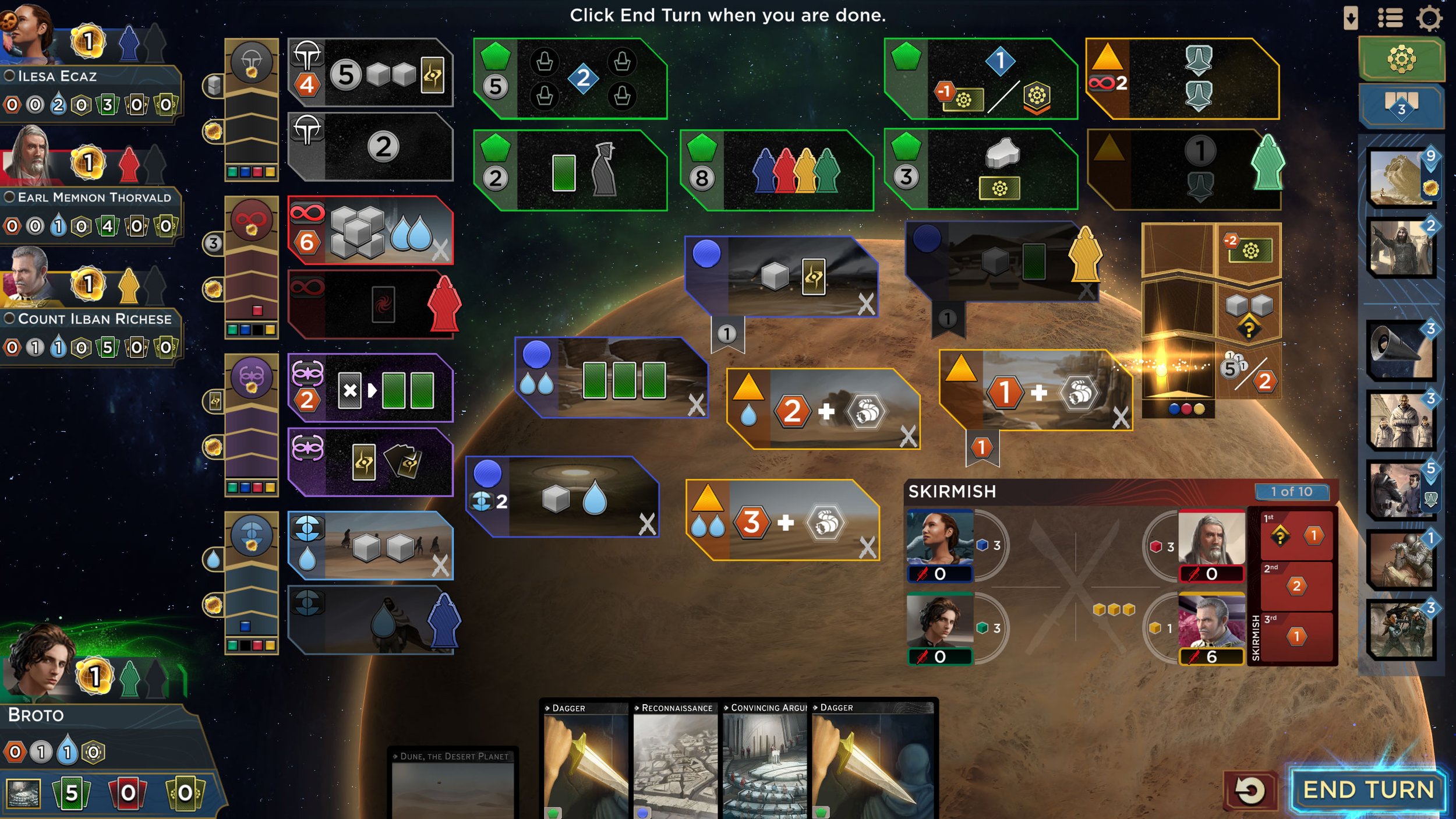
Dune: Imperium Digital
Visual Development & Art Direction
Software Used: Photoshop, Maya, Substance Painter, UnityVisual Development / Art Direction
Dune: Imperium presented the challenge of translating a complex tabletop experience into an intuitive and visually cohesive digital game while preserving the identity and atmosphere of the film it’s based on.
I worked across UI design and 3D environment development, helping establish a visual direction that balanced the original game's identity with the needs of a digital experience. Through iterative design, visual exploration, and collaboration across disciplines, we developed a presentation that supported both experienced players and newcomers.
UI
The largest challenge was to translate a square aspect ratio board into an interface that felt familiar to players while adapting to the numerous device screen aspect ratios we supported.
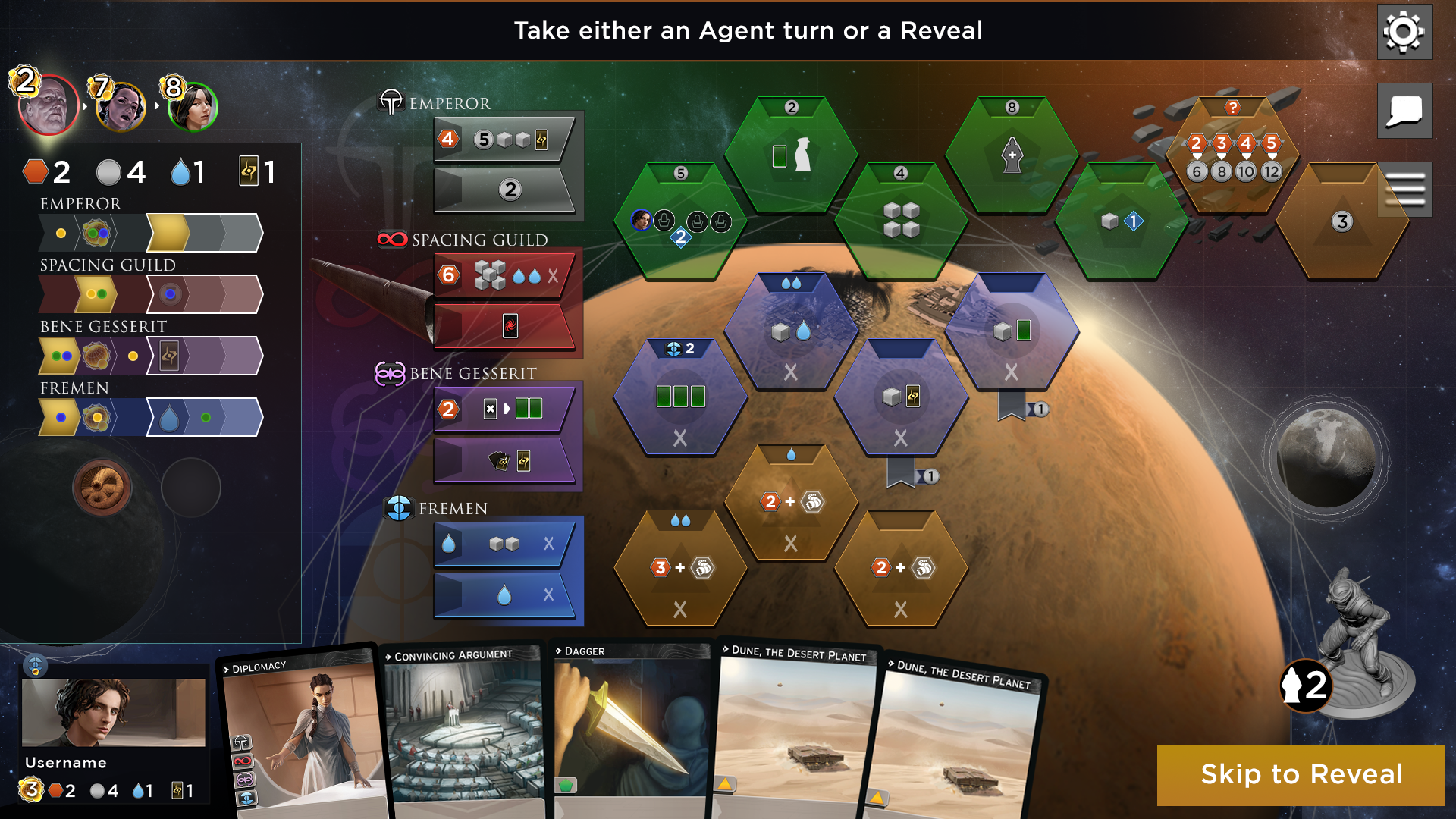
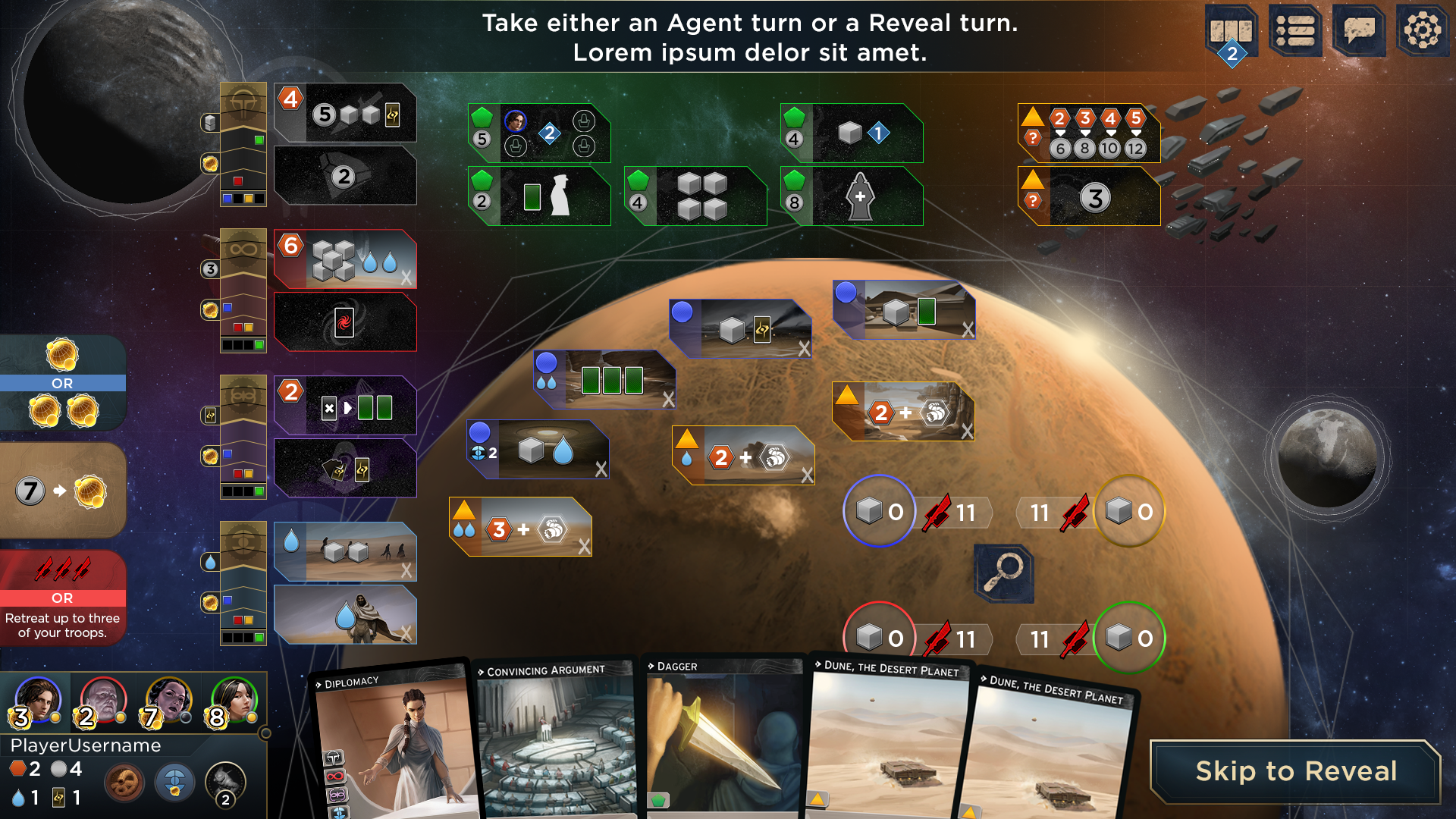
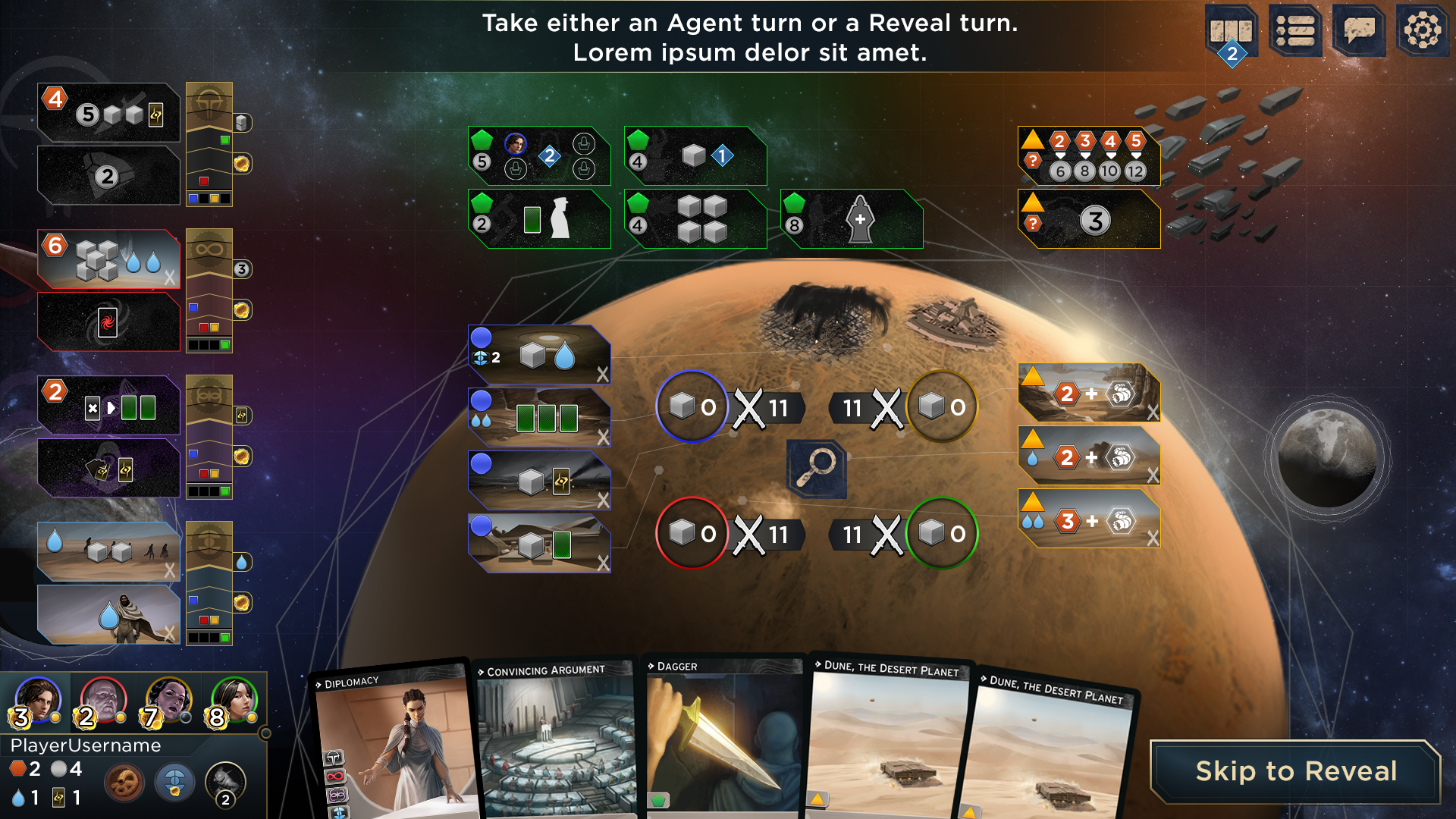
I started the project hands-on, using a lo-fi wireframe from design I began exploring a large variety of layouts. Part of the exploration was also focused on the general visual direction of the project while still keeping it loose and directional. My aim was to establish a direction that utilized the additional tools available to video games such as animation, lighting, and audio.
The following images are my initial explorations on the project. Once I had a solid vision for the project I brought on our Senior UI Artist, Chris Mercado to further iterate and refine the user interface. We met with the design team each Monday to discuss what we explored, note iteration tasks, and get updates on spec developments from Design. We also met with the full art team every other week for critique. The remaining back and forth generally happened in team chat channels and emergent visual reviews.
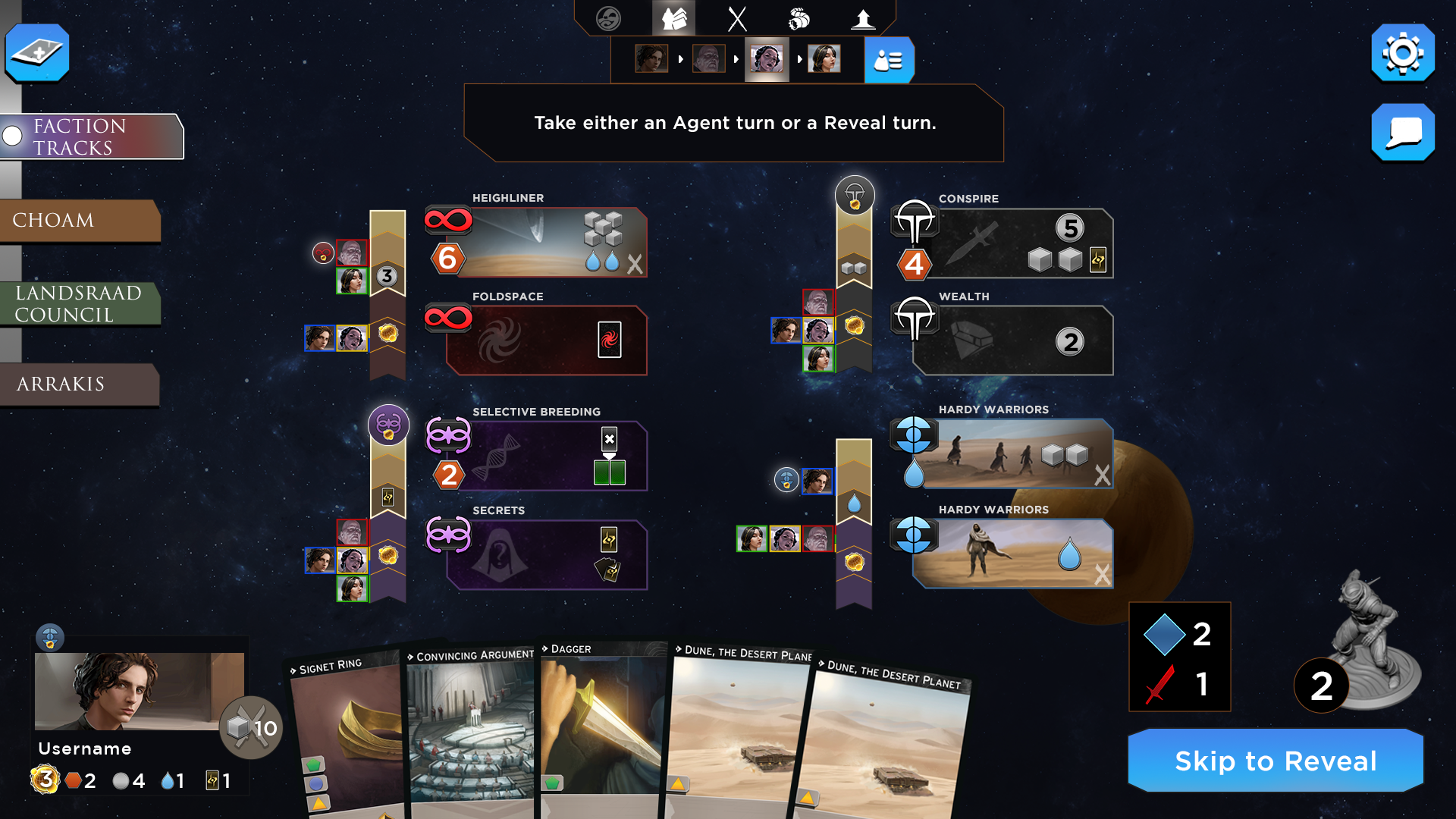
At the start, my intuition was to break up the board into separate screens that could be accessed from a top-level navigation.
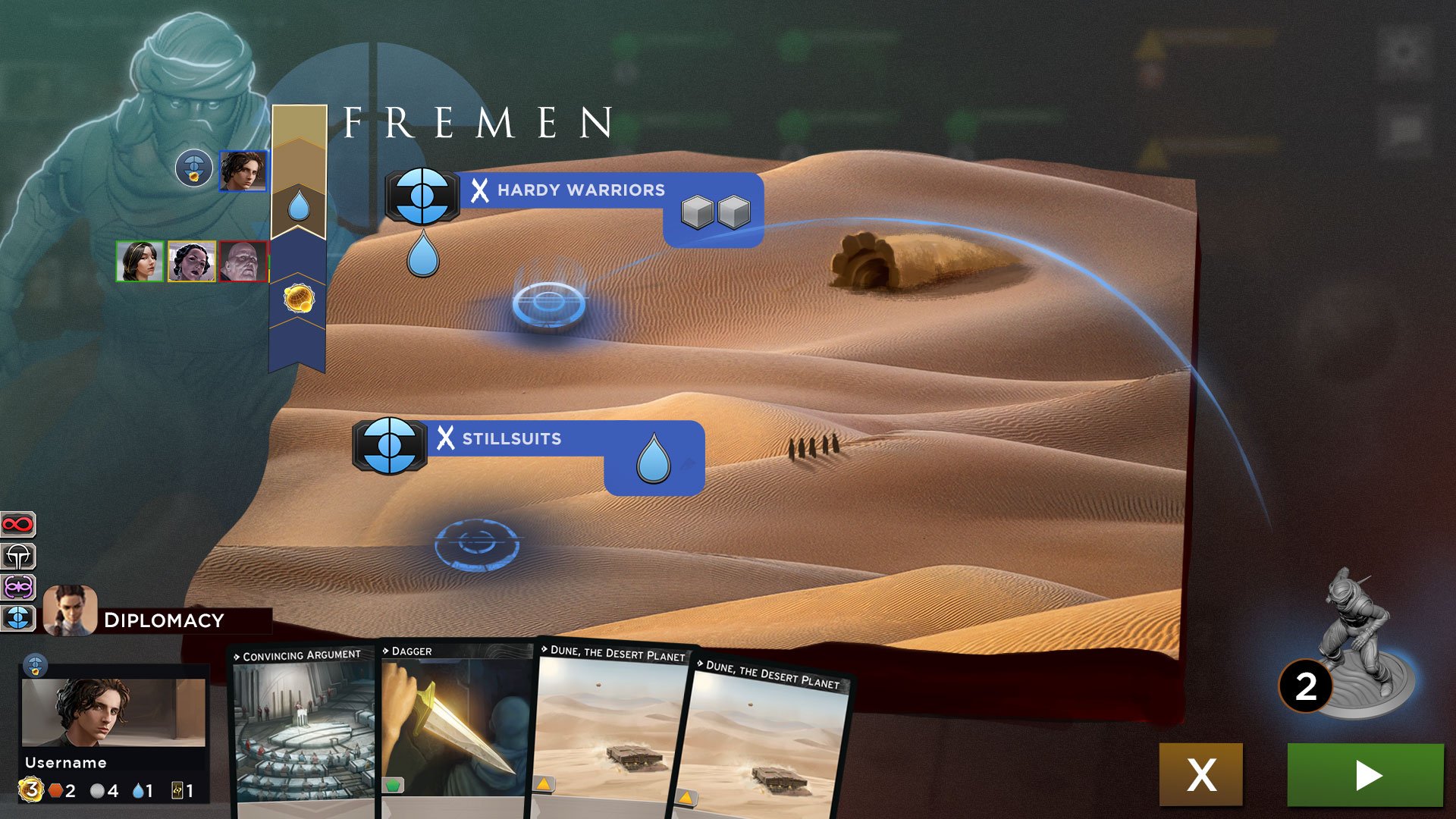
When interacting with a certain section of the map the player would be taken to an up-close view of the environments of Dune.
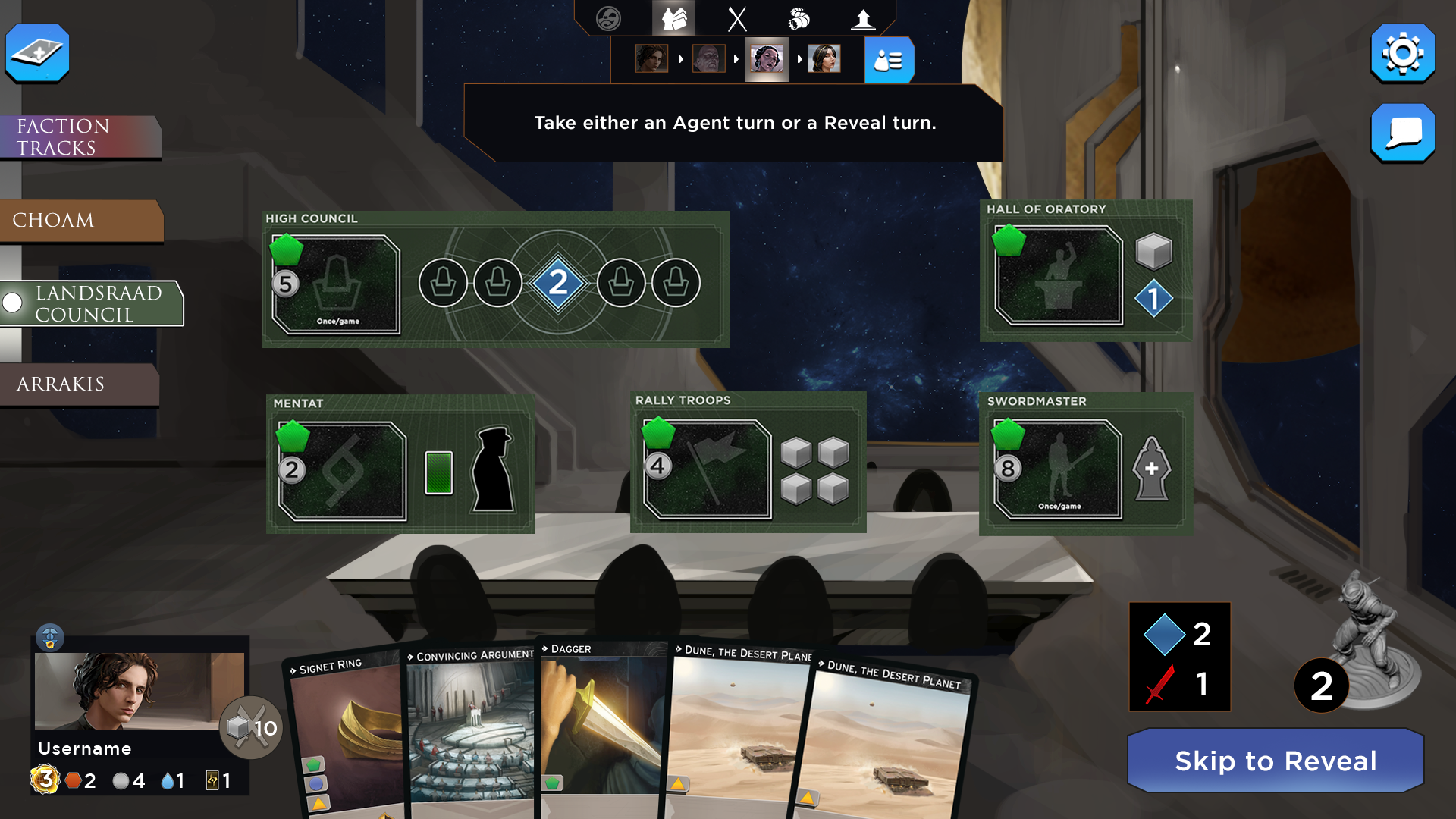
Up-close view of the Landsraad
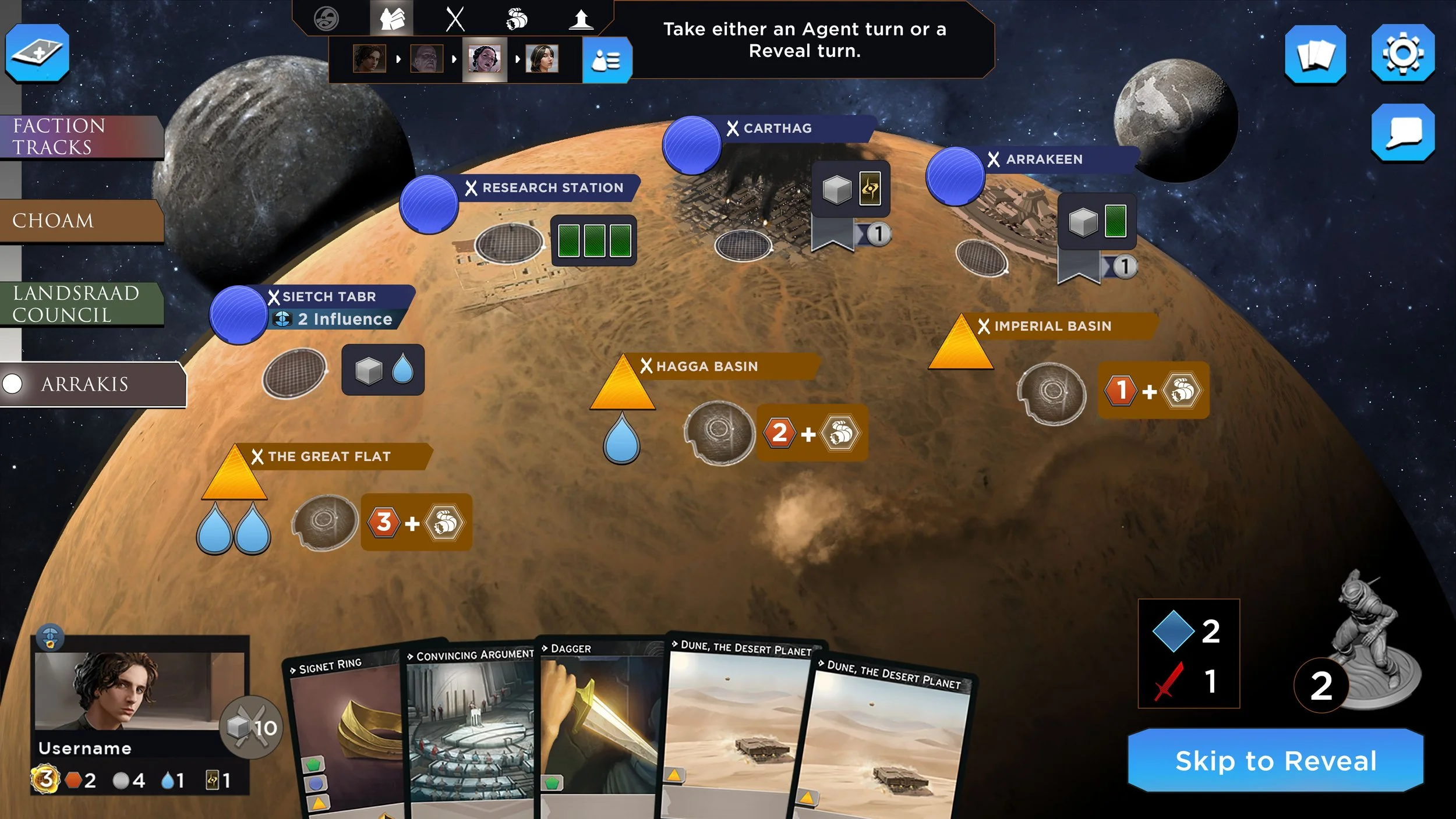
This version explored putting Arrakis based locations directly on the planet itself with occasional sandworm passings.
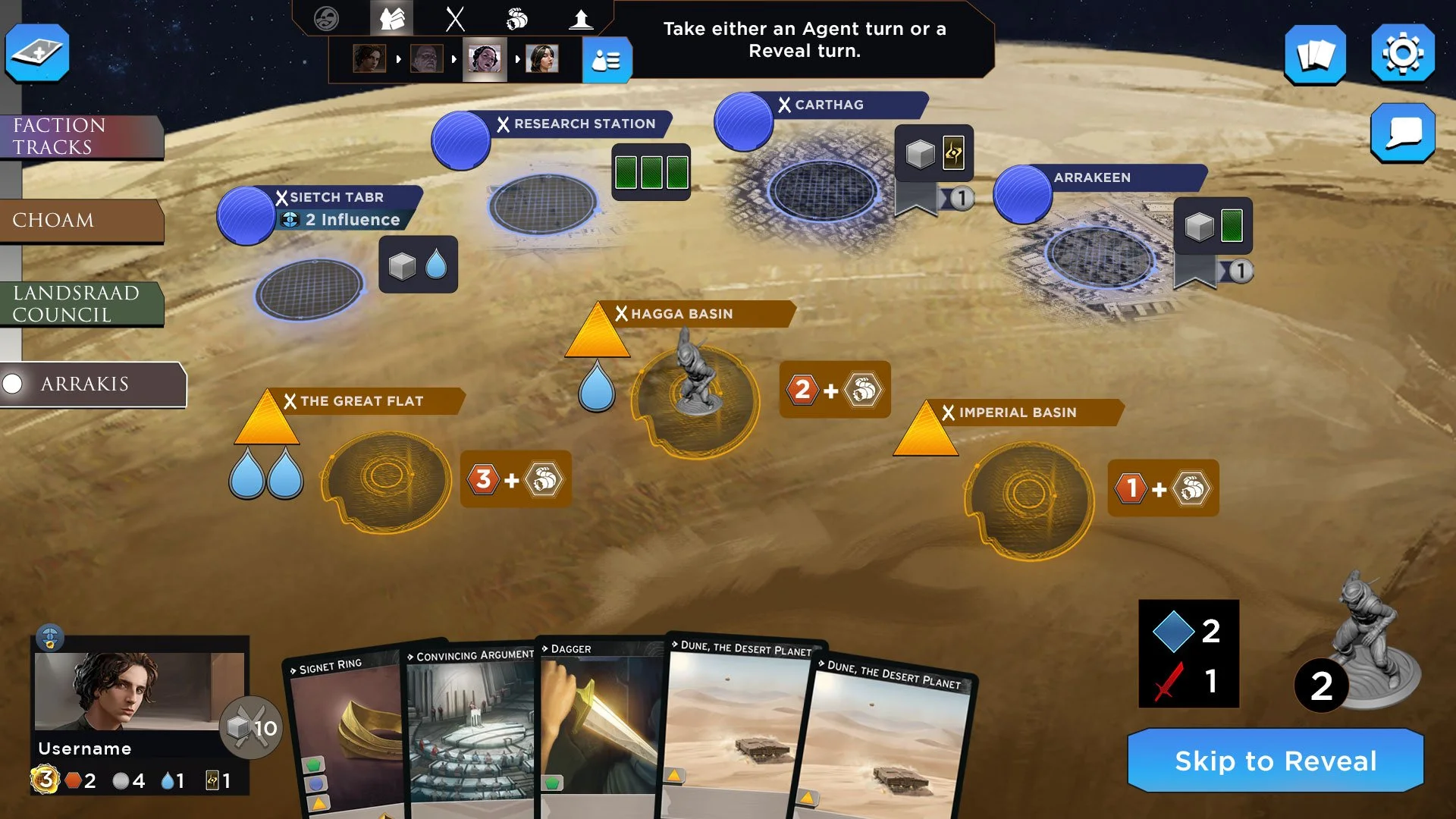
Riffing on the previous exploration but even moving closer to the planet.
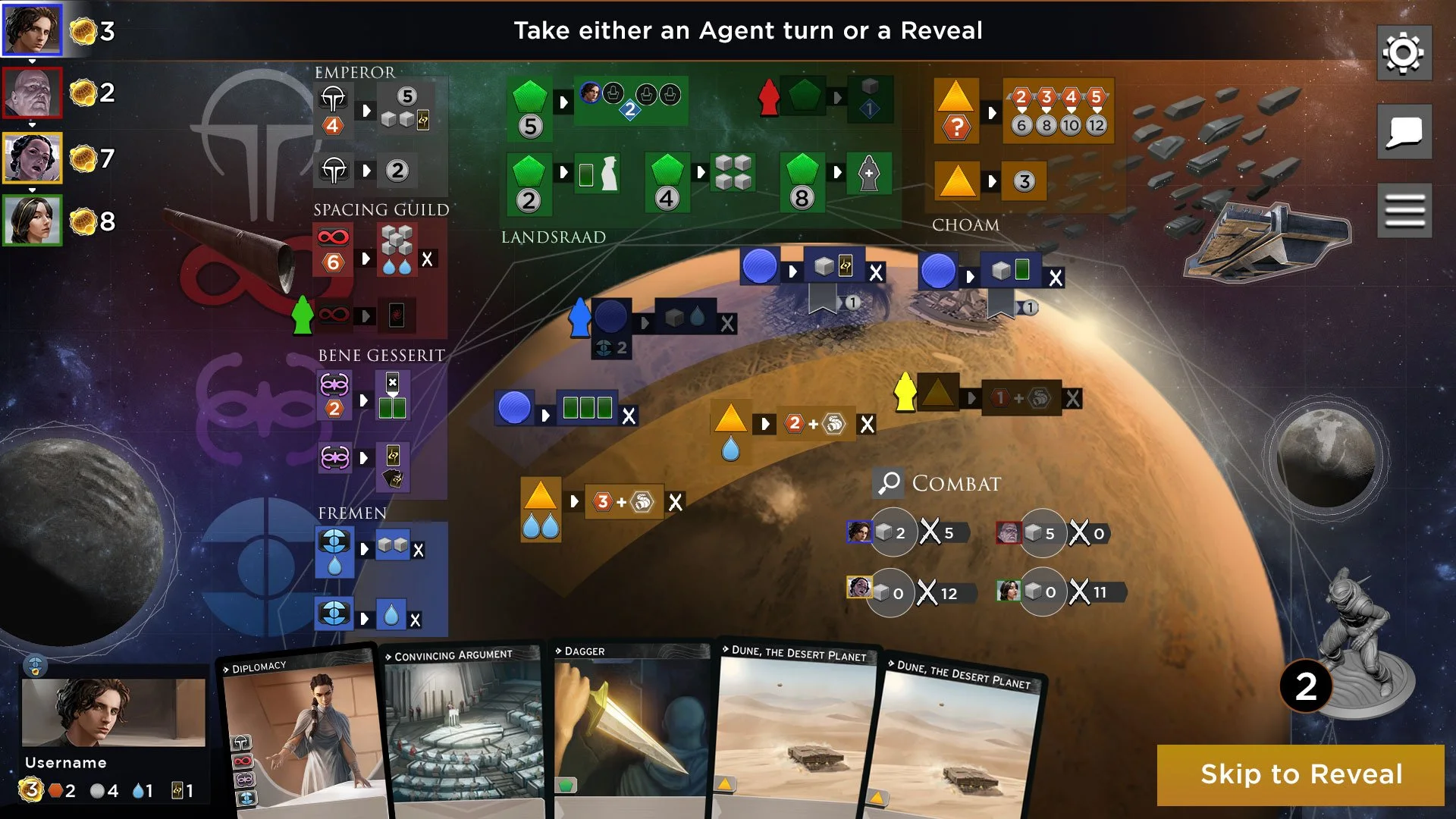
After discussions with designers, we decided it was important to show the full board at all times given it's importance as a whole in strategic decision making.
Further explorations looked for ways to bring players into the world of Dune.
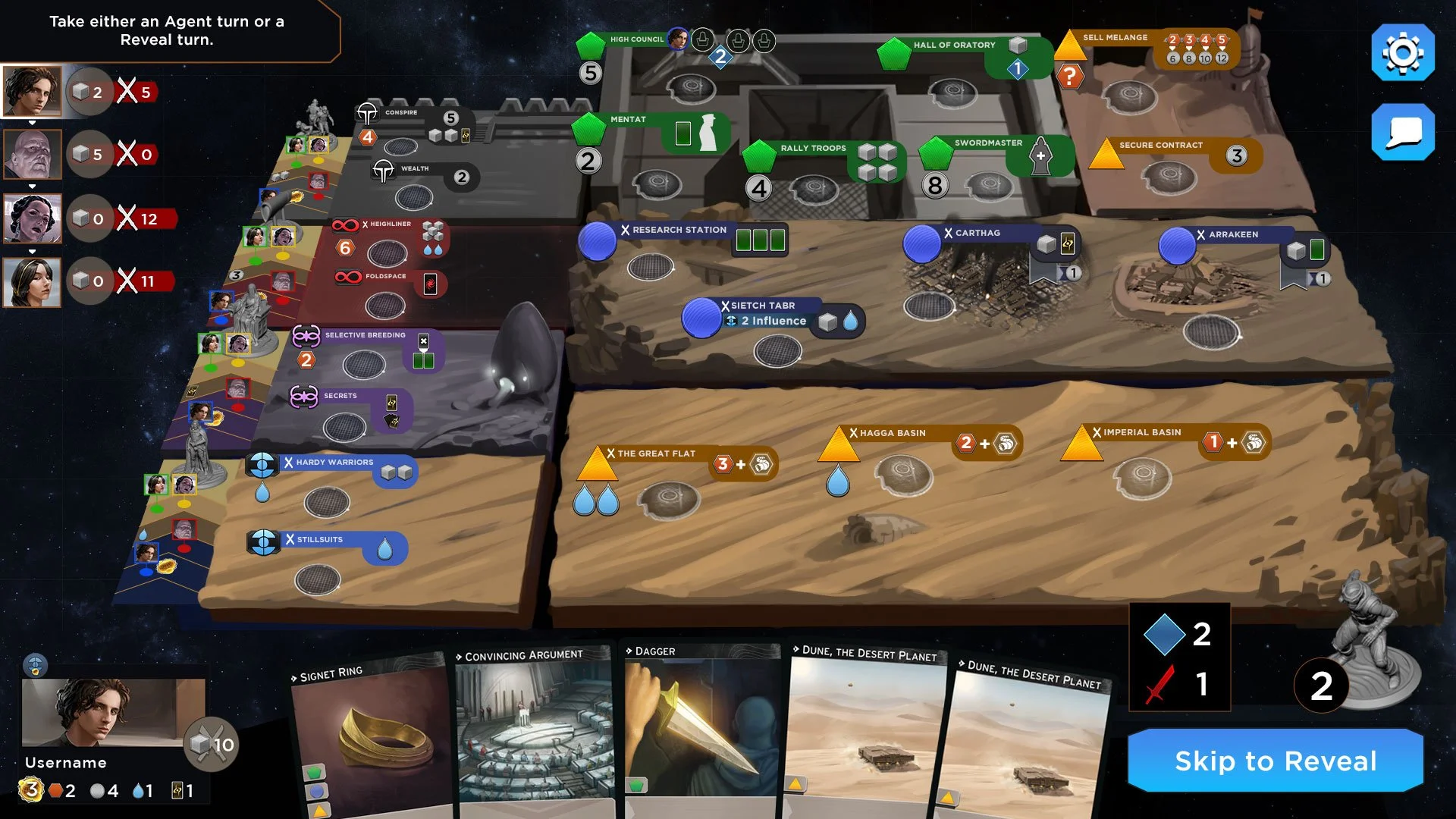
There is a vast range in space the locations on the board represent, so we tried creative ways to mash them all together, which ultimately wasn't successful.
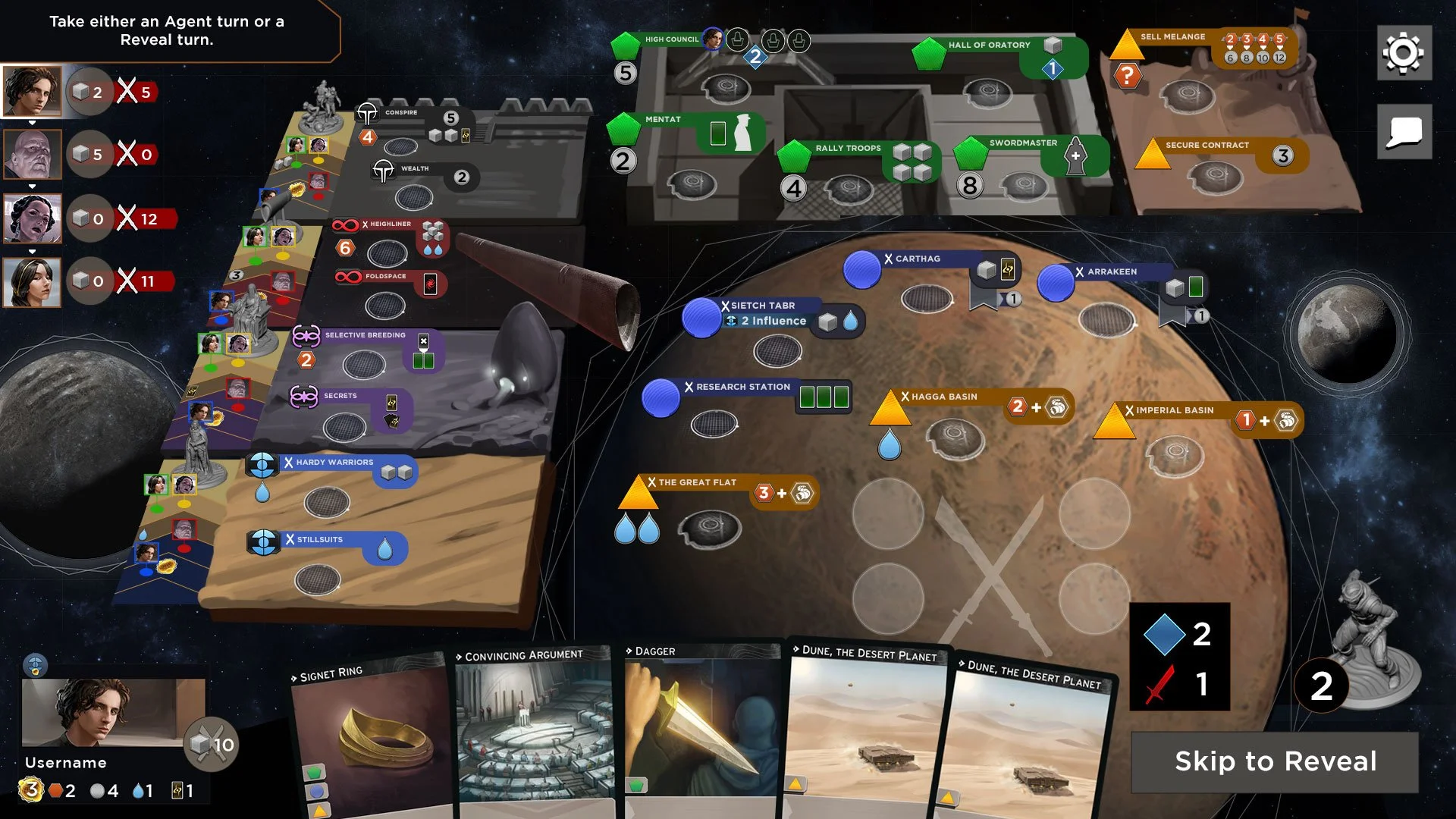
An iteration on the previous exploration that mixes the isometric cutaways with an extreme birds eye view of Arrakis.
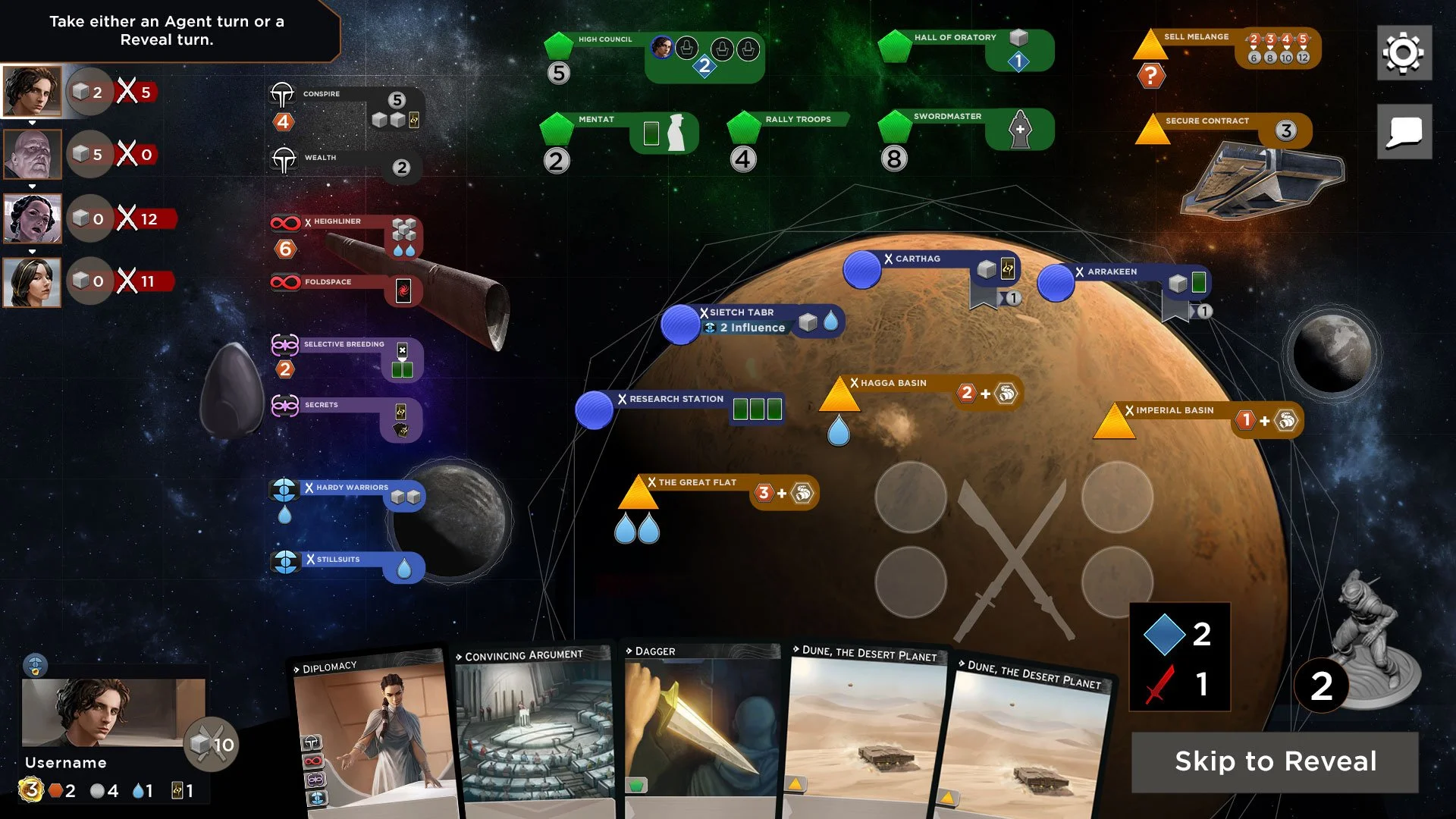
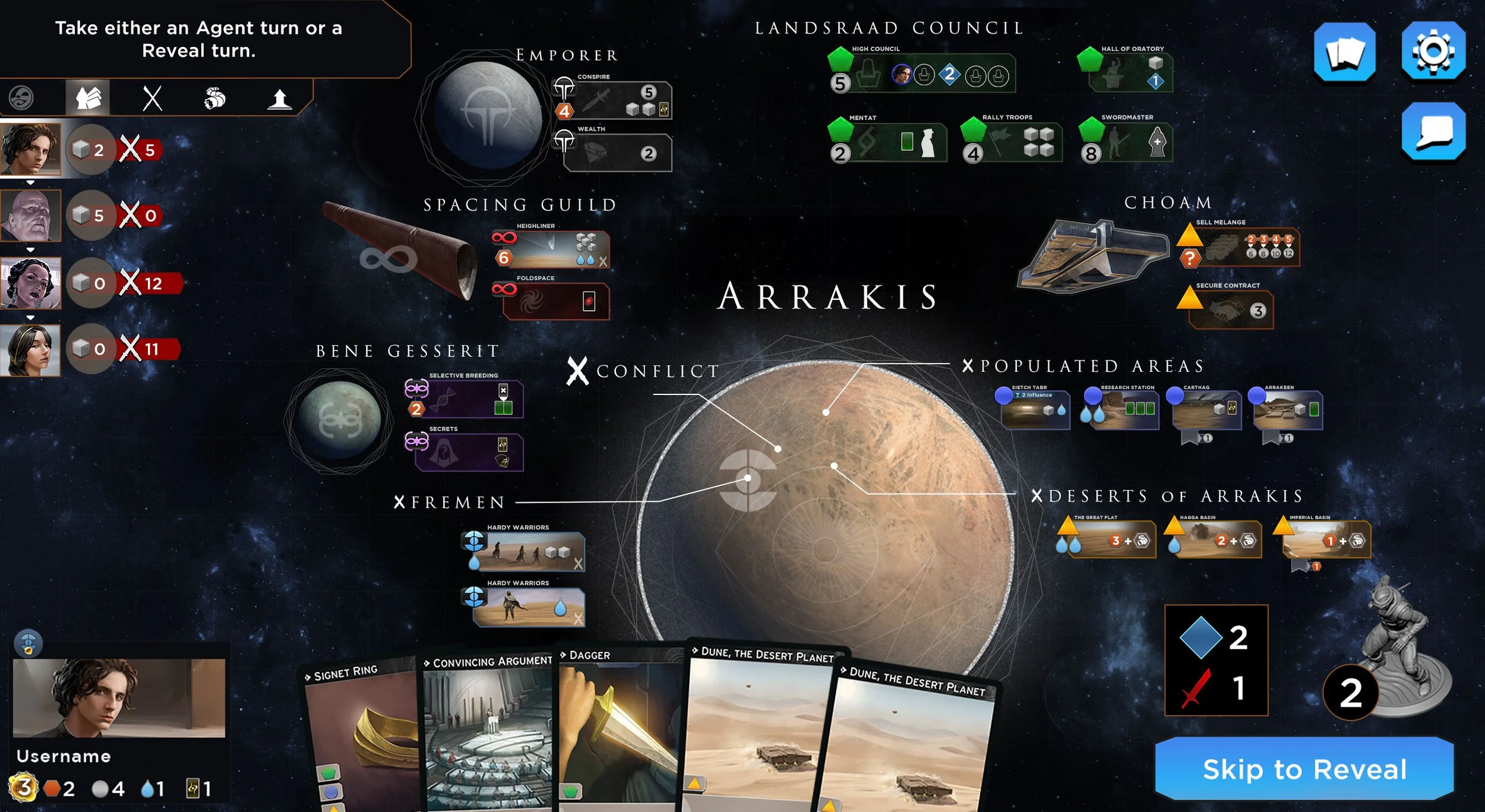
We began to circle back to something closer to the original board representation while also integrating the conflict area.
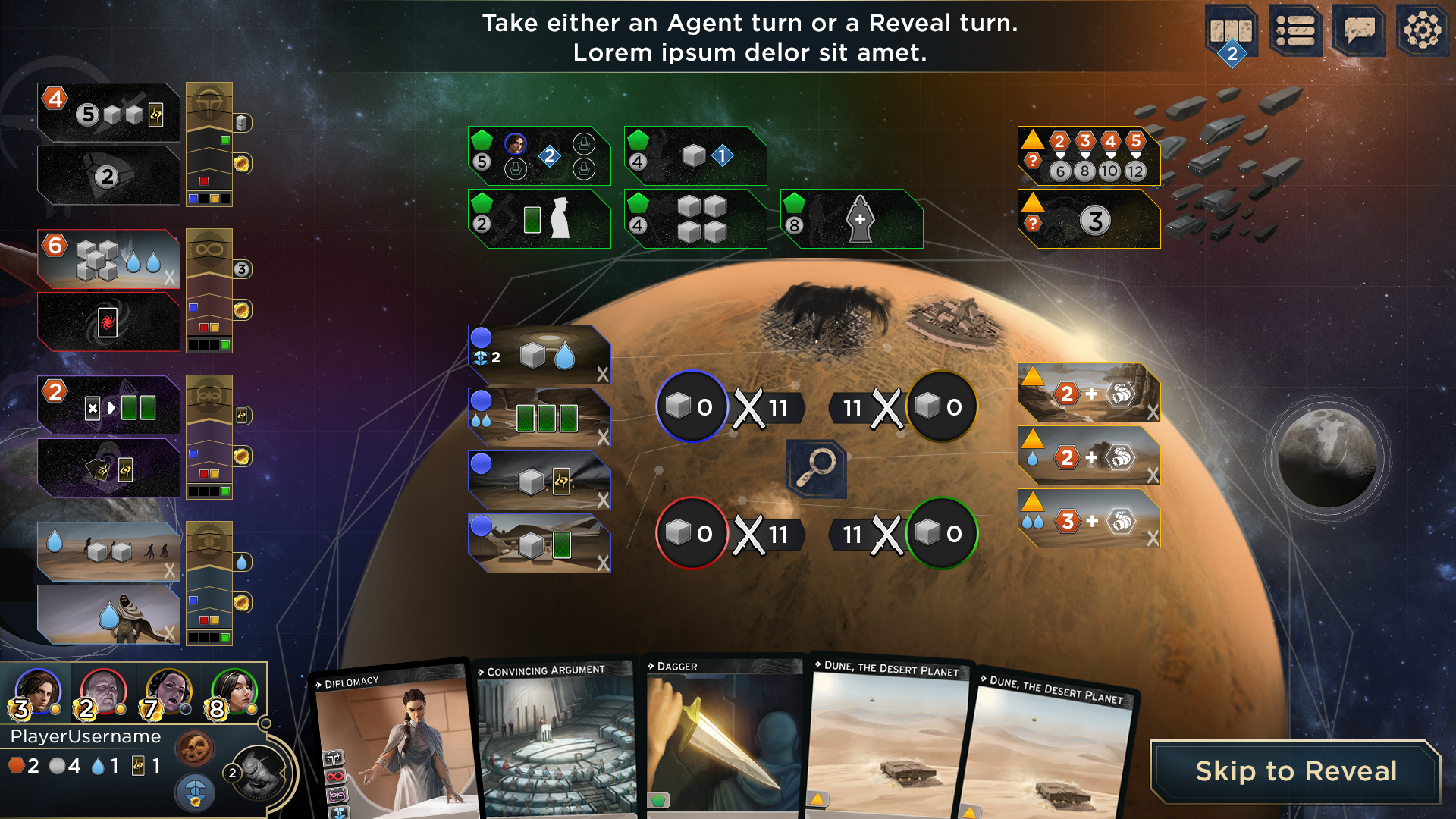
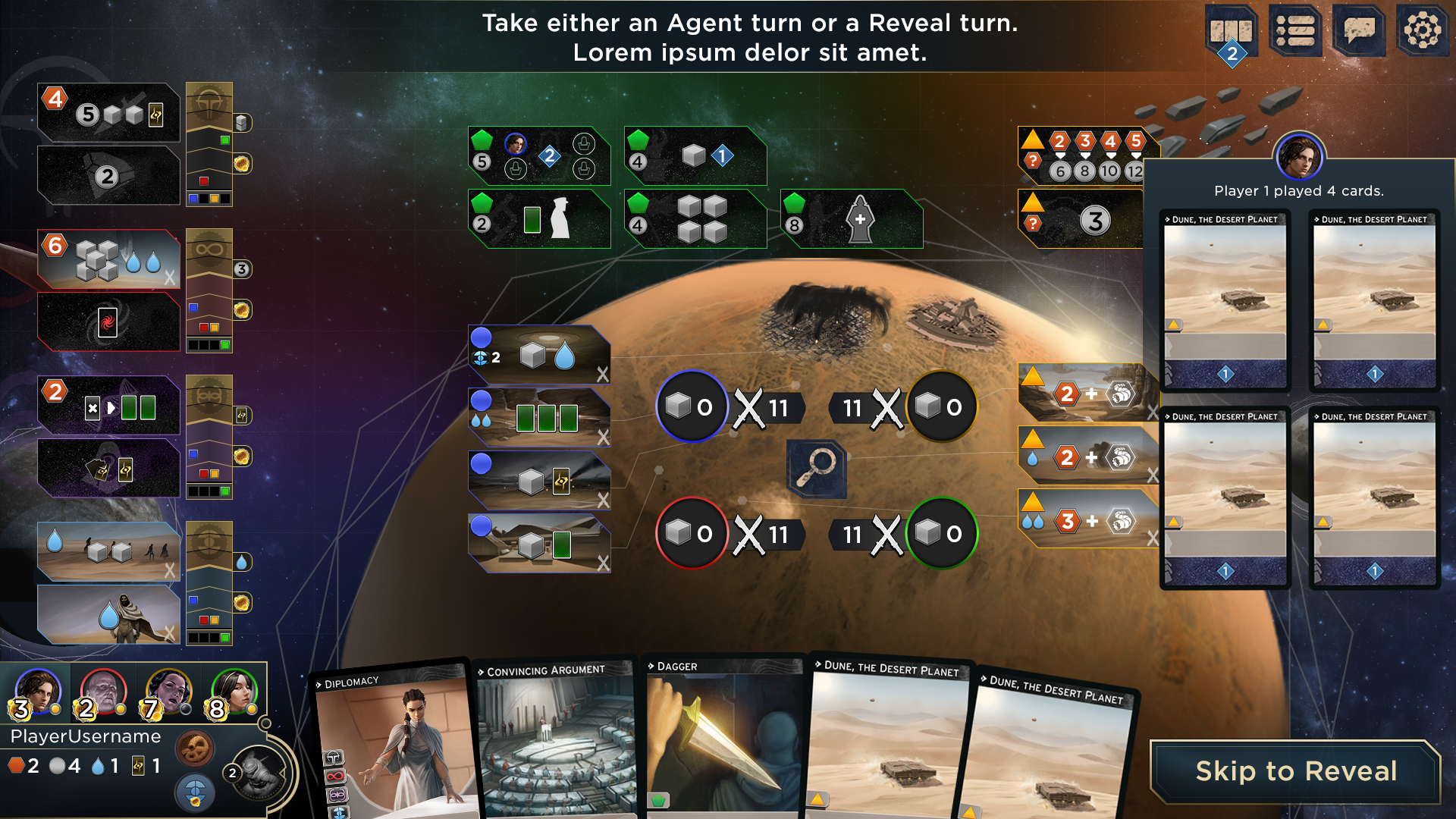
The rest of the mocks are contributions from Chris Mercado.
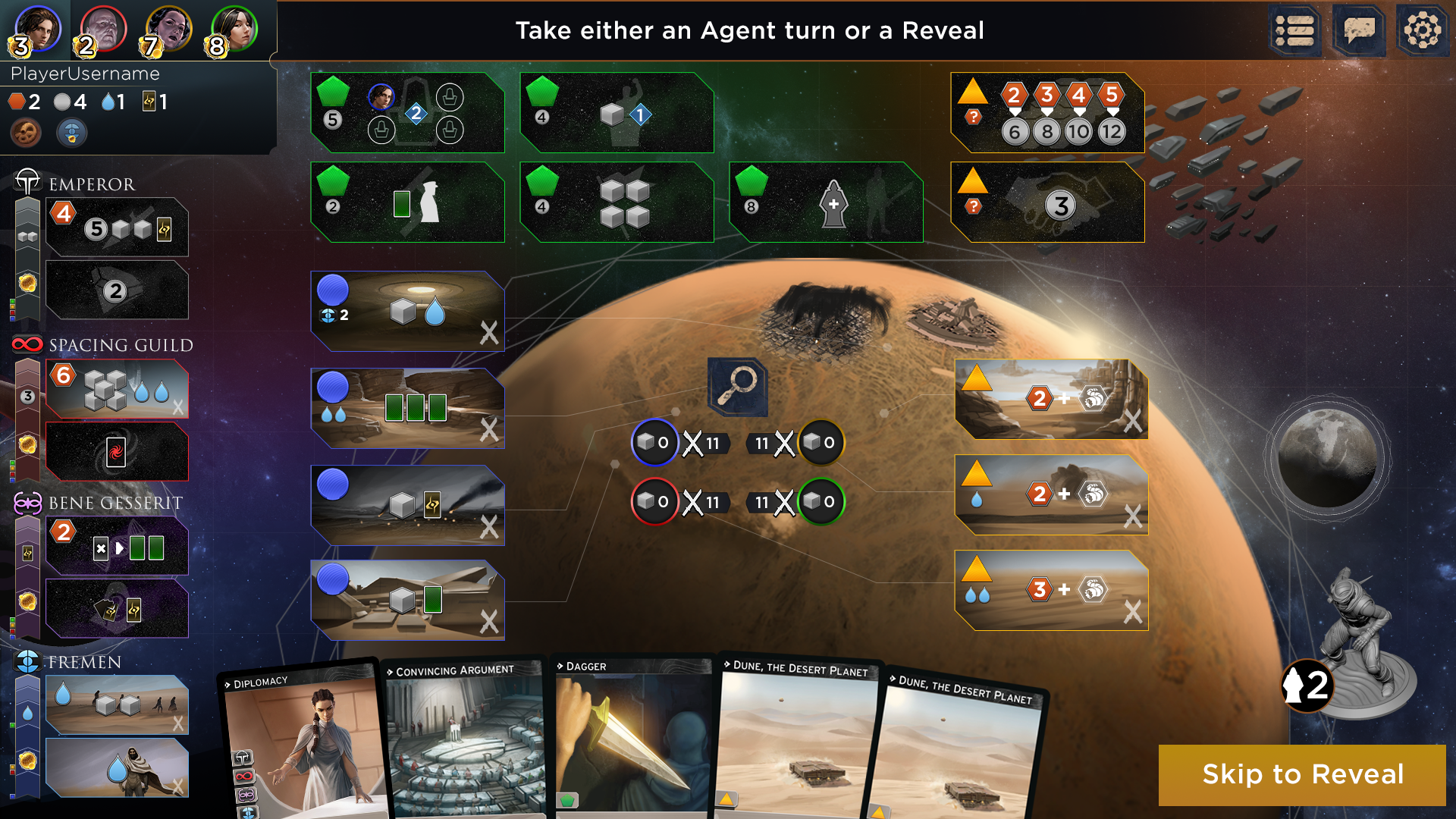
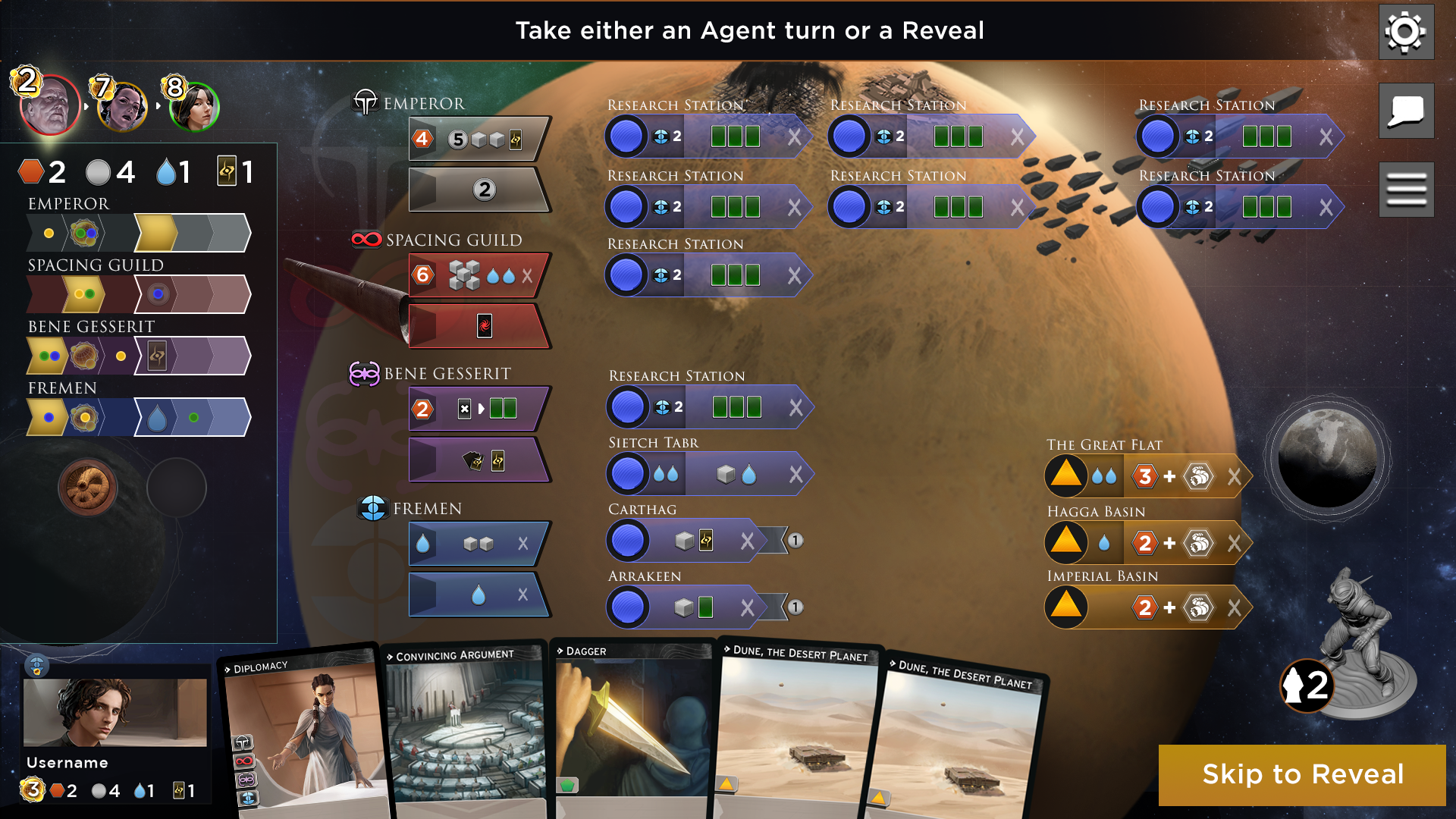
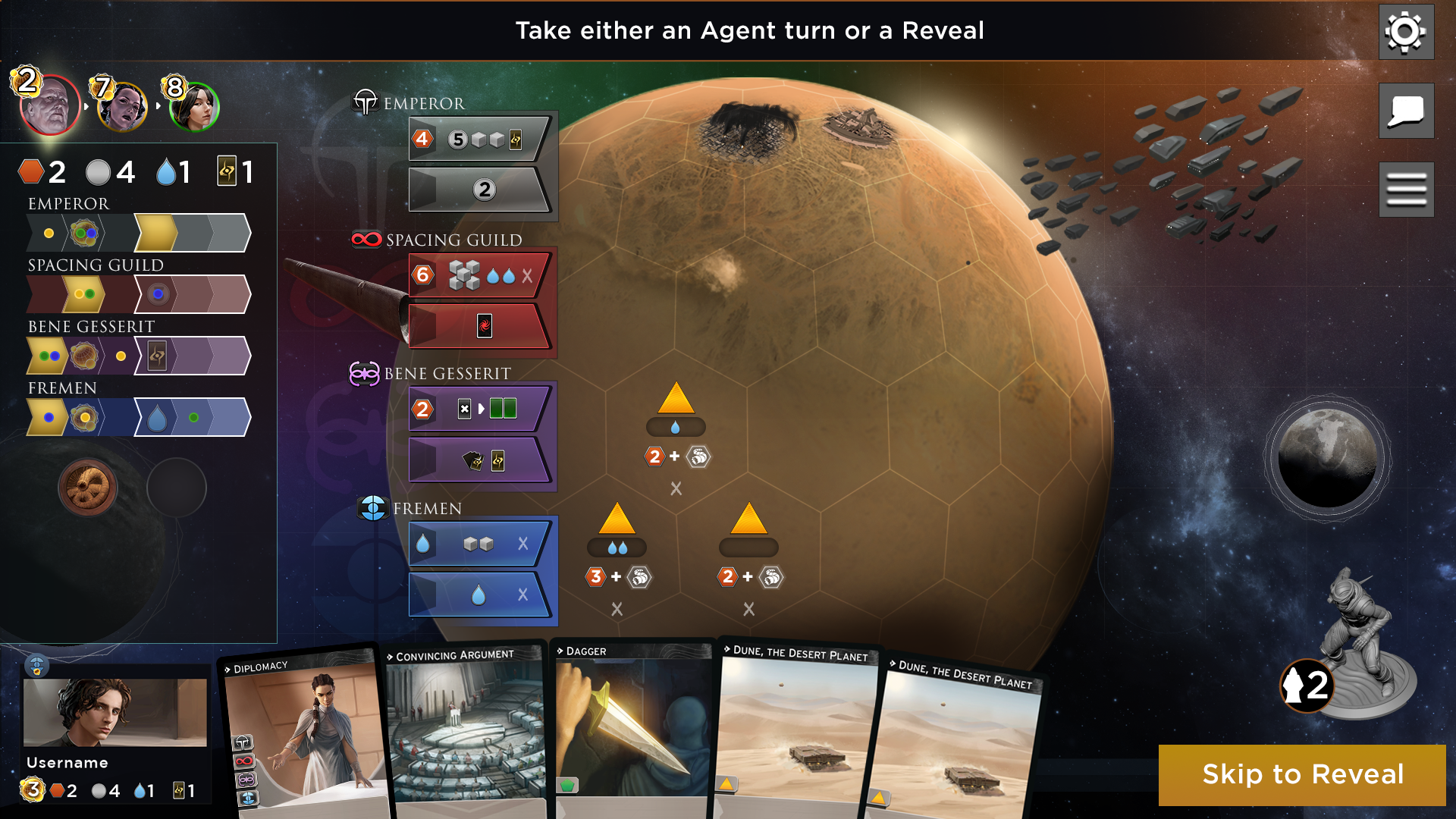
Front-End UI
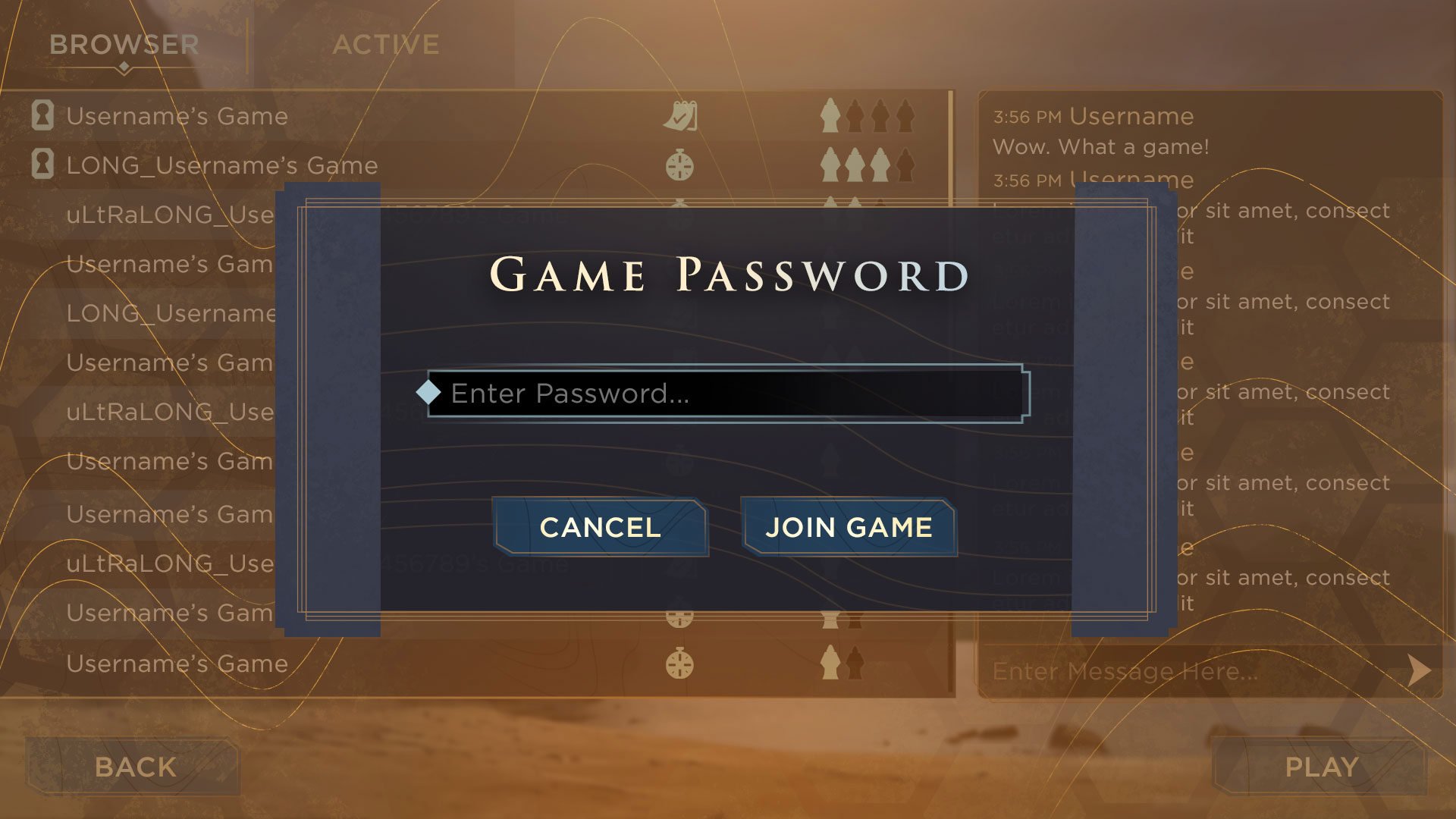
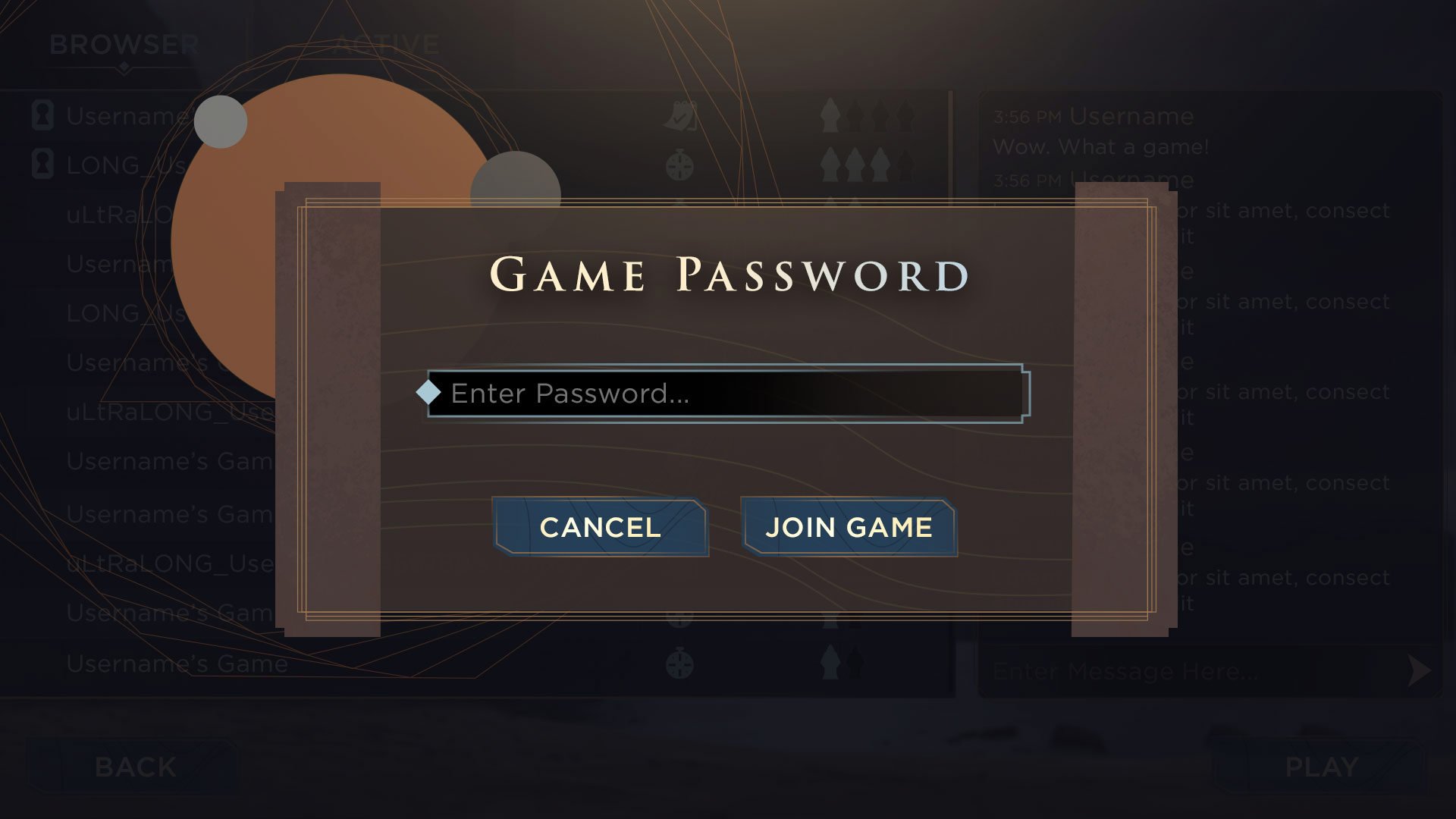
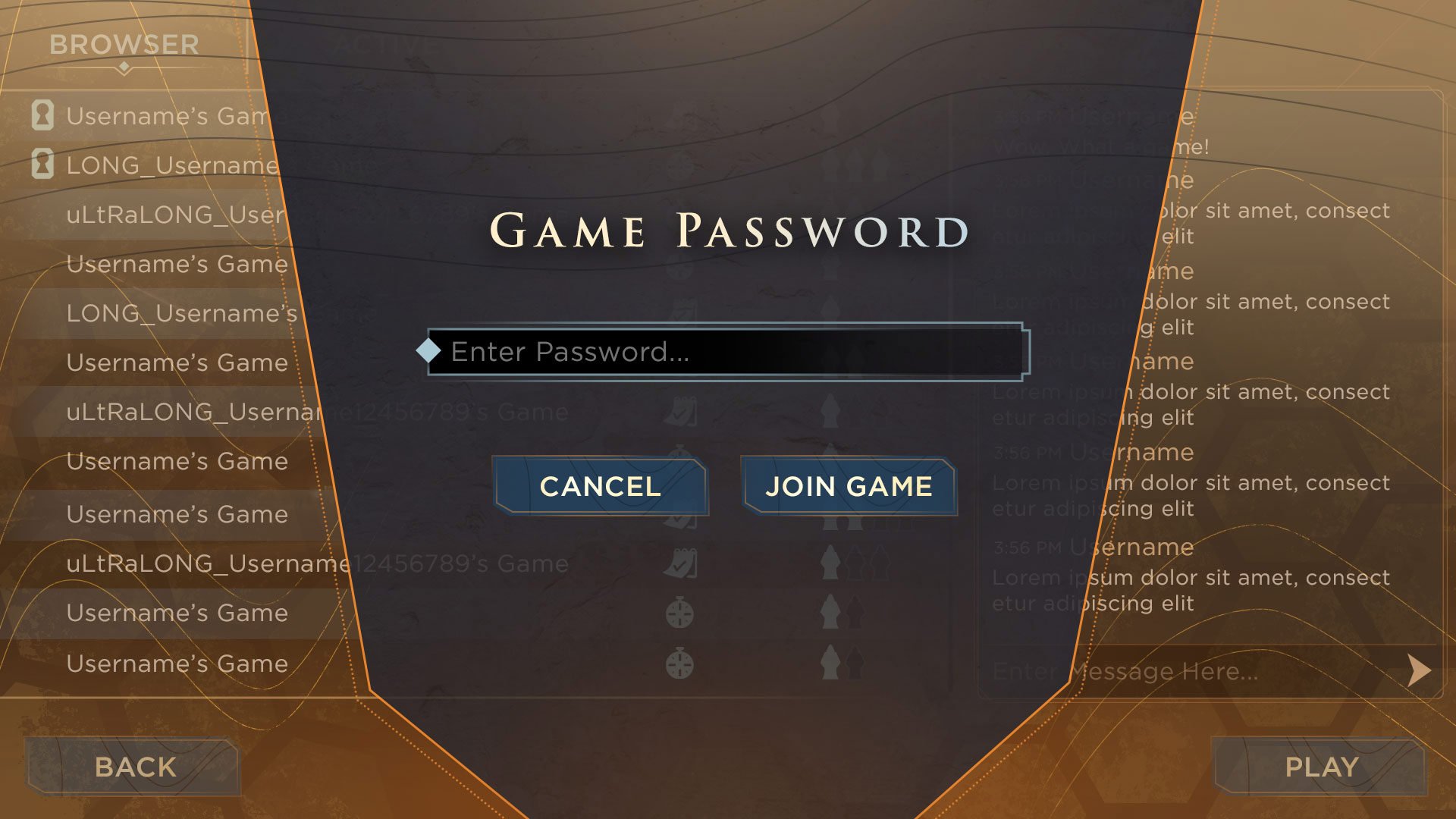
I generally wanted to push our UI style to the next level with Dune: Imperium. Given the major film IP, I wanted to give the game a AAA quality look on a AA budget. Similar to the main board UI exploration, I started off with some initial style explorations that I then passed off to UI Artists Atilla Guzey and Chris Mercado to refine and improve upon. We gathered references from games with similar subject matter that had a really striking and fresh style to use as a jumping off point.
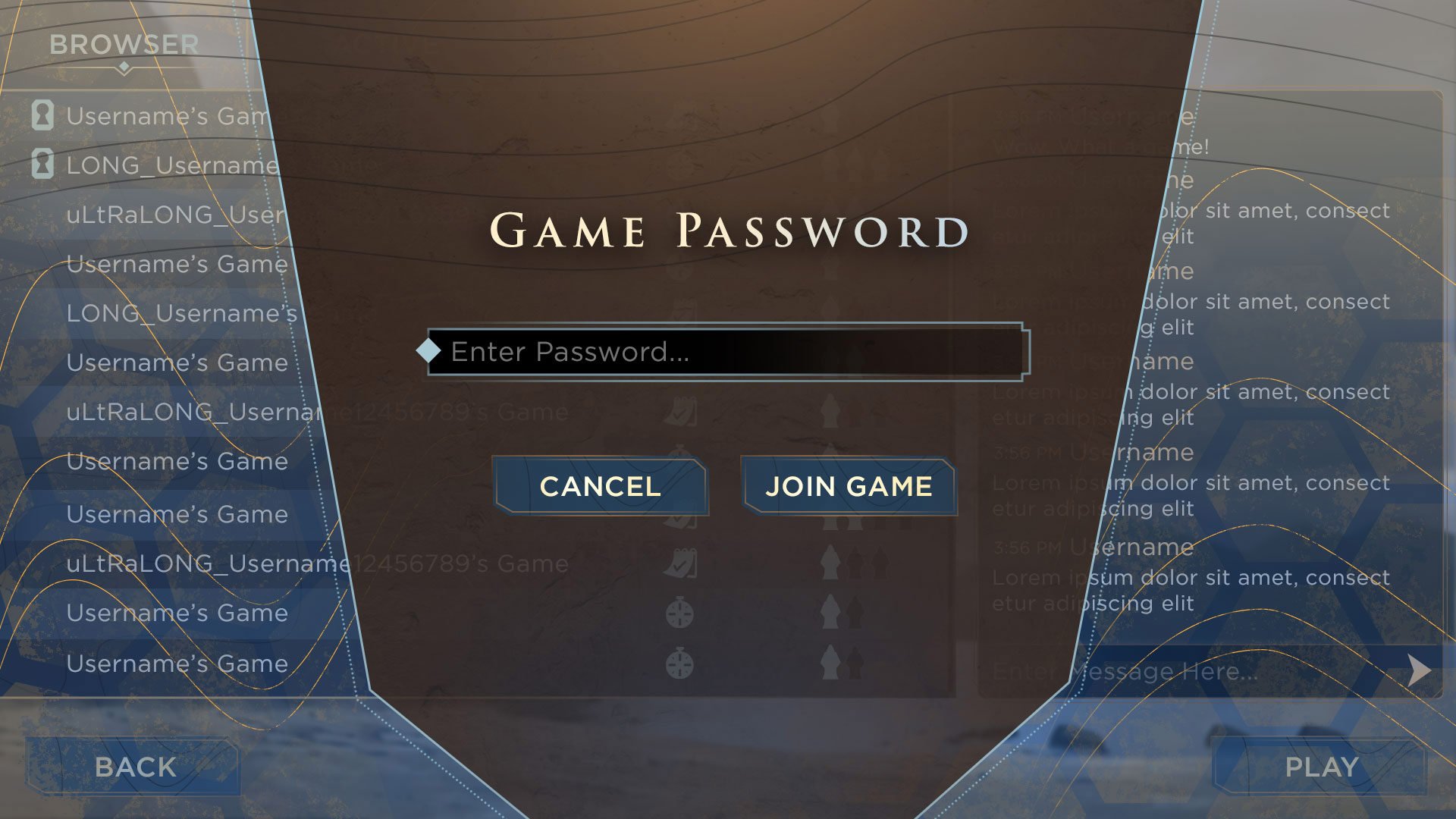
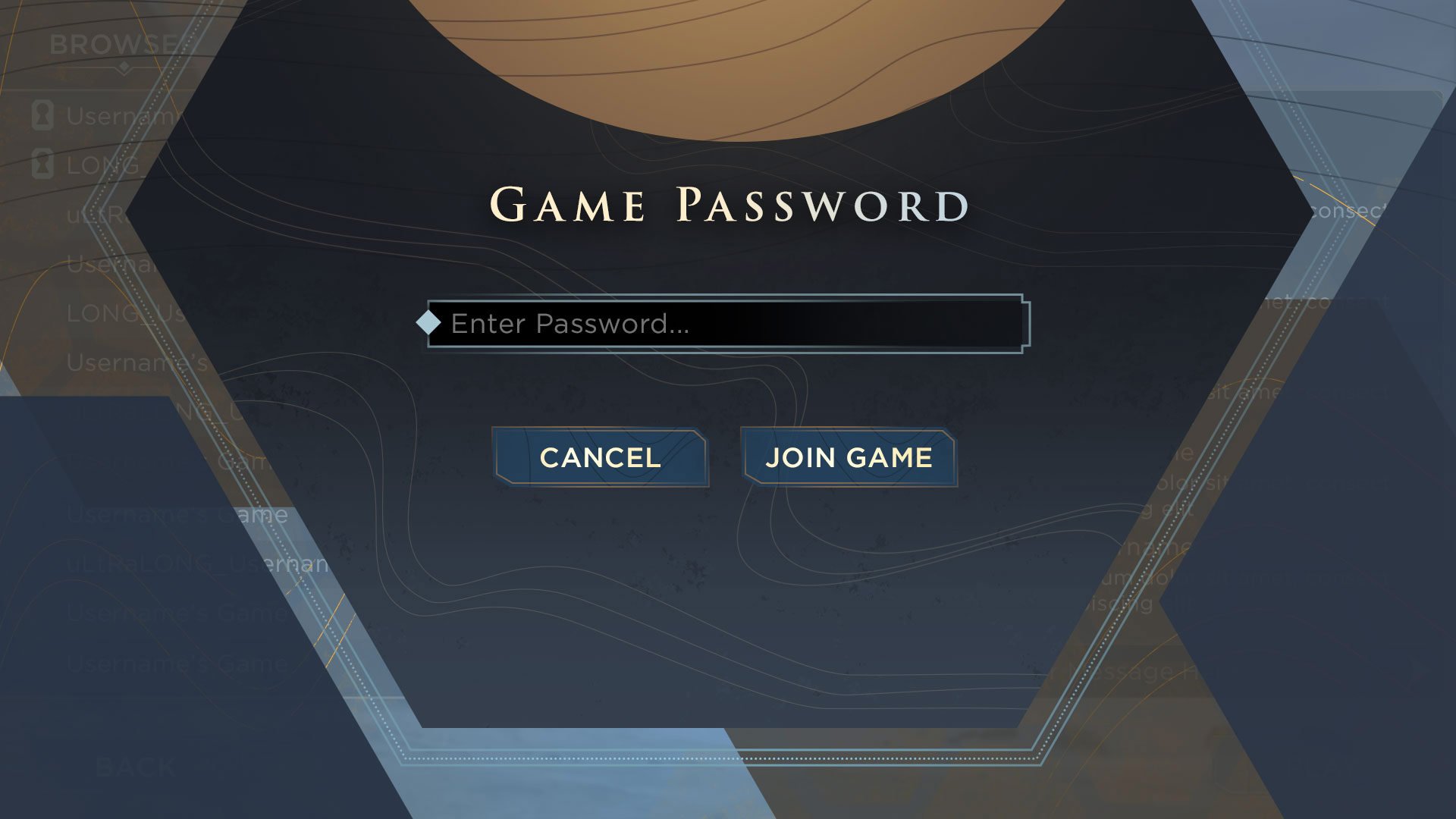
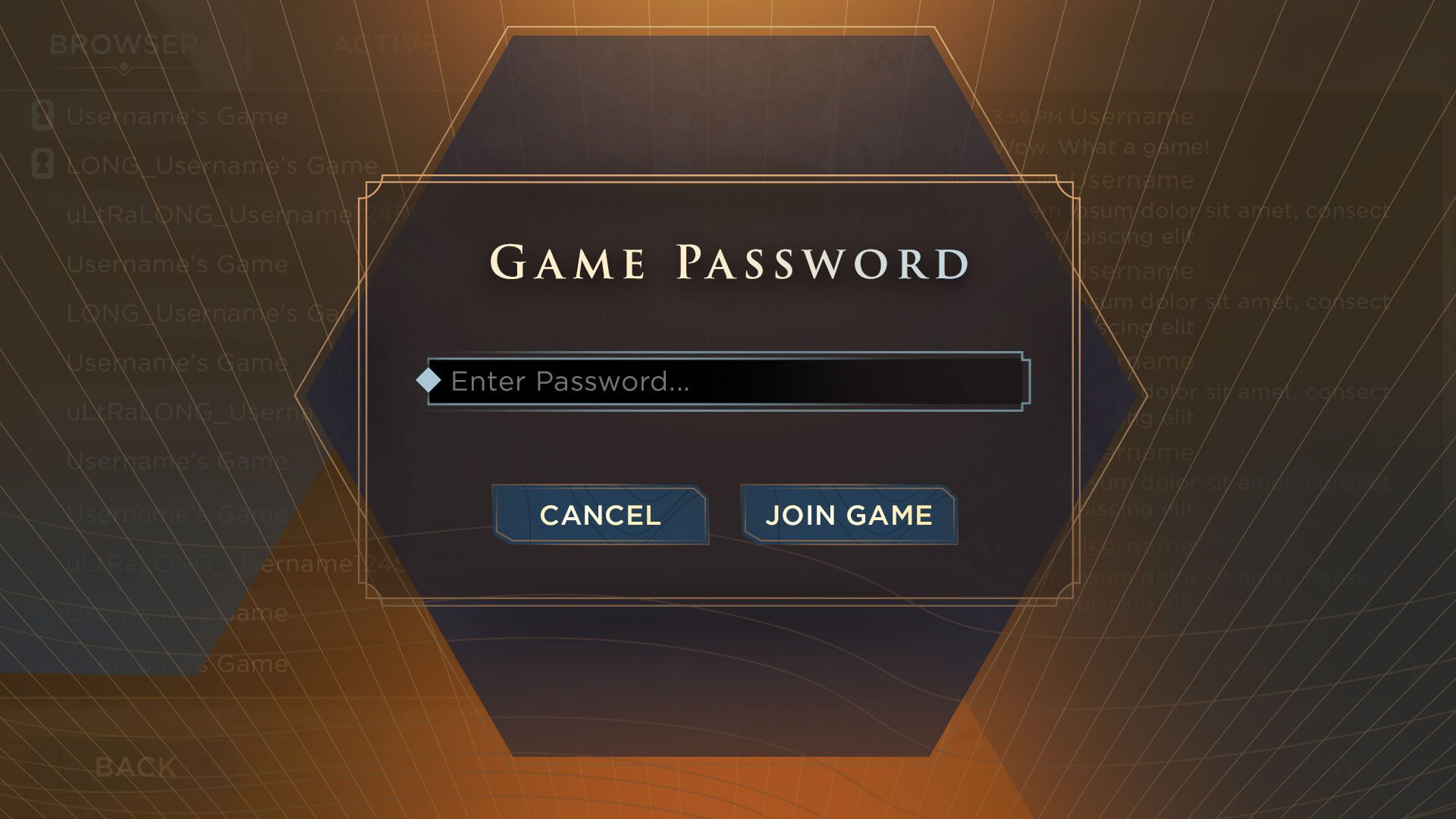
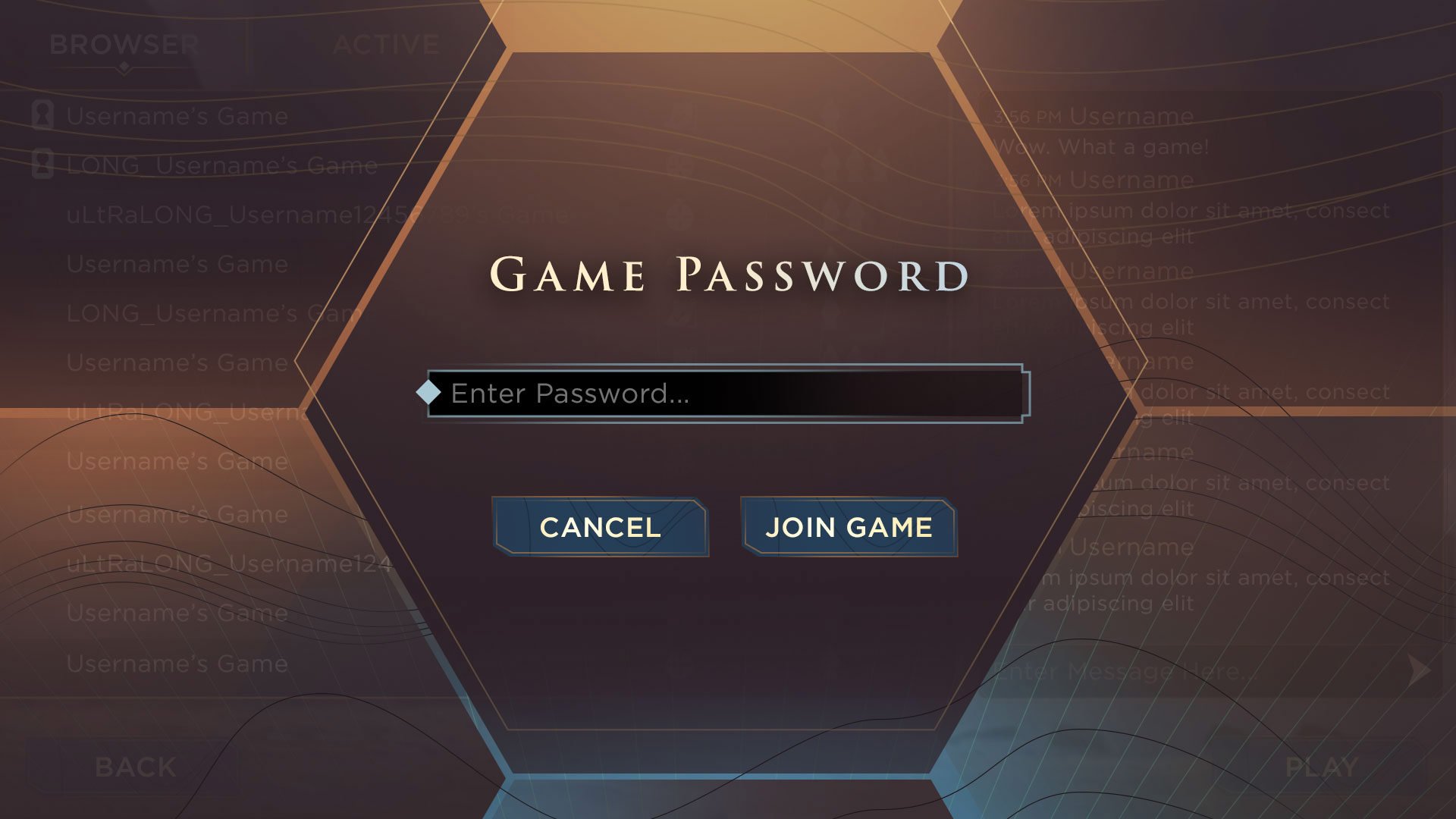
The following explorations of the “Challenges” screen show the general evolution of the UI style and the variety of options we explored.
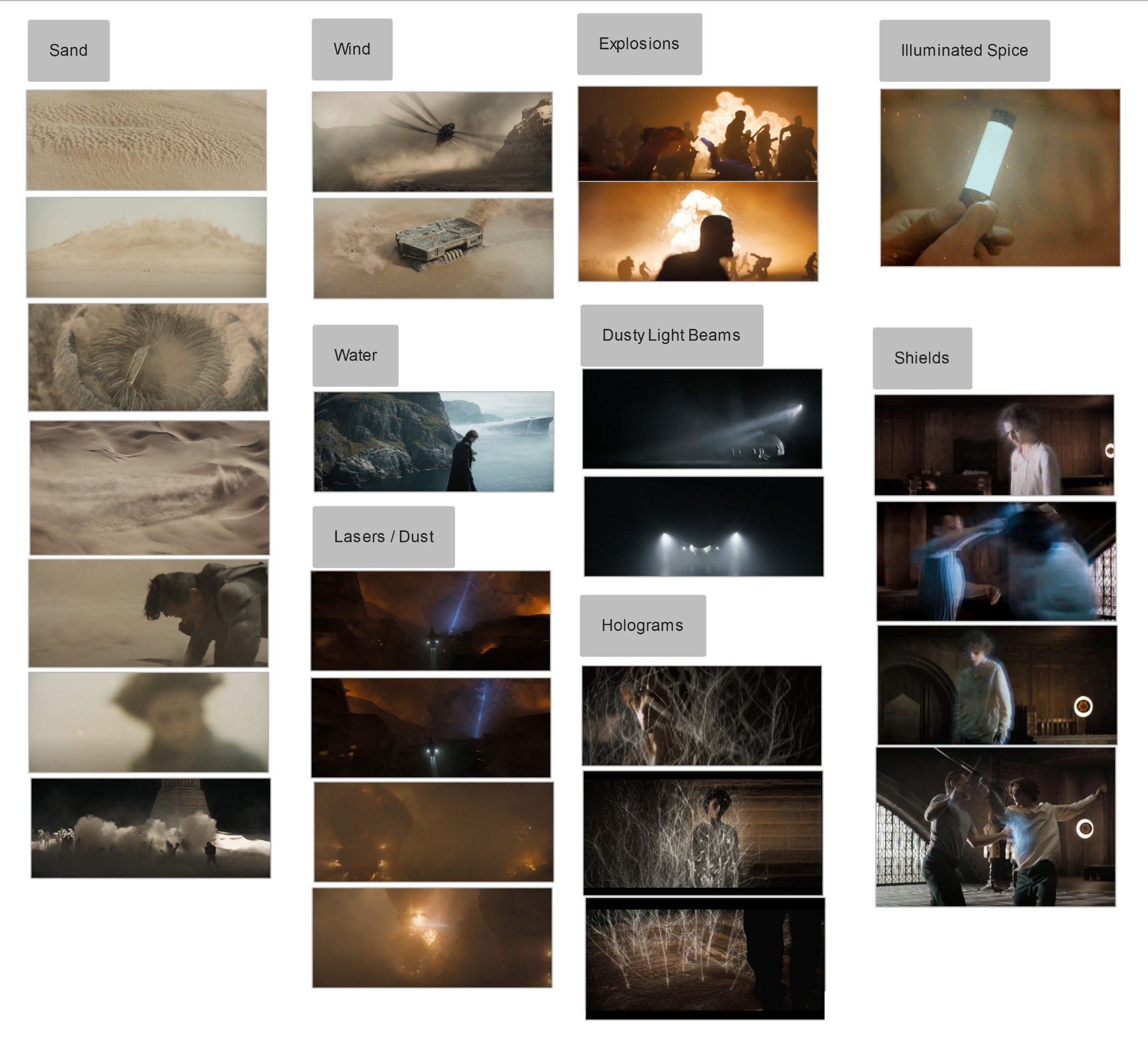
VFX
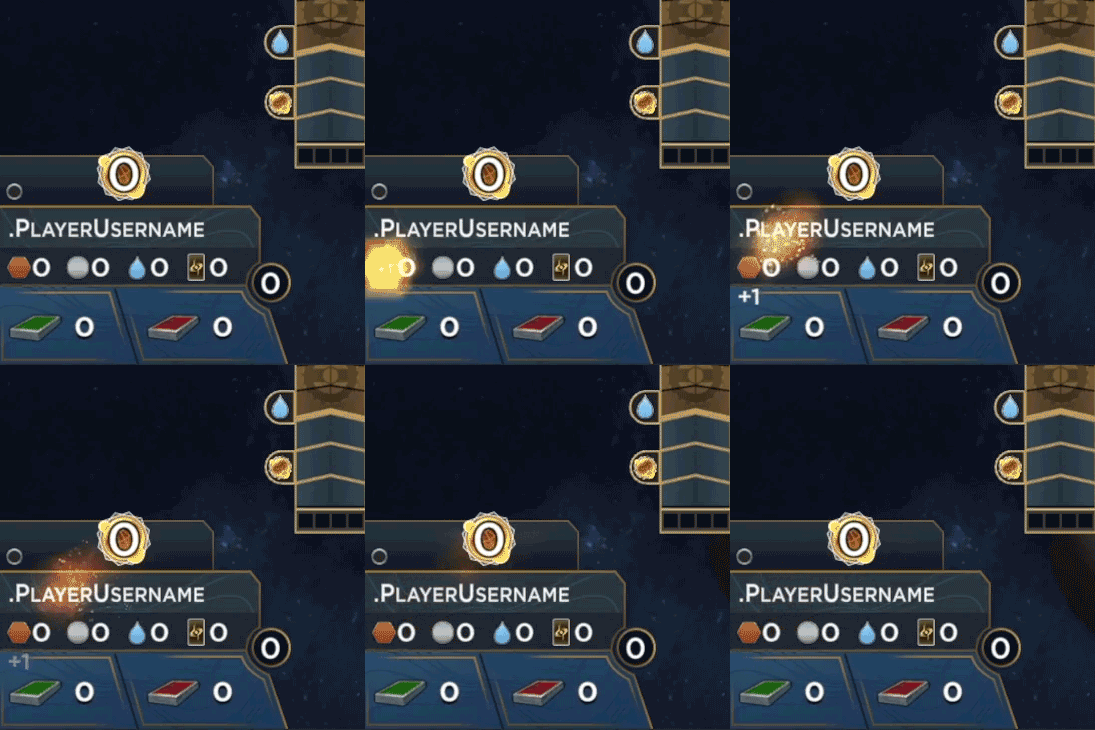
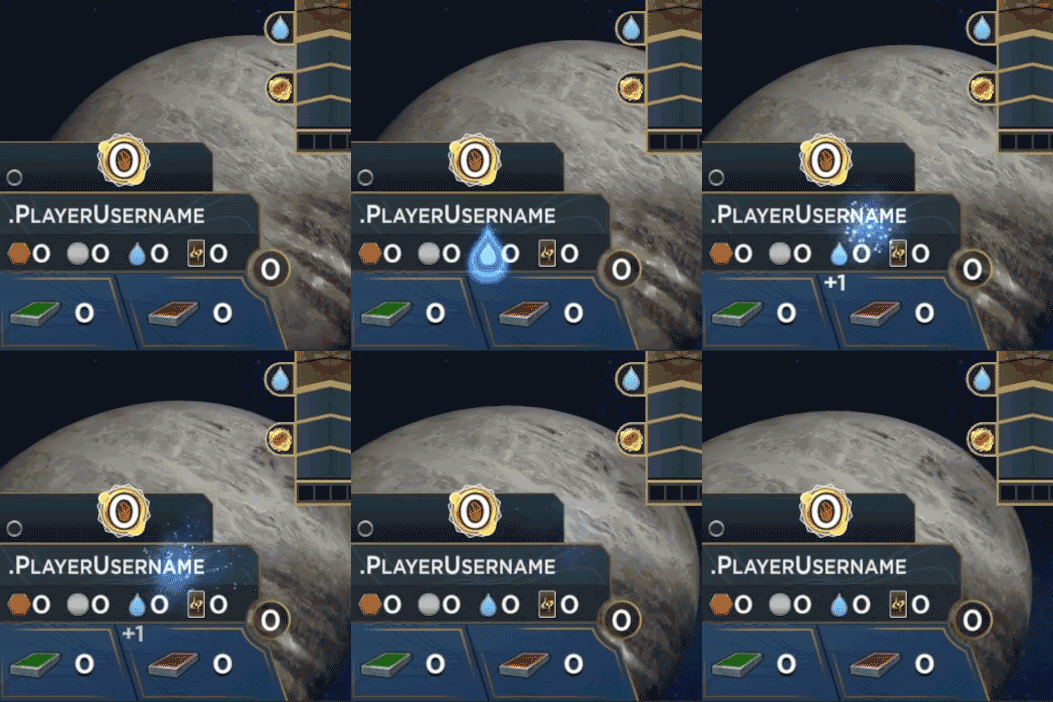
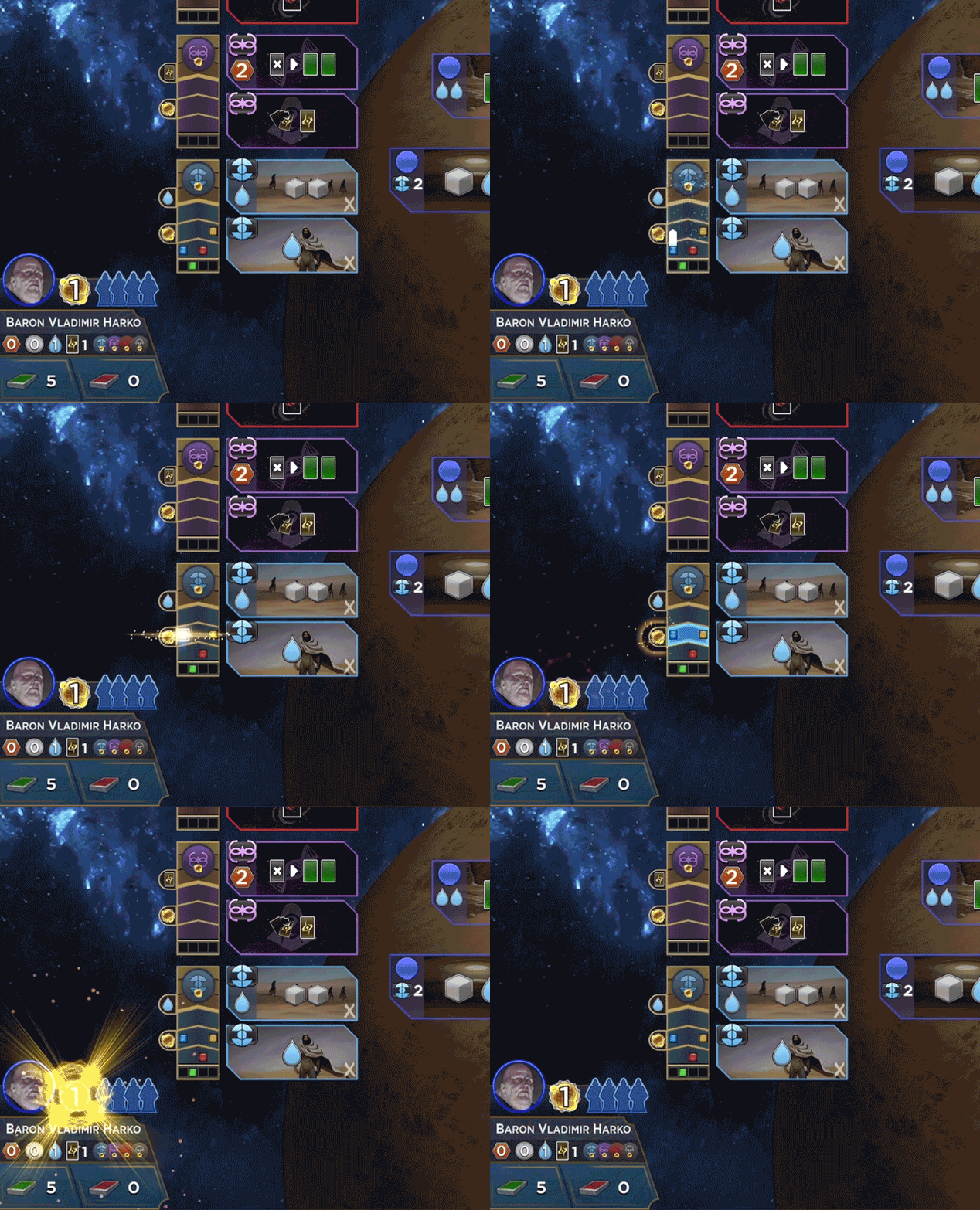
The film was a huge inspiration for the VFX in the digital version of Dune: Imperium. I love how grounded the VFX in the film feels and the color it contributes to an otherwise beige experience. I was excited to make the VFX in the game feel reminiscent of the film while simultaneously servicing gameplay needs.
I began by gathering as much variety of reference I could find in the film and compiled them into a mood board for the style guide on our wiki. The references were accompanied by short, easy to reference style notes for our Senior VFX Artist, Steve Thoma to use as he began establishing the style.
Once I had a rough style guide and reference ready to go, we had a VFX kickoff with the full team to discuss the direction and allow others on the team to contribute to the direction.
The following videos are VFX explorations from Steve.
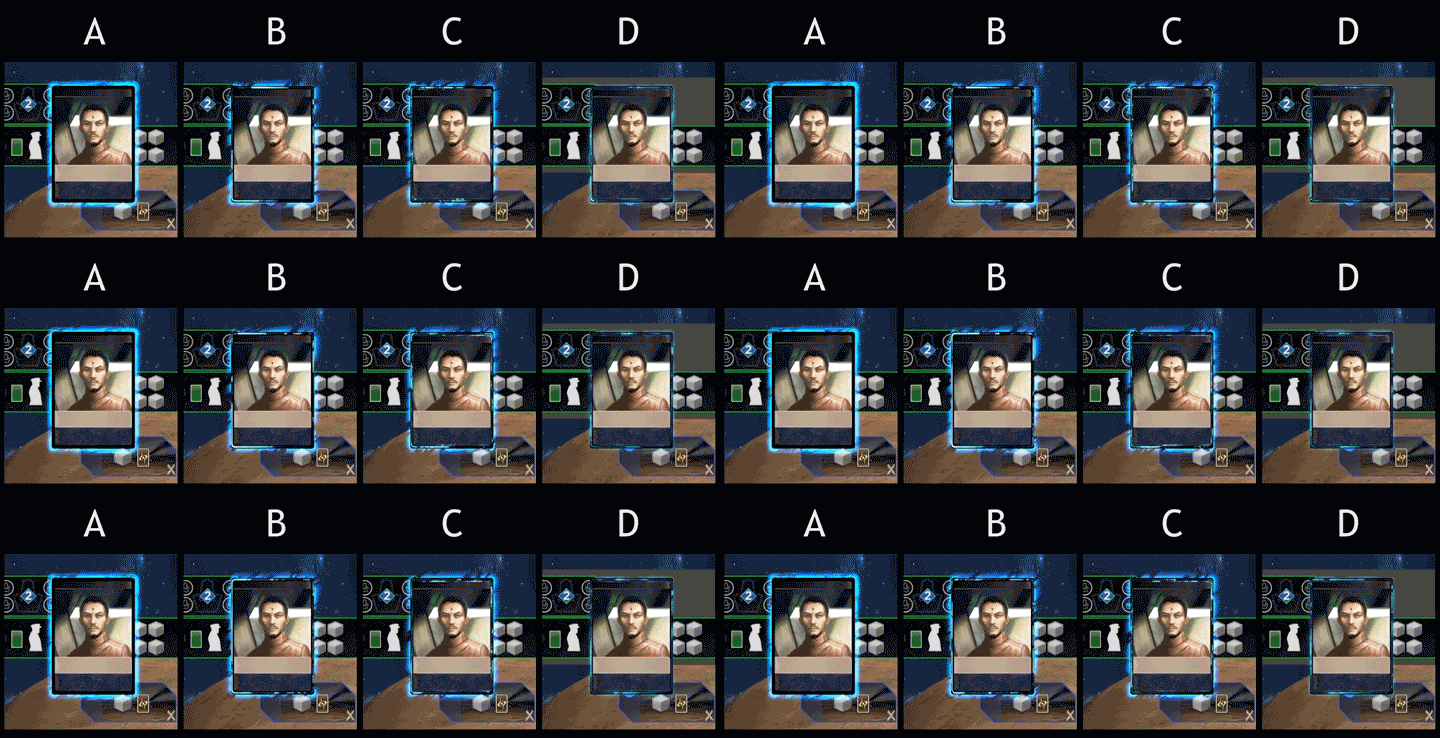
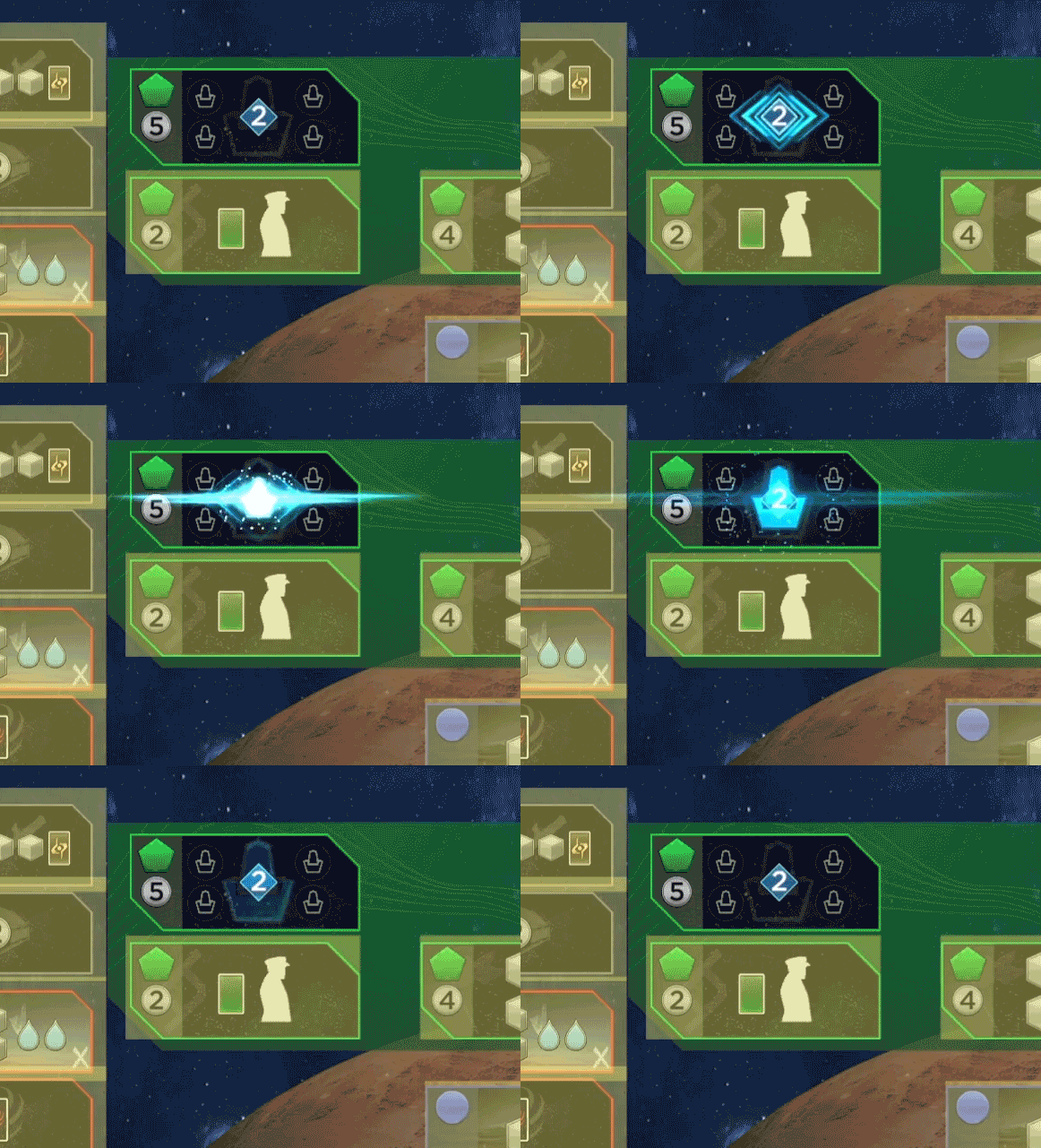
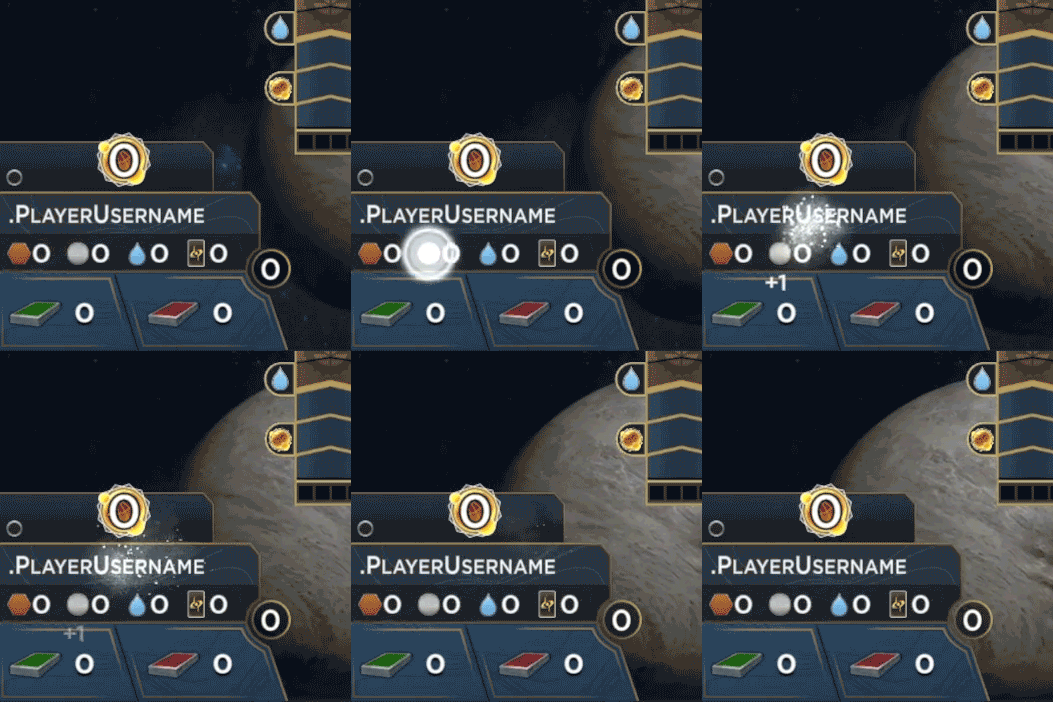
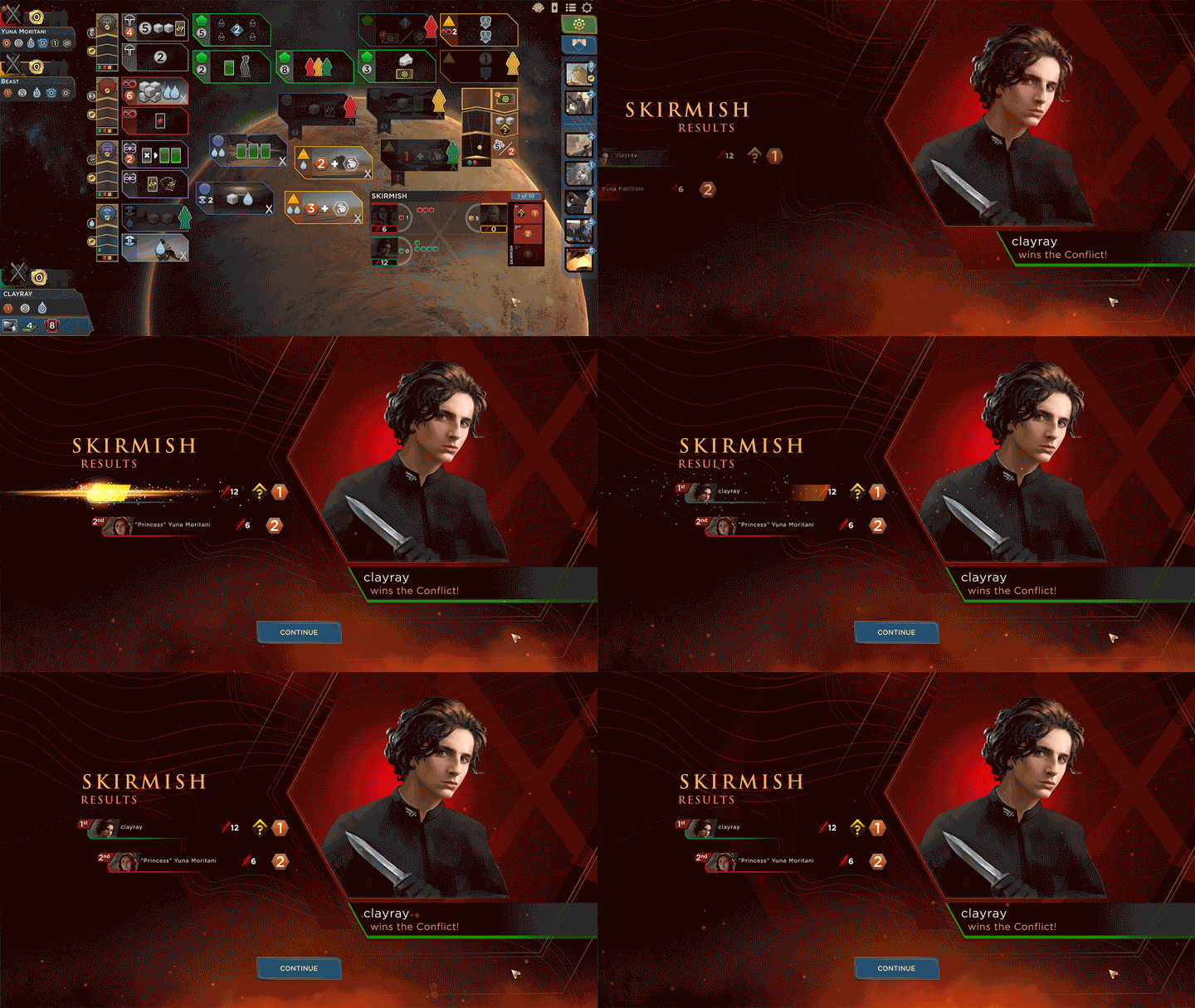
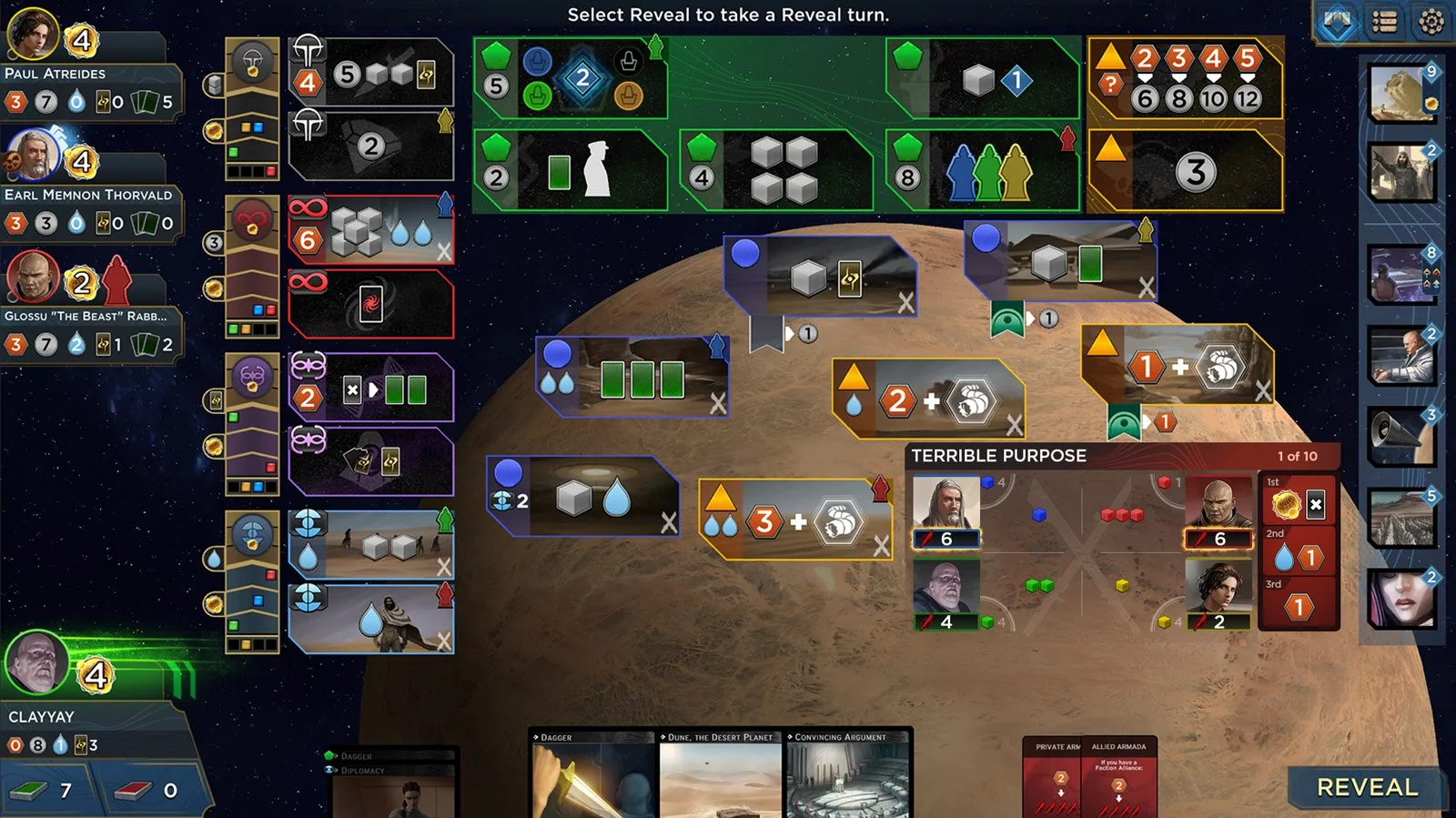
After many iterations, playtesting with implemented UI, discussions with design we ended up with a clean, minimal UI that delivered a intuitive UX that players have praised. Board game adaptations can be a tricky balance of information density and video game immersion. We had to make some sacrifices along the way but I’m proud of where we landed and am happy that new and veteran users alike have enjoyed the experience we built.
Below are two videos showing the conflict sequence and the end of game sequence. These videos show a good vertical slice of how the final product ended up.
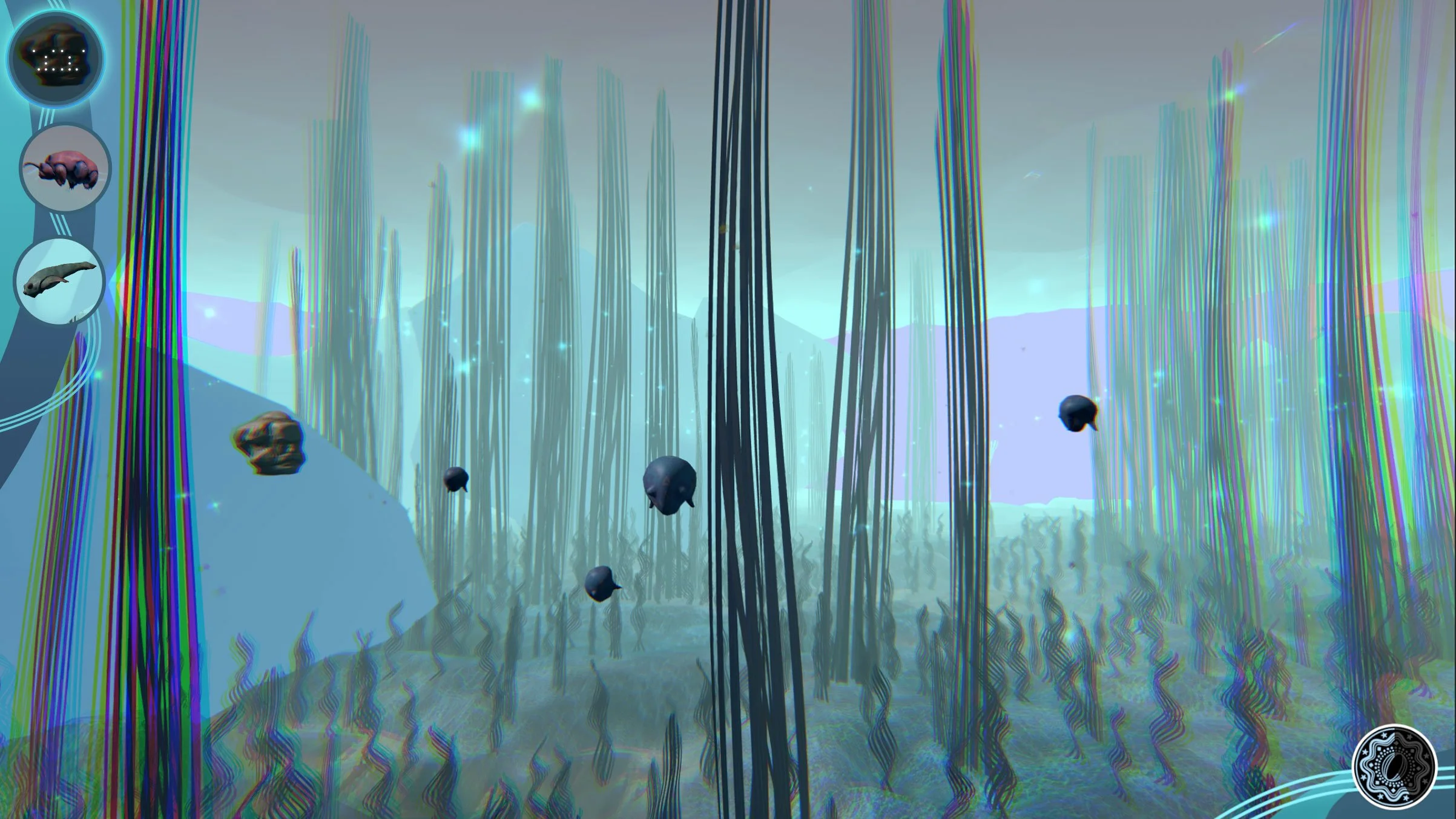
Meow Wolf Installation
3D Environment art & concept design
Software Used: Photoshop, Zbrush, Maya, Substance Painter, UnityInterdimensional transit map
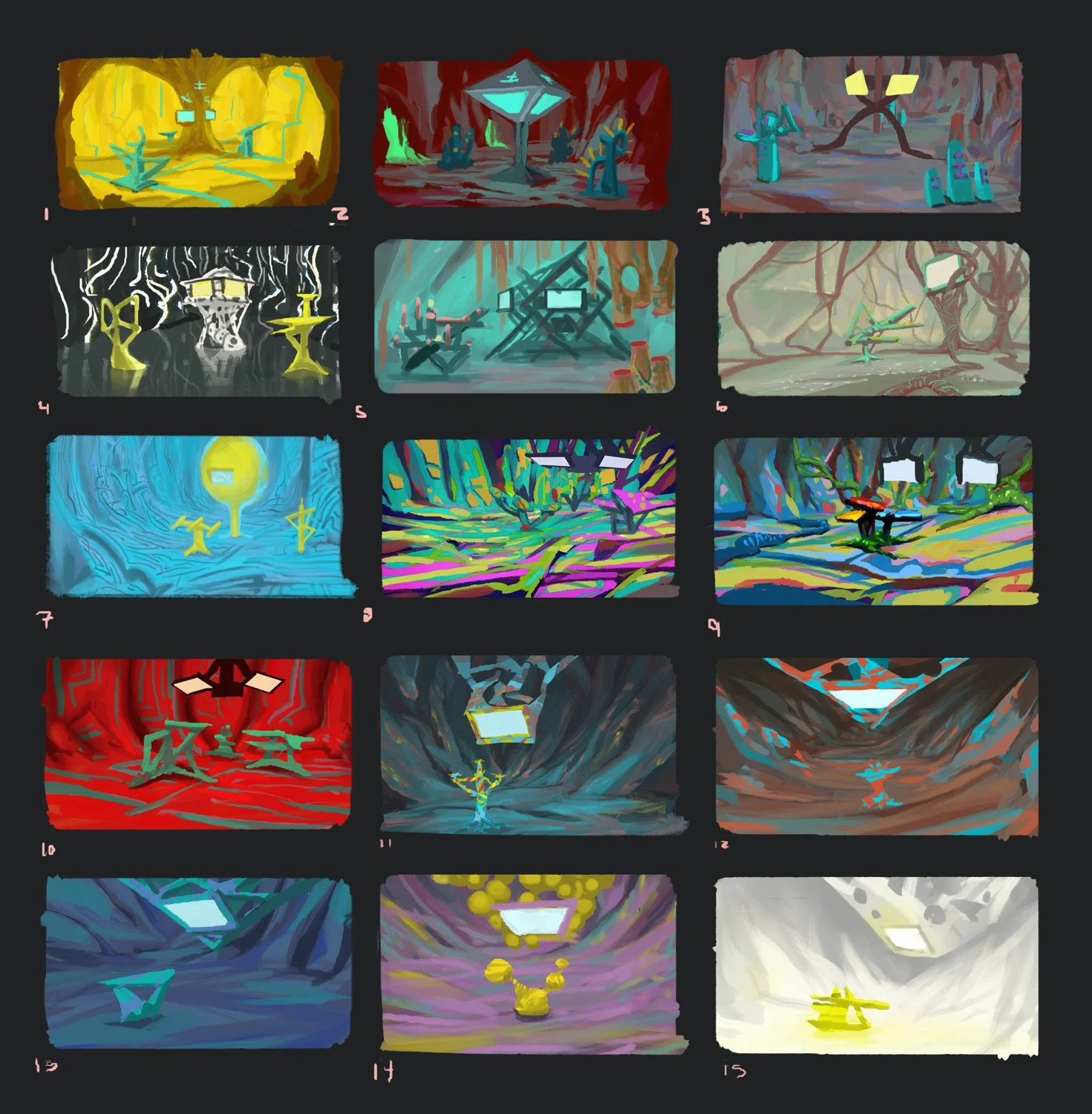
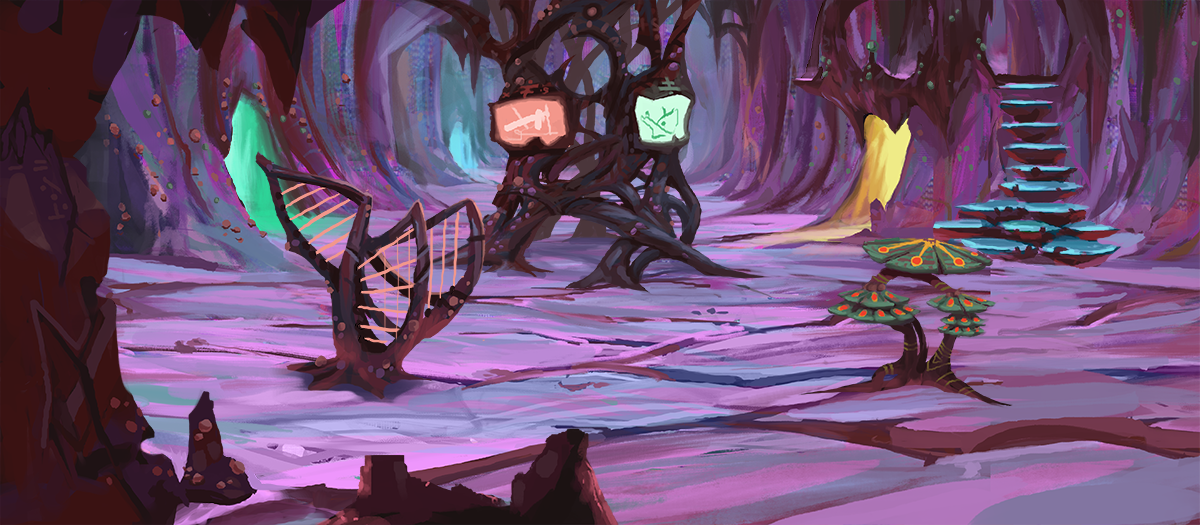
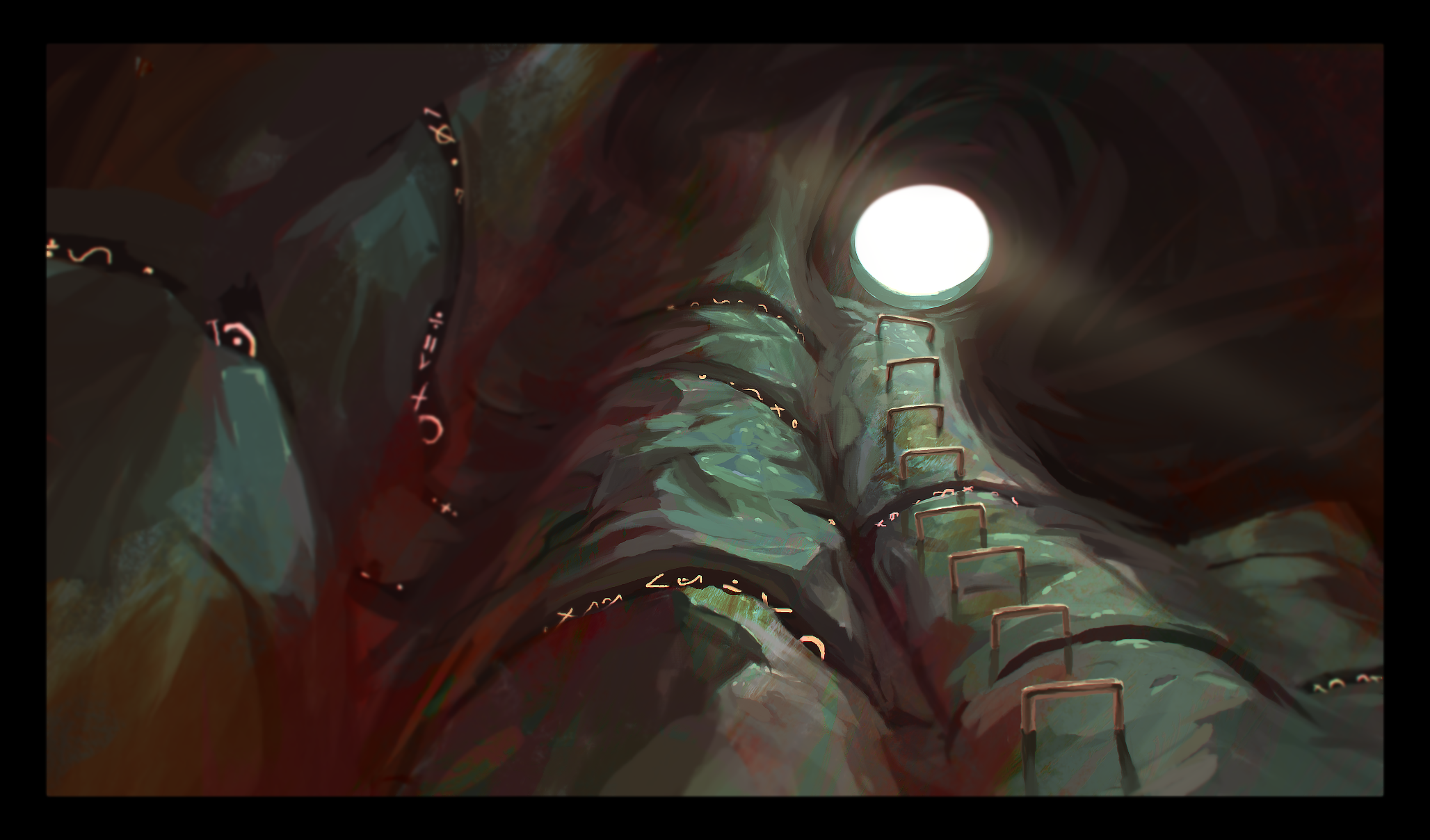
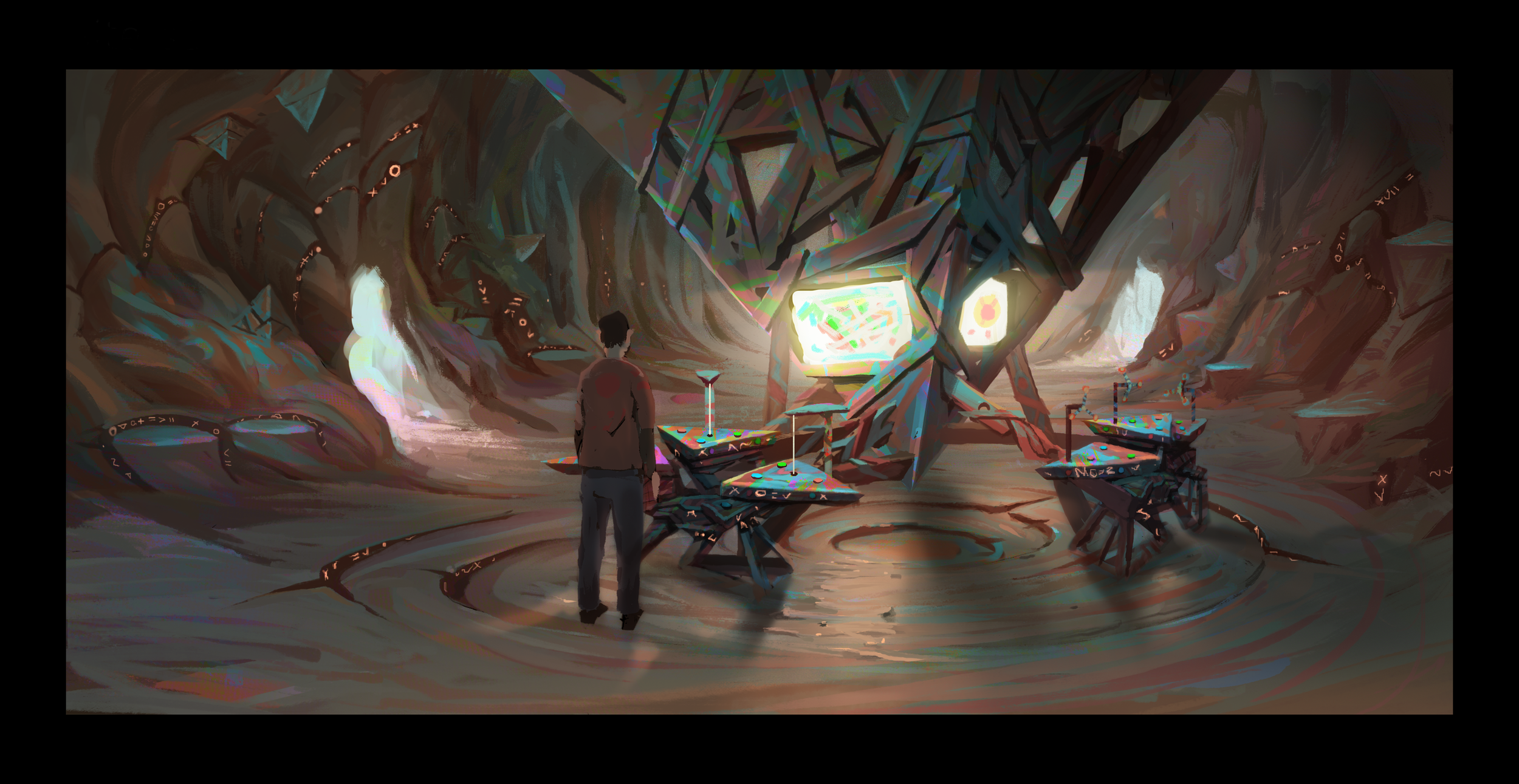
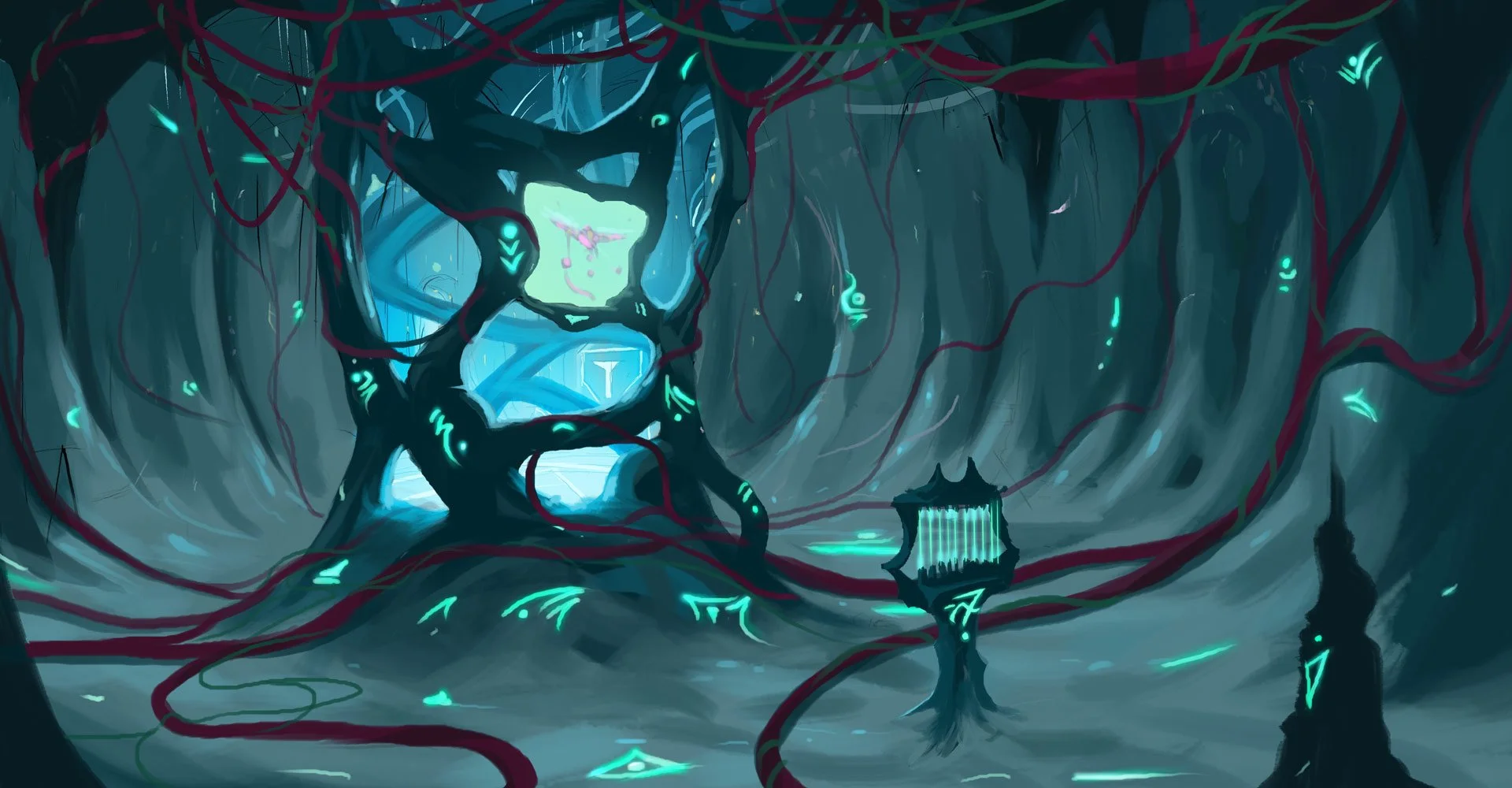
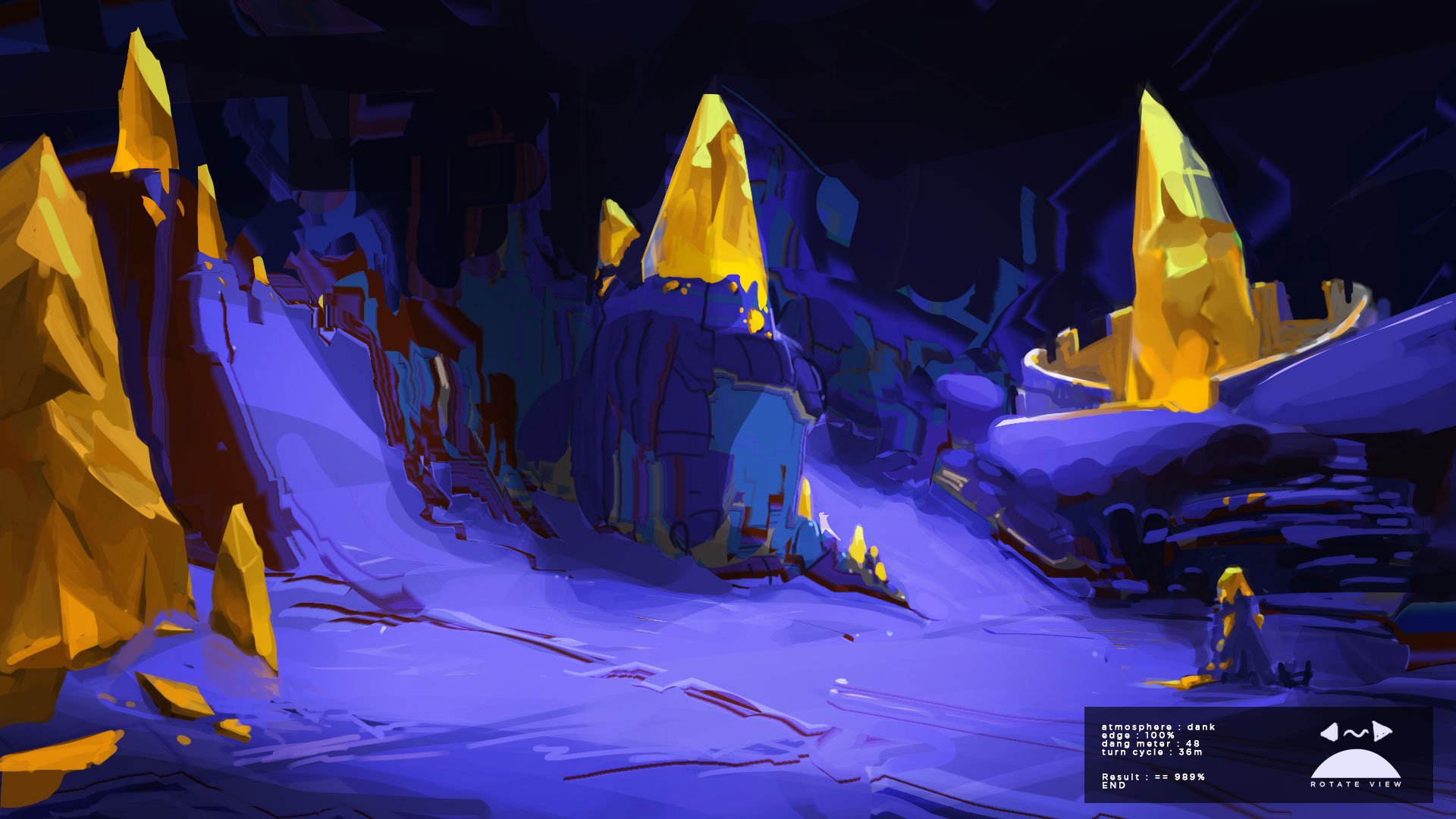
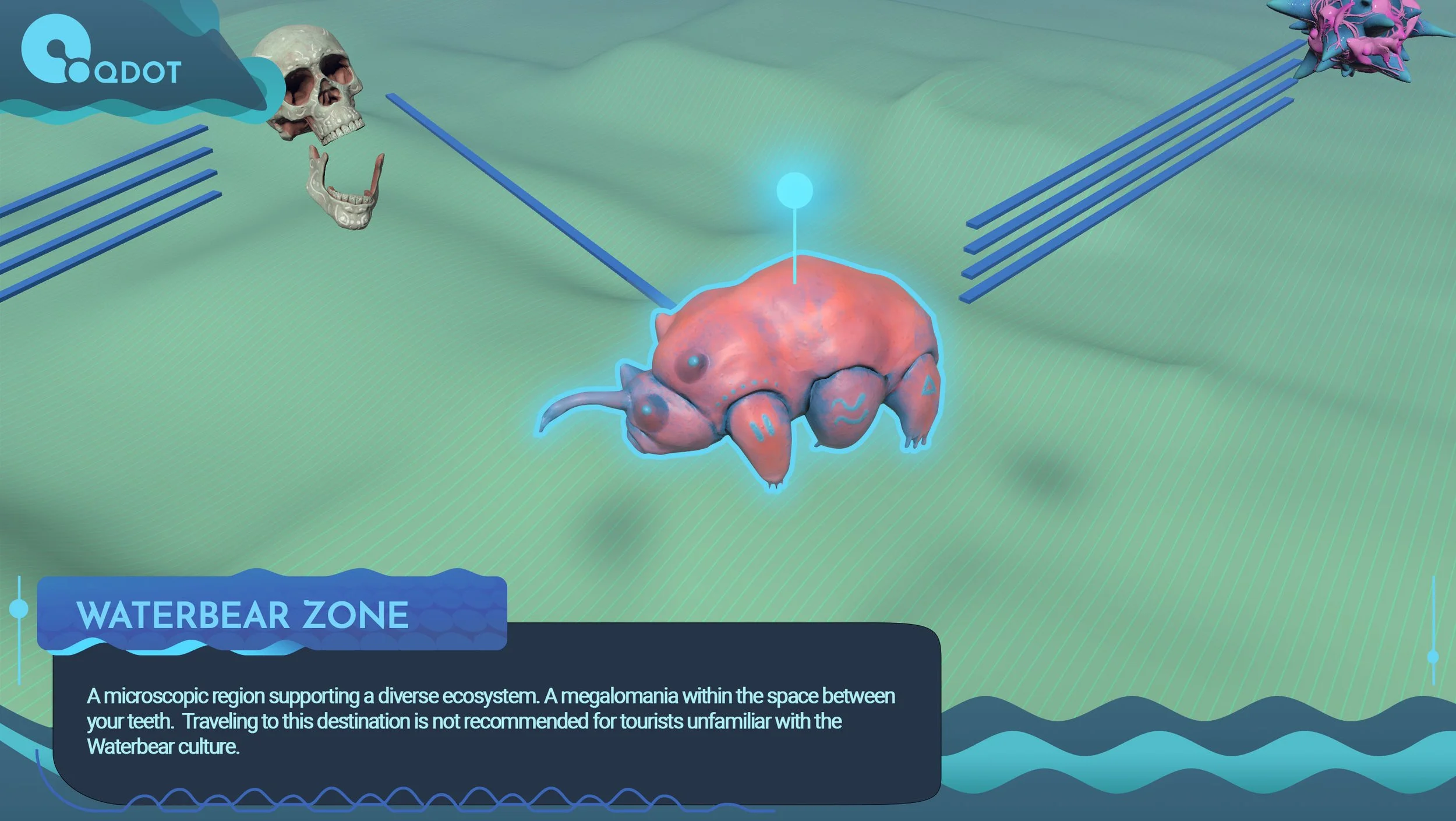
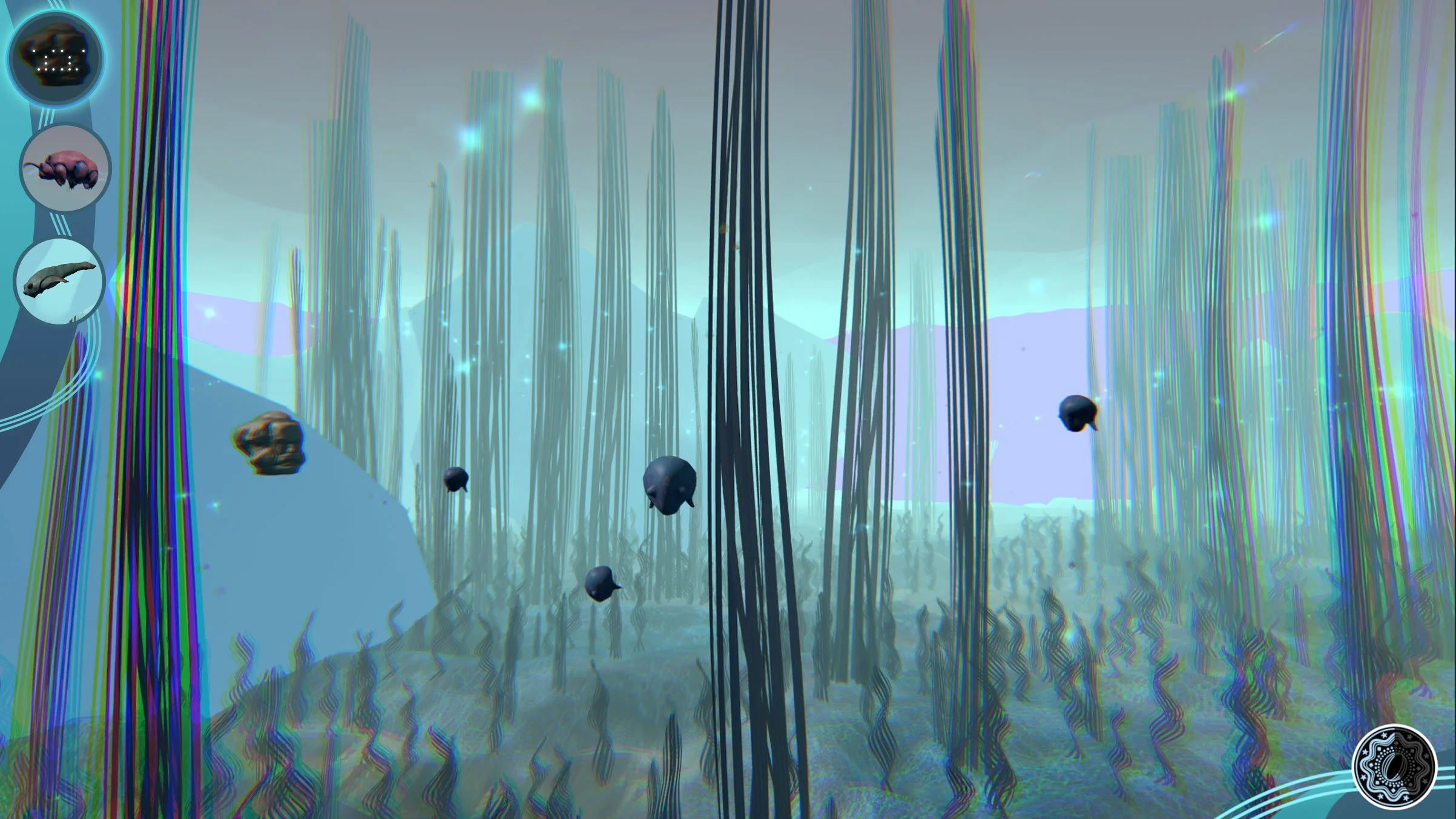
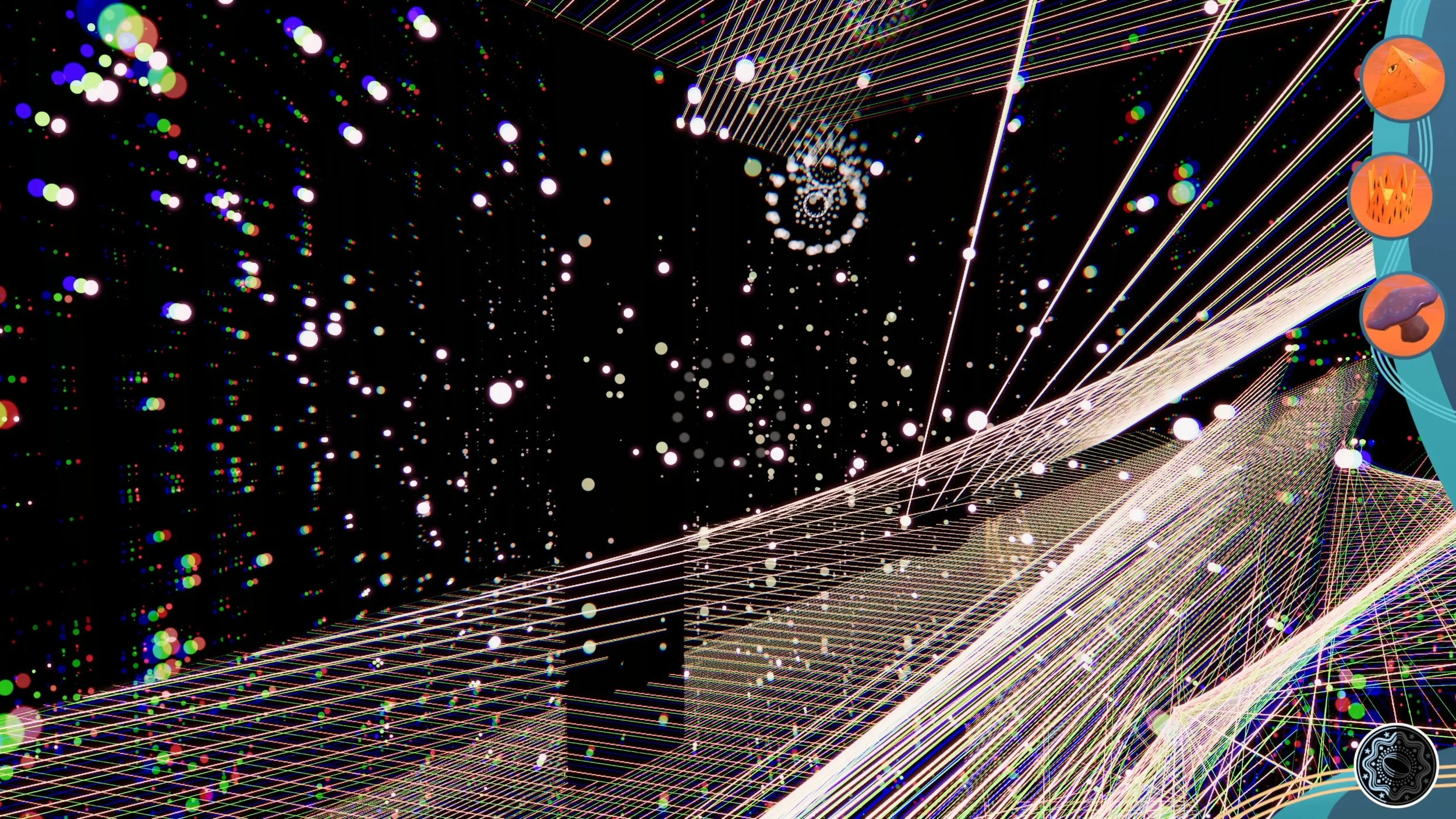
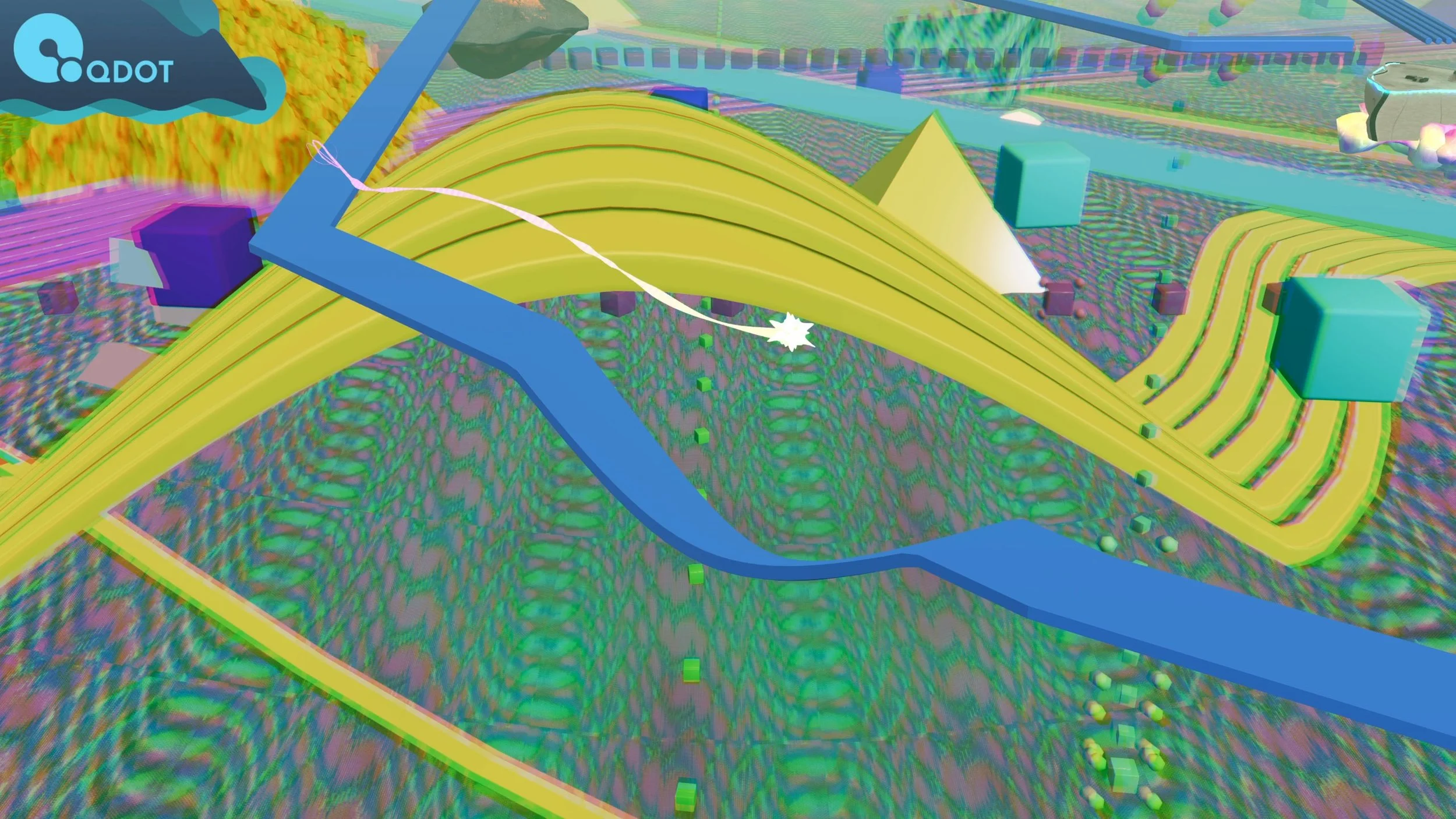
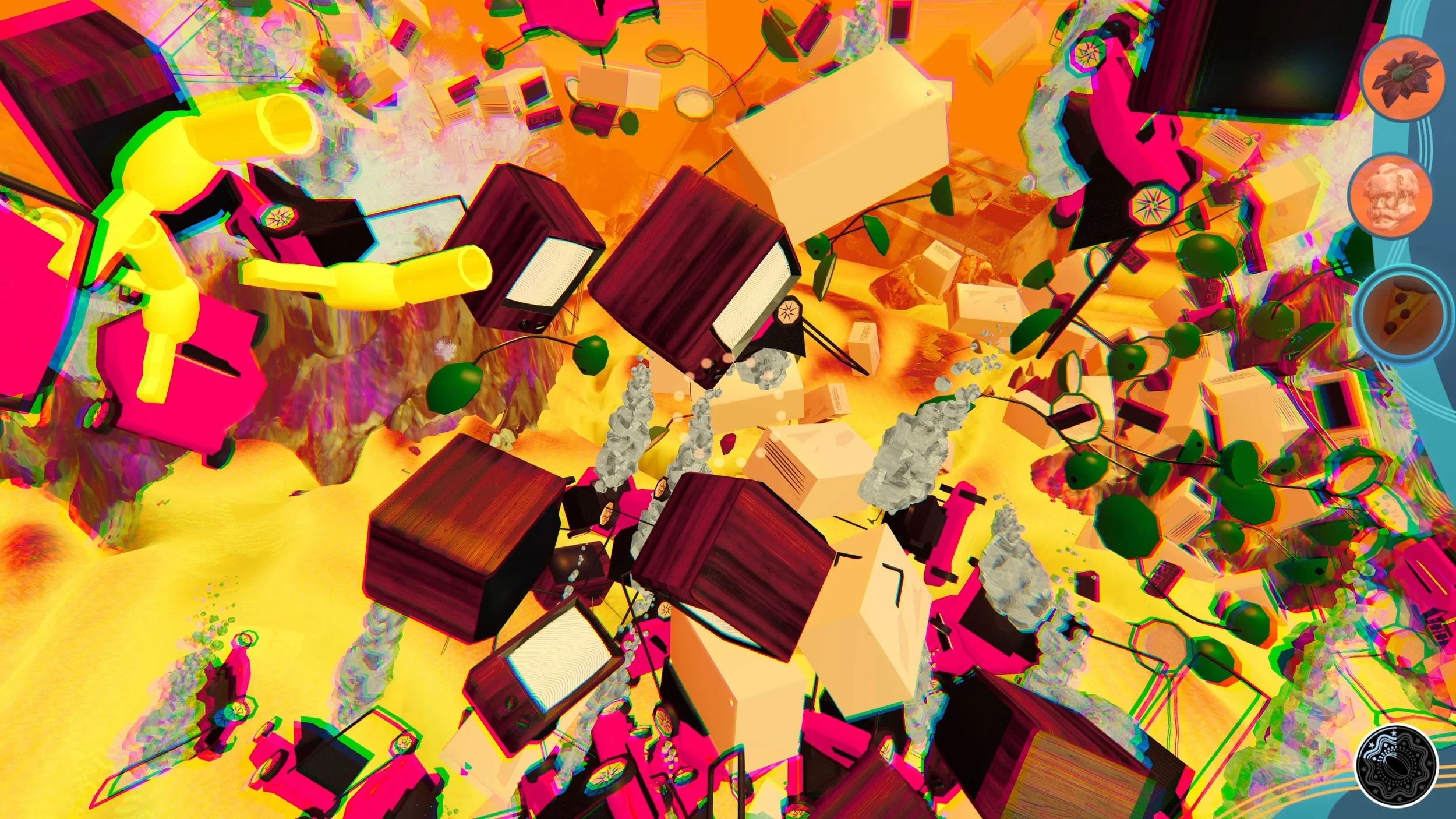
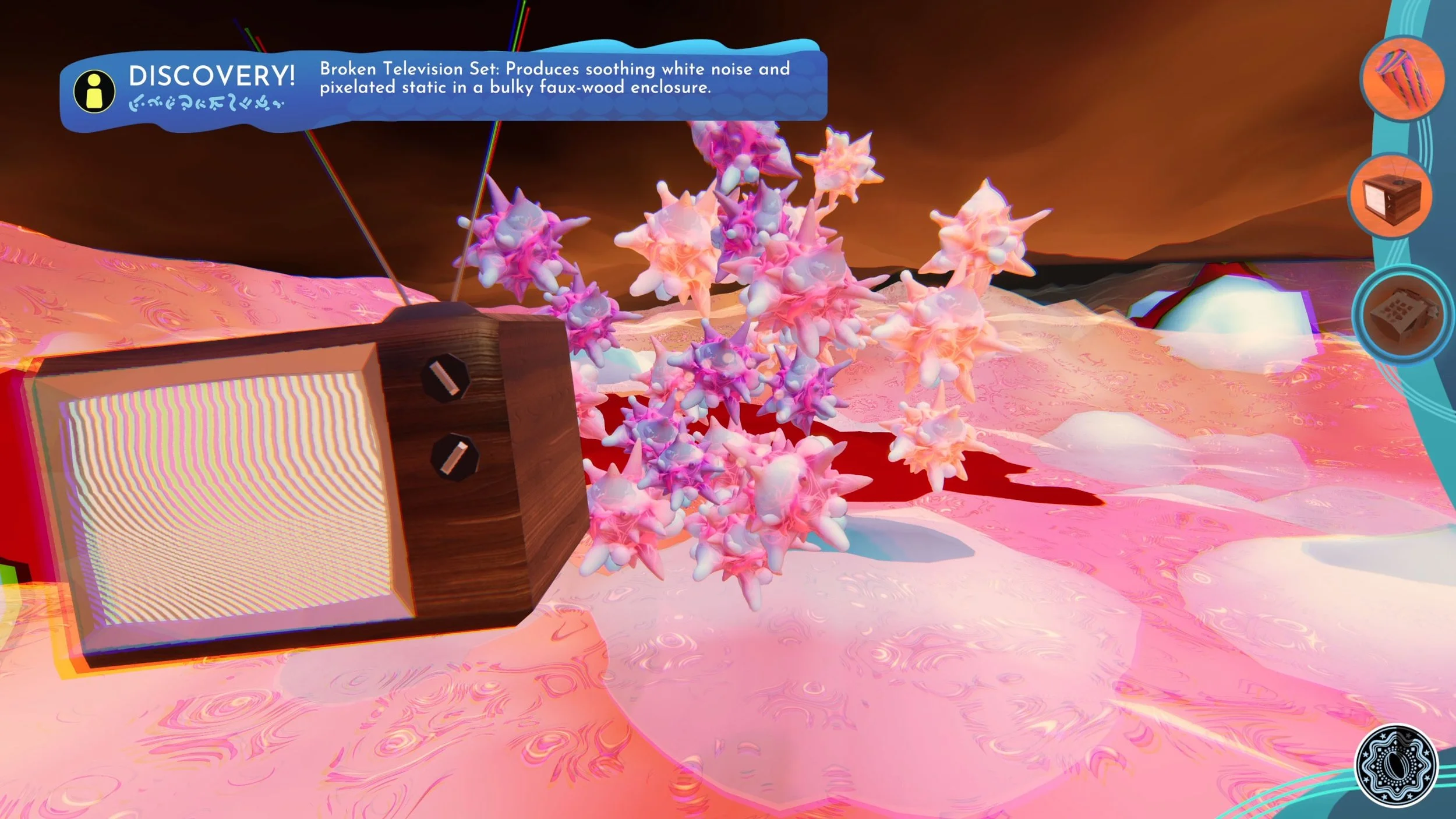
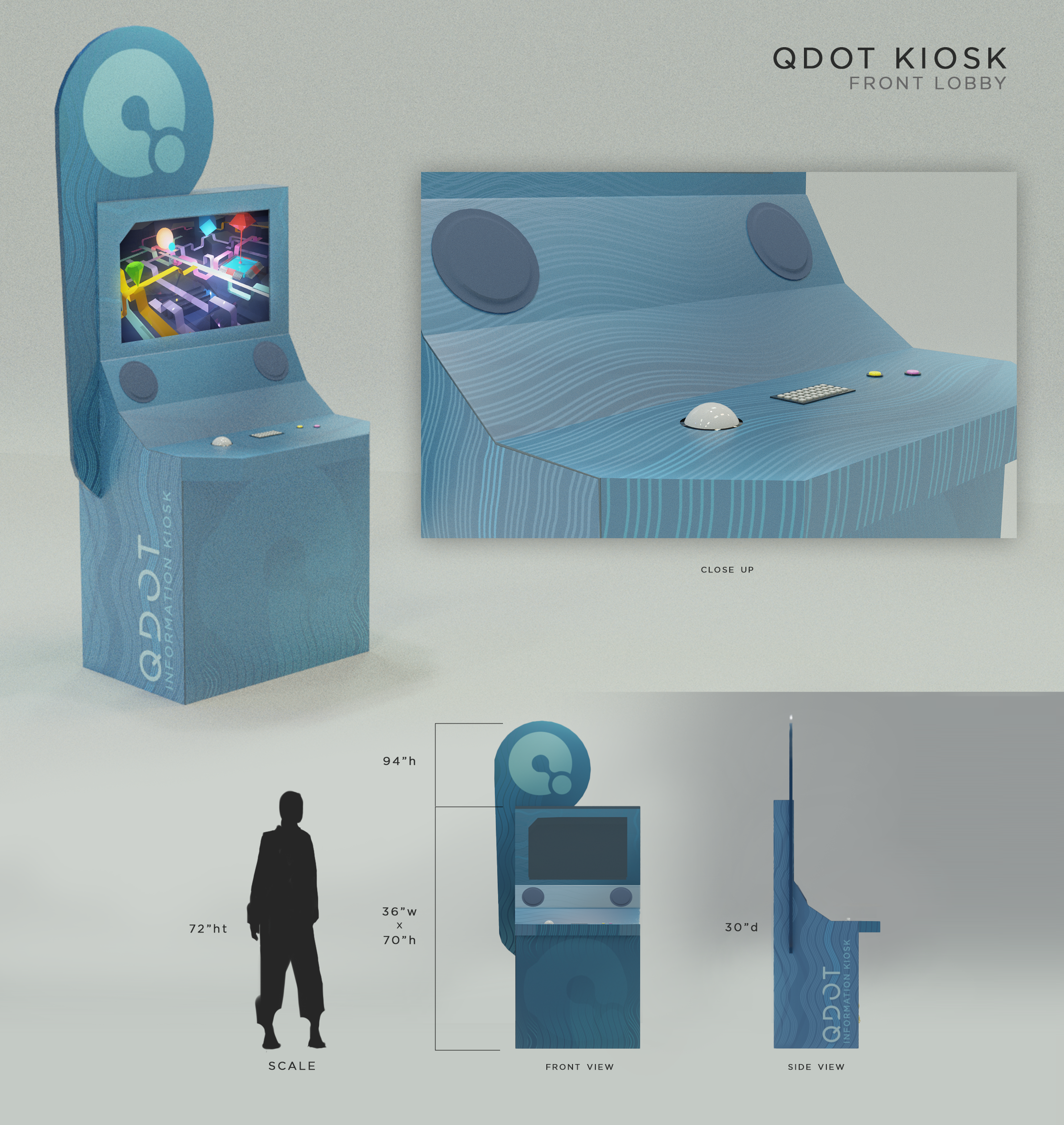
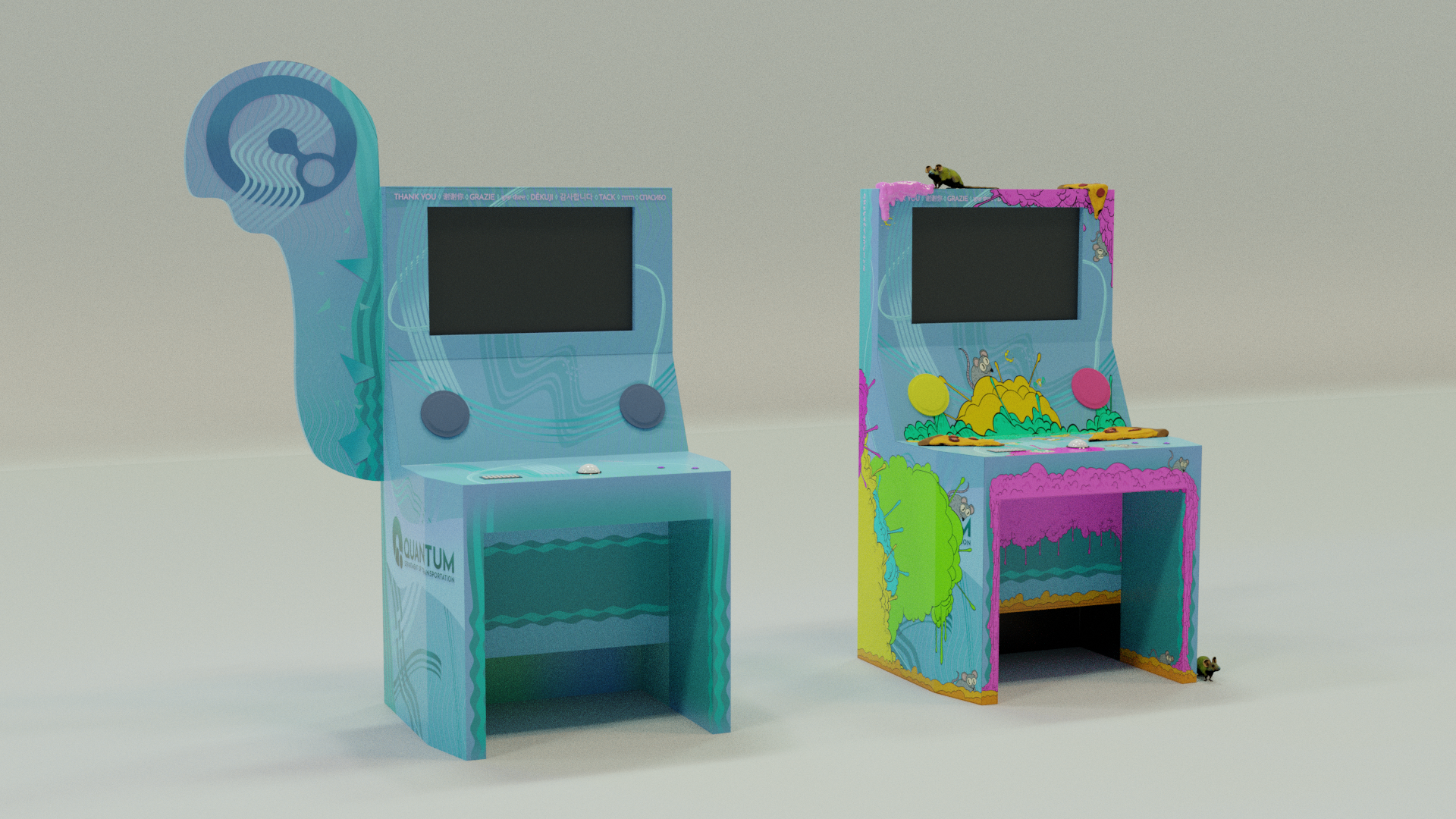
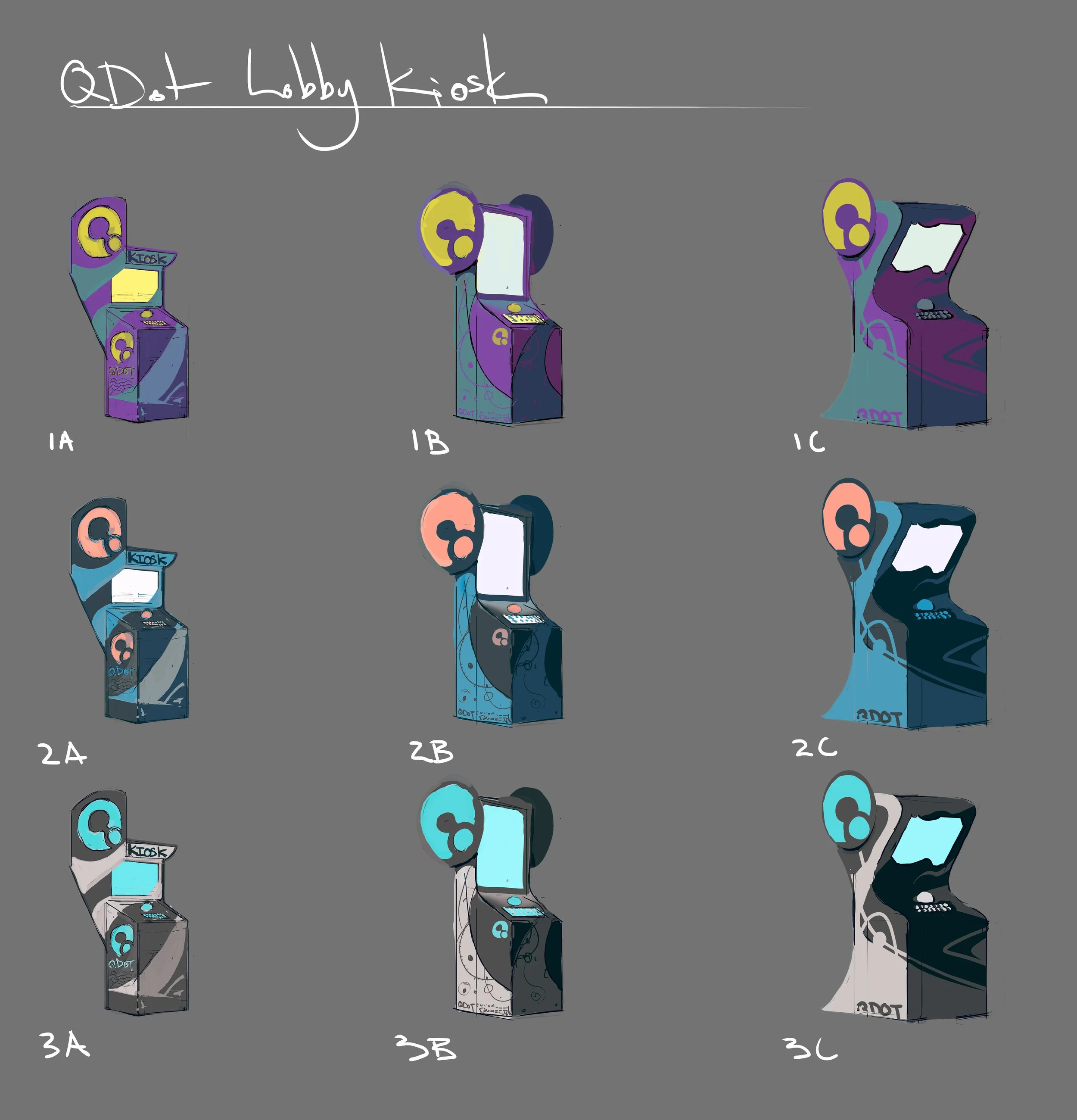
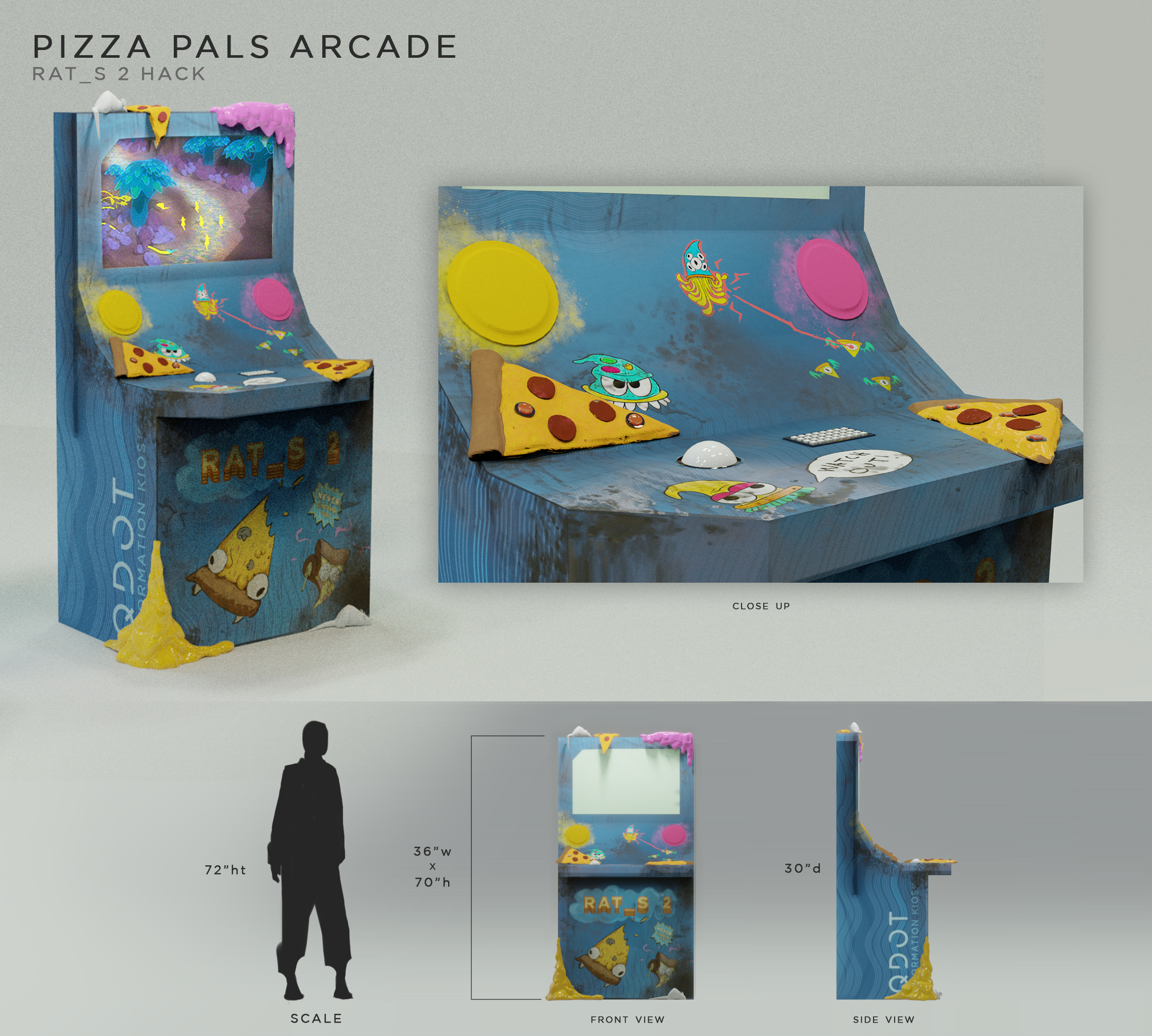
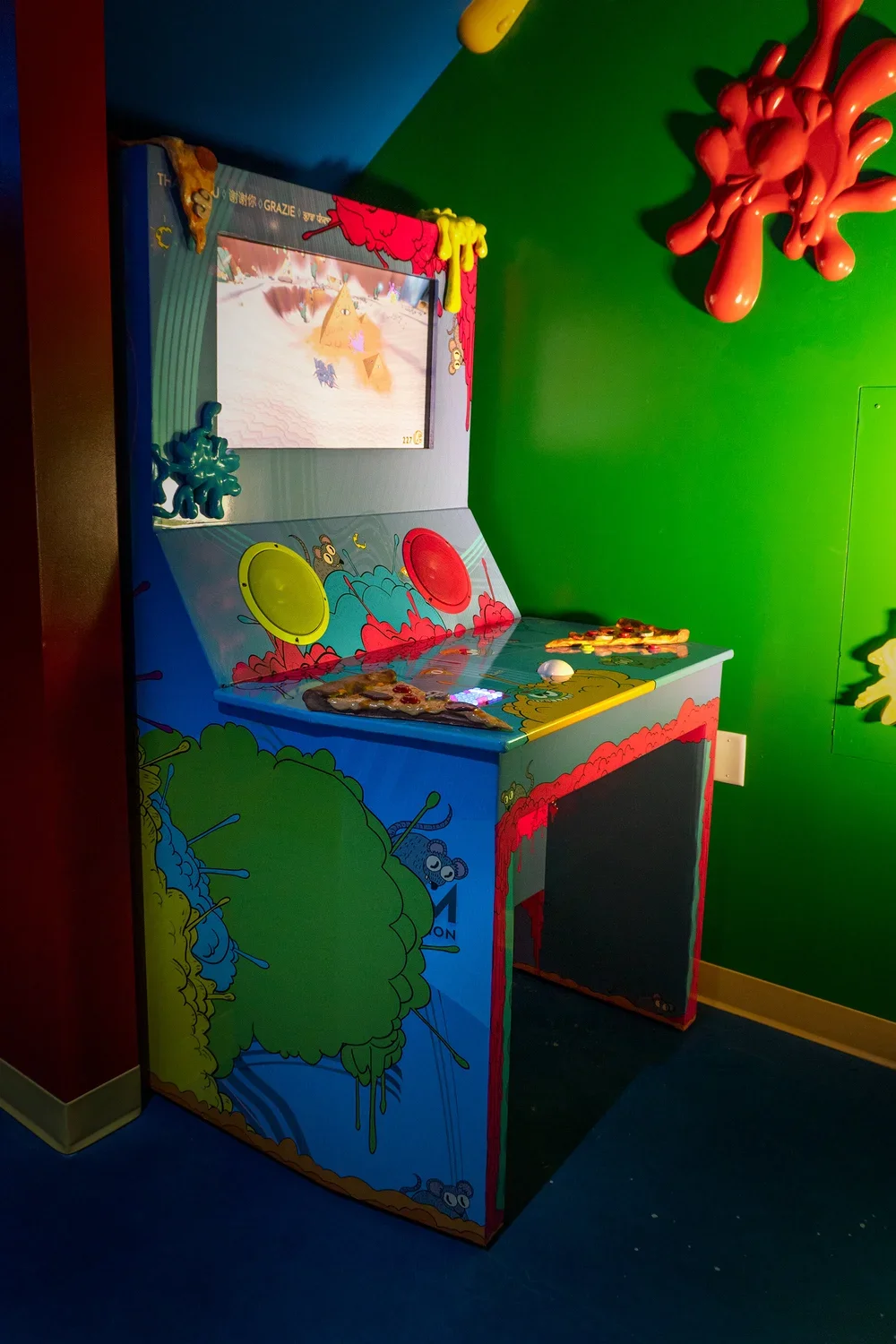
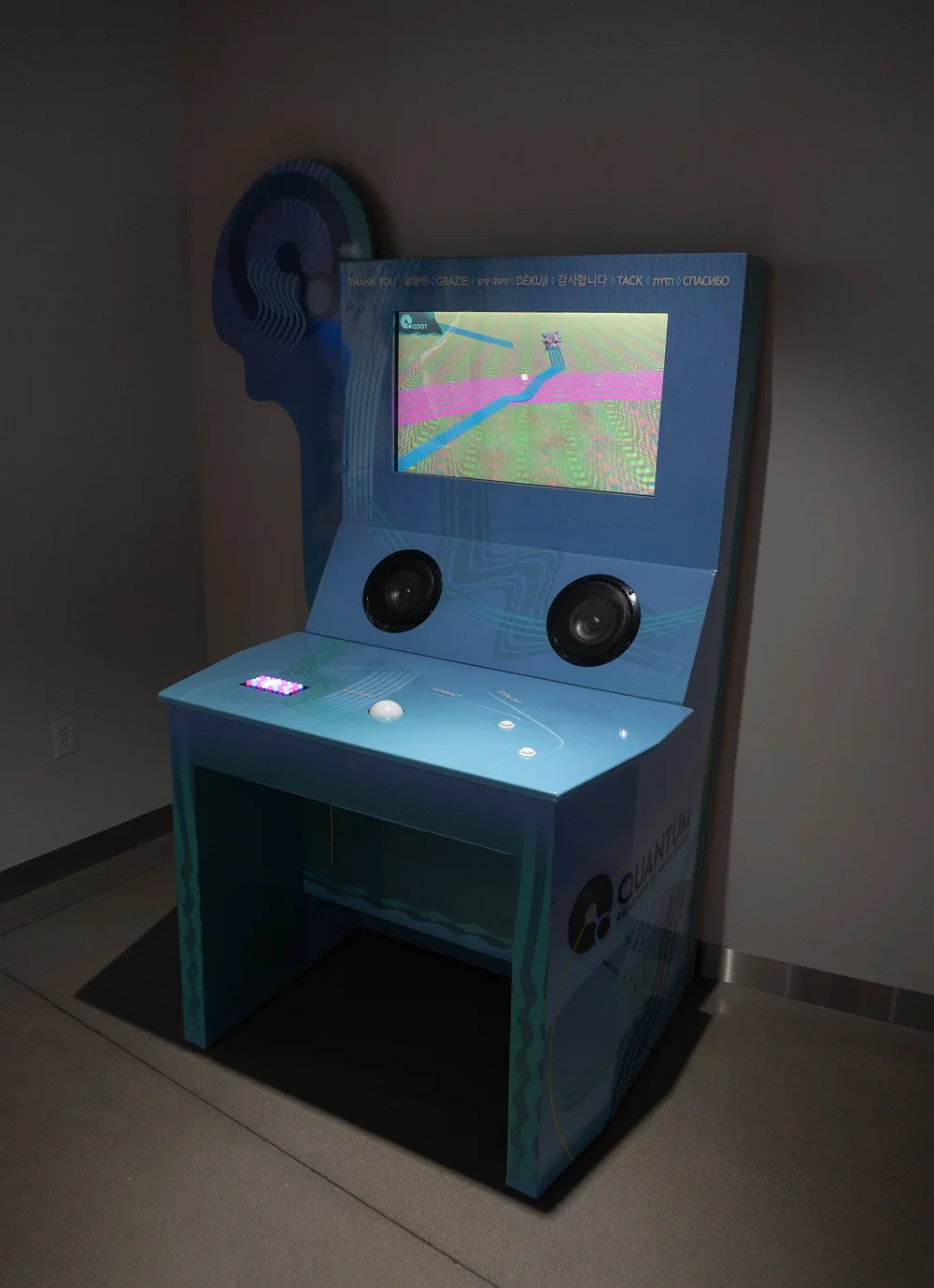
This game is permanently installed in the Meow Wolf Convergence Station in Denver, CO. I made concepts as well as 3D environment and character art for the project. I also worked on the design and physical construction of the piece.
Everdell Digital
3D Environment art
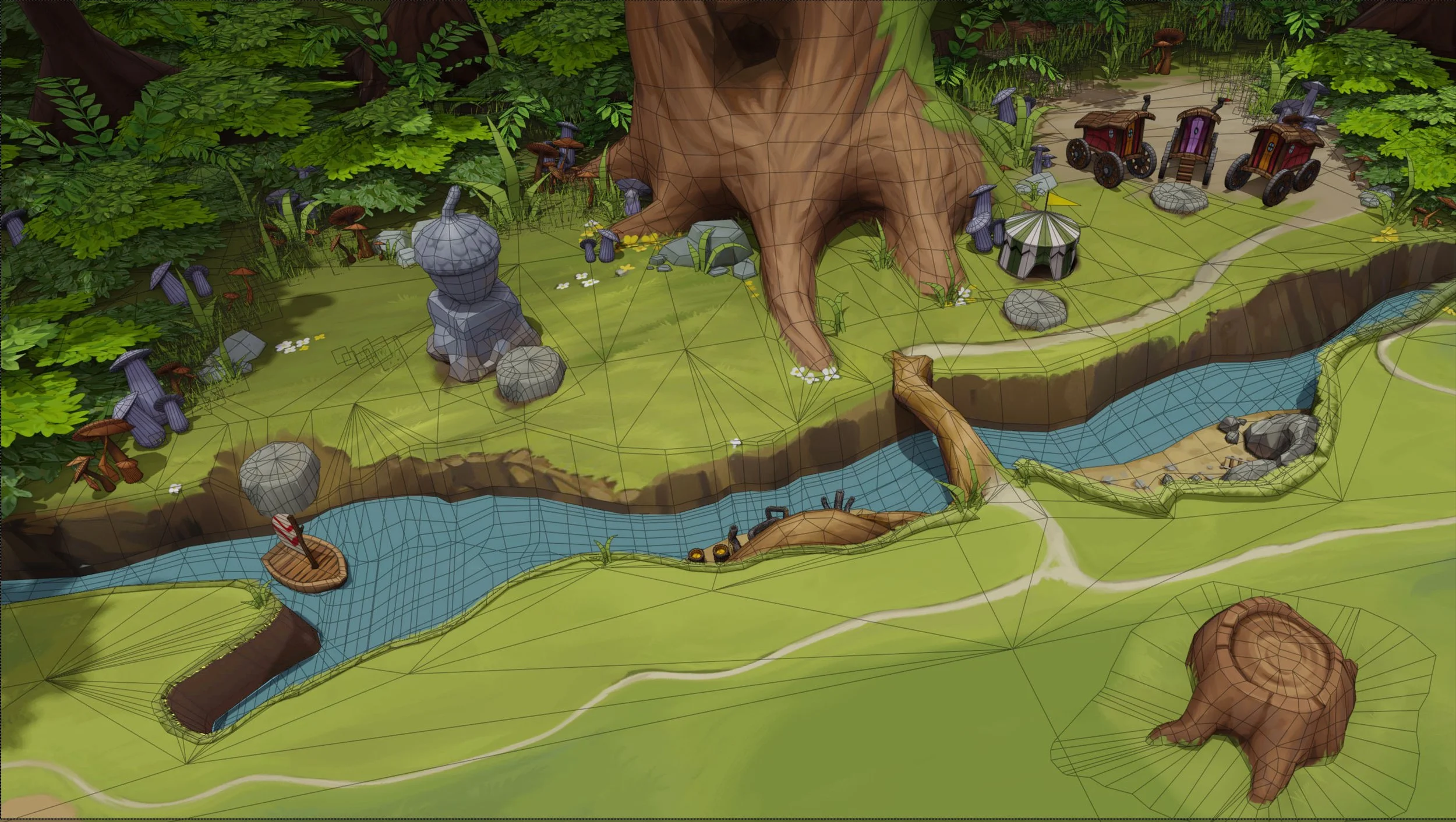
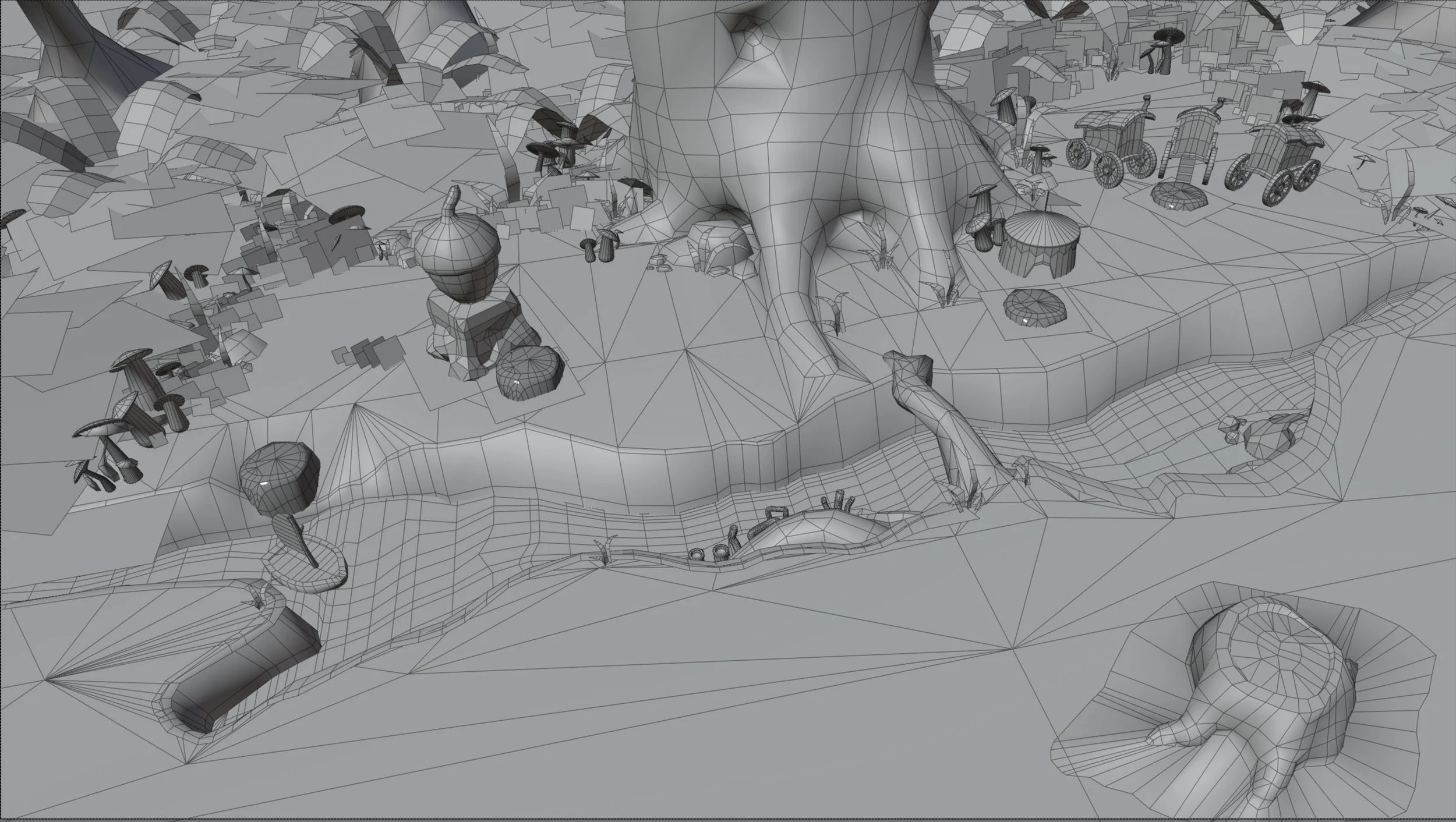
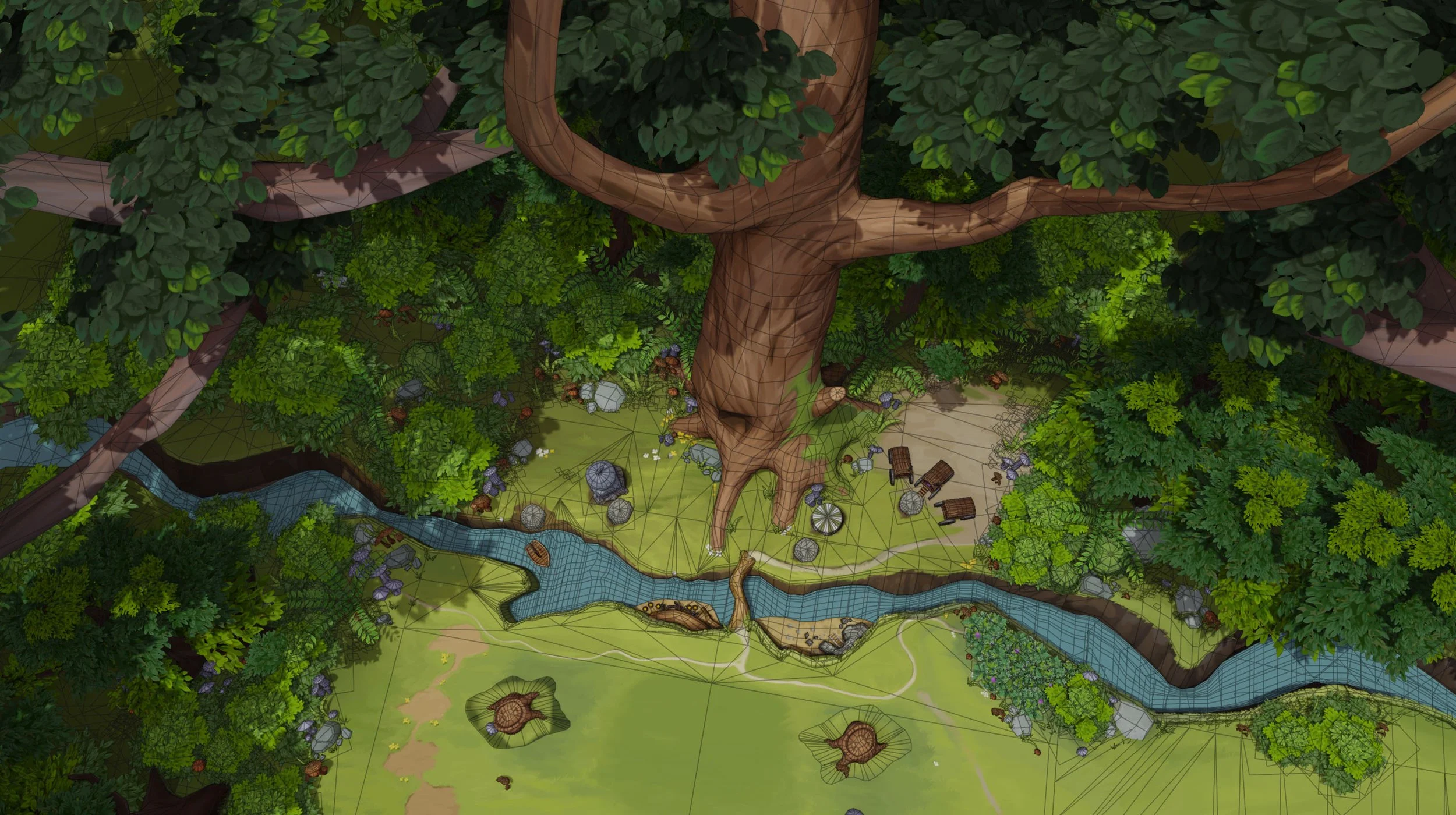
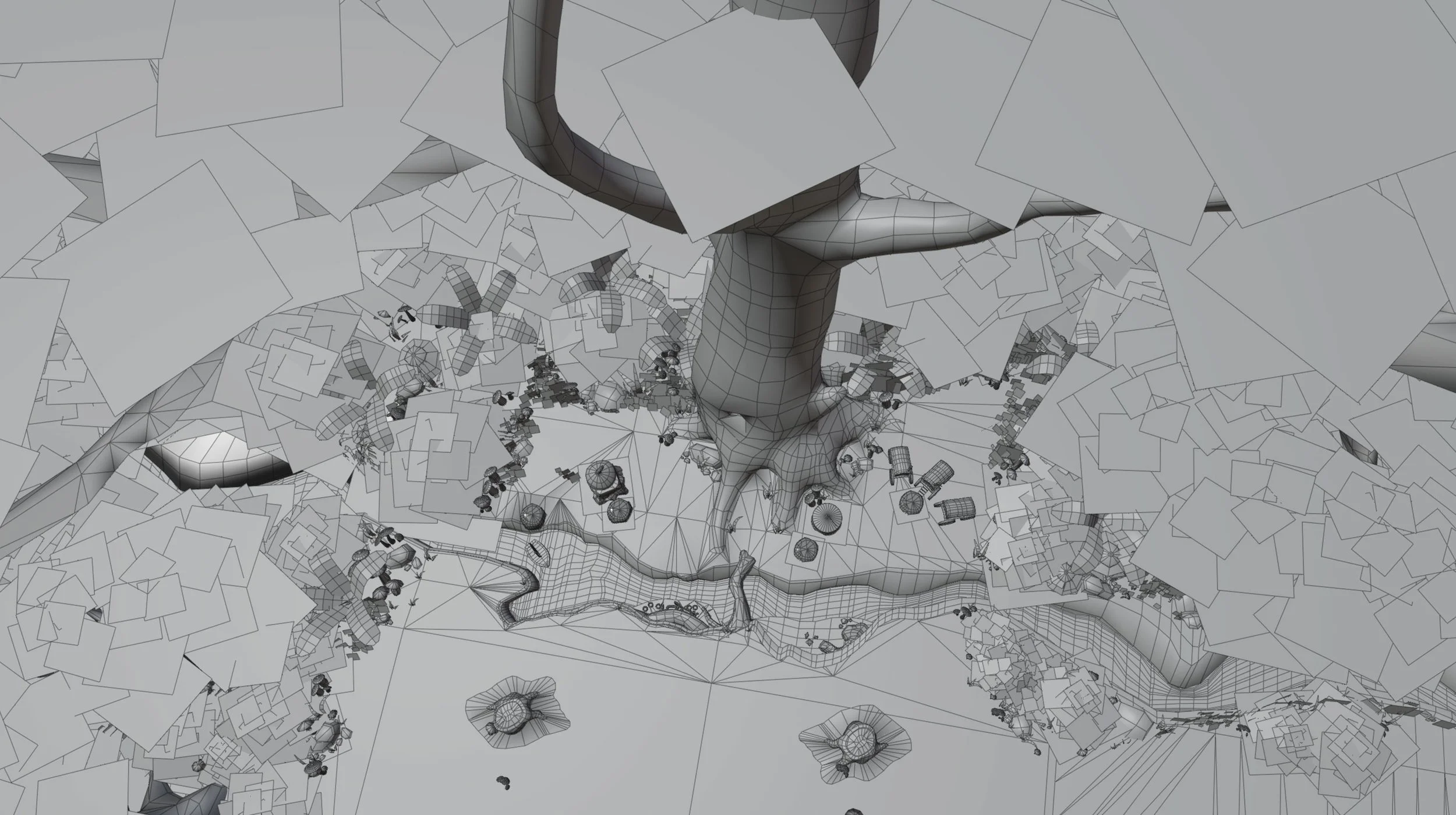
Software Used: Photoshop, Maya, Substance Painter, UnityDigital Board Game Environment
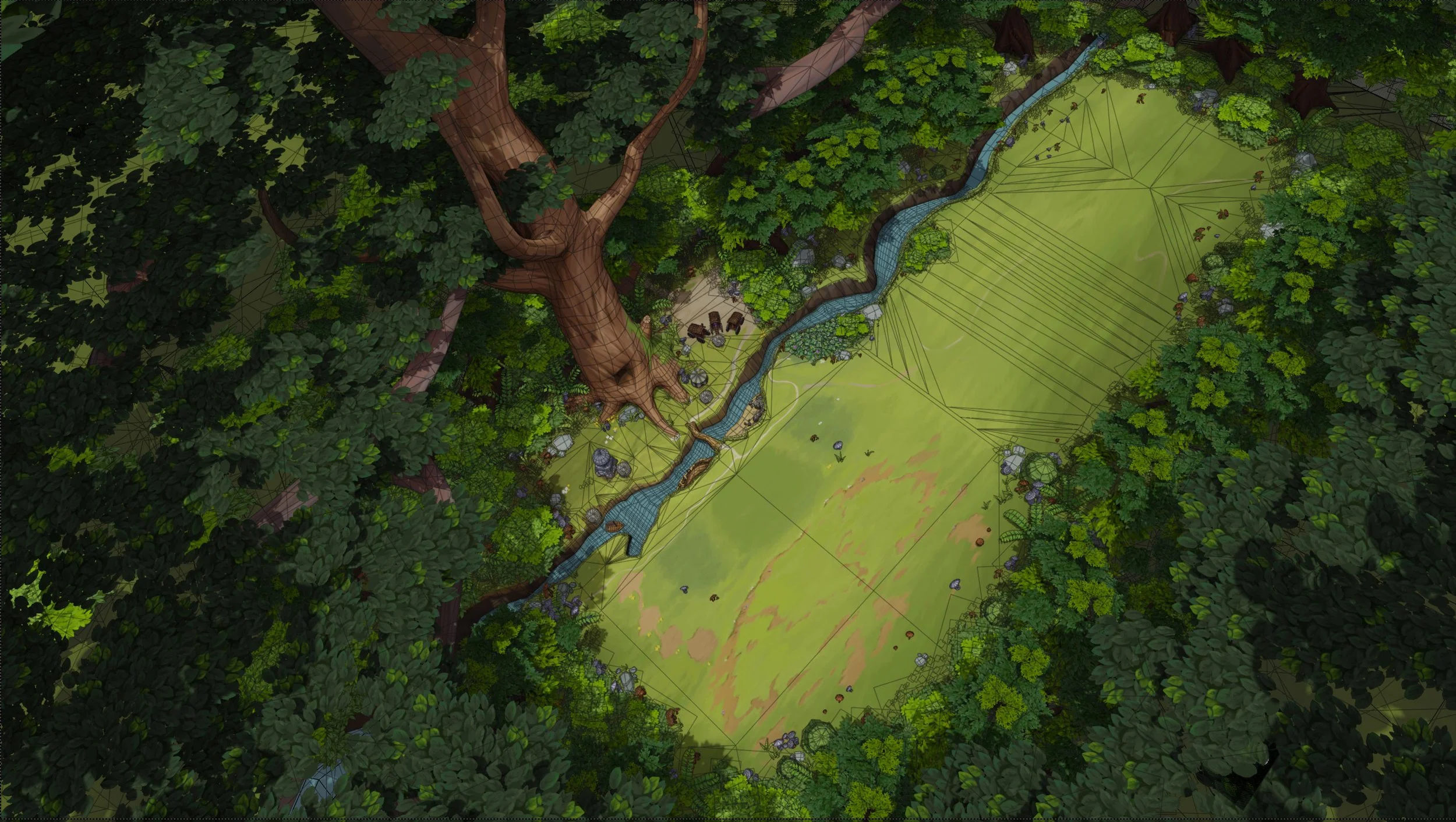
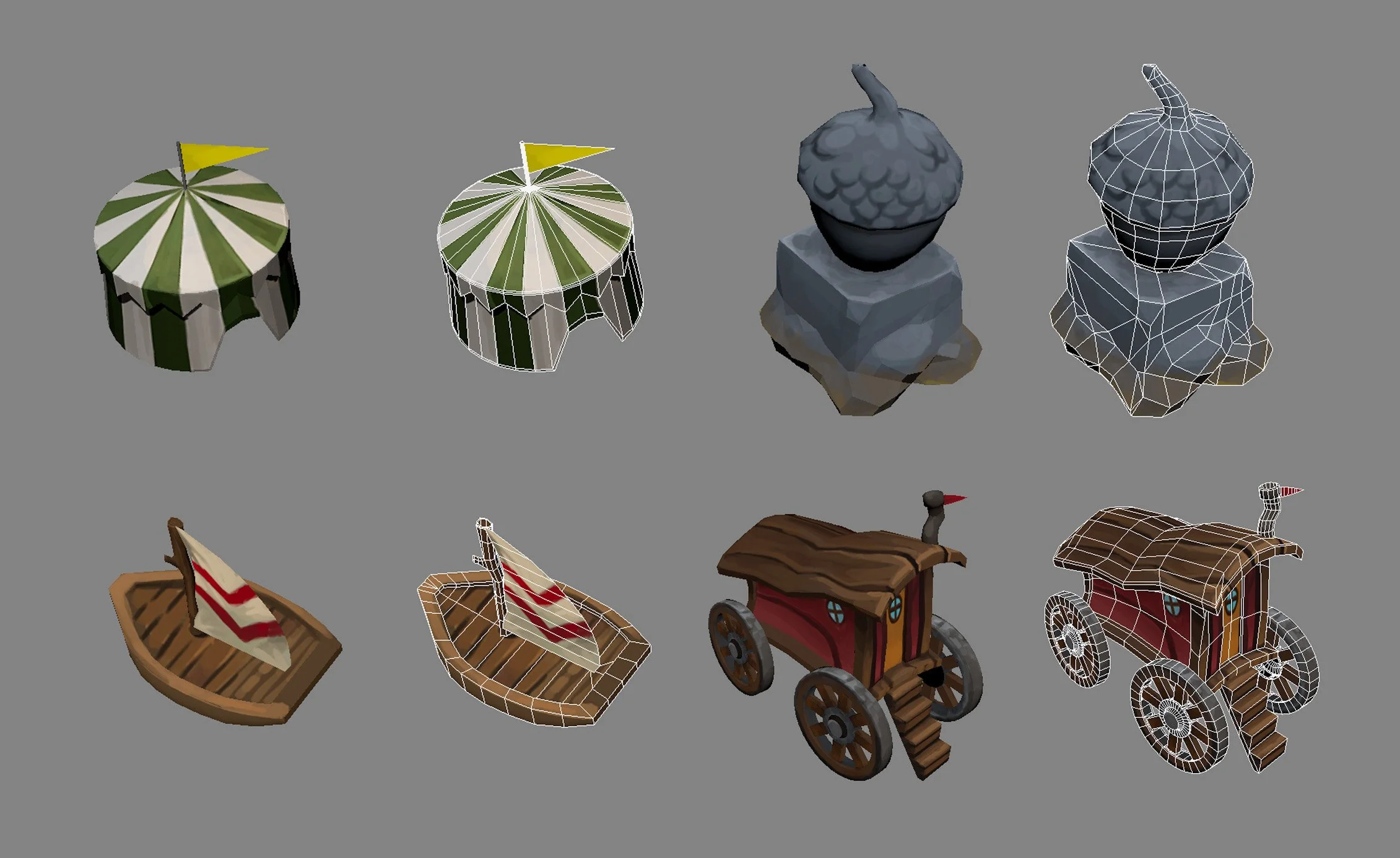
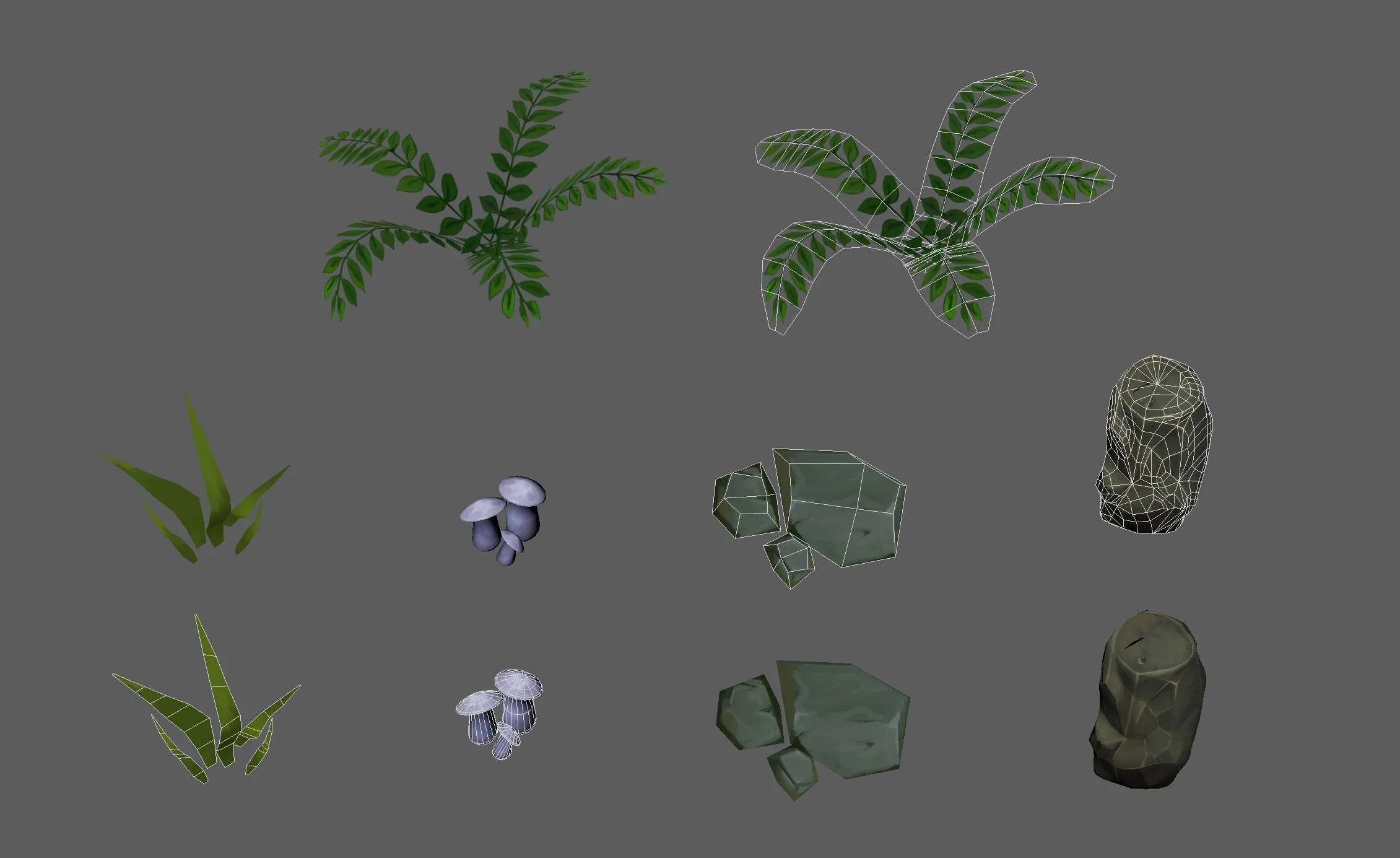
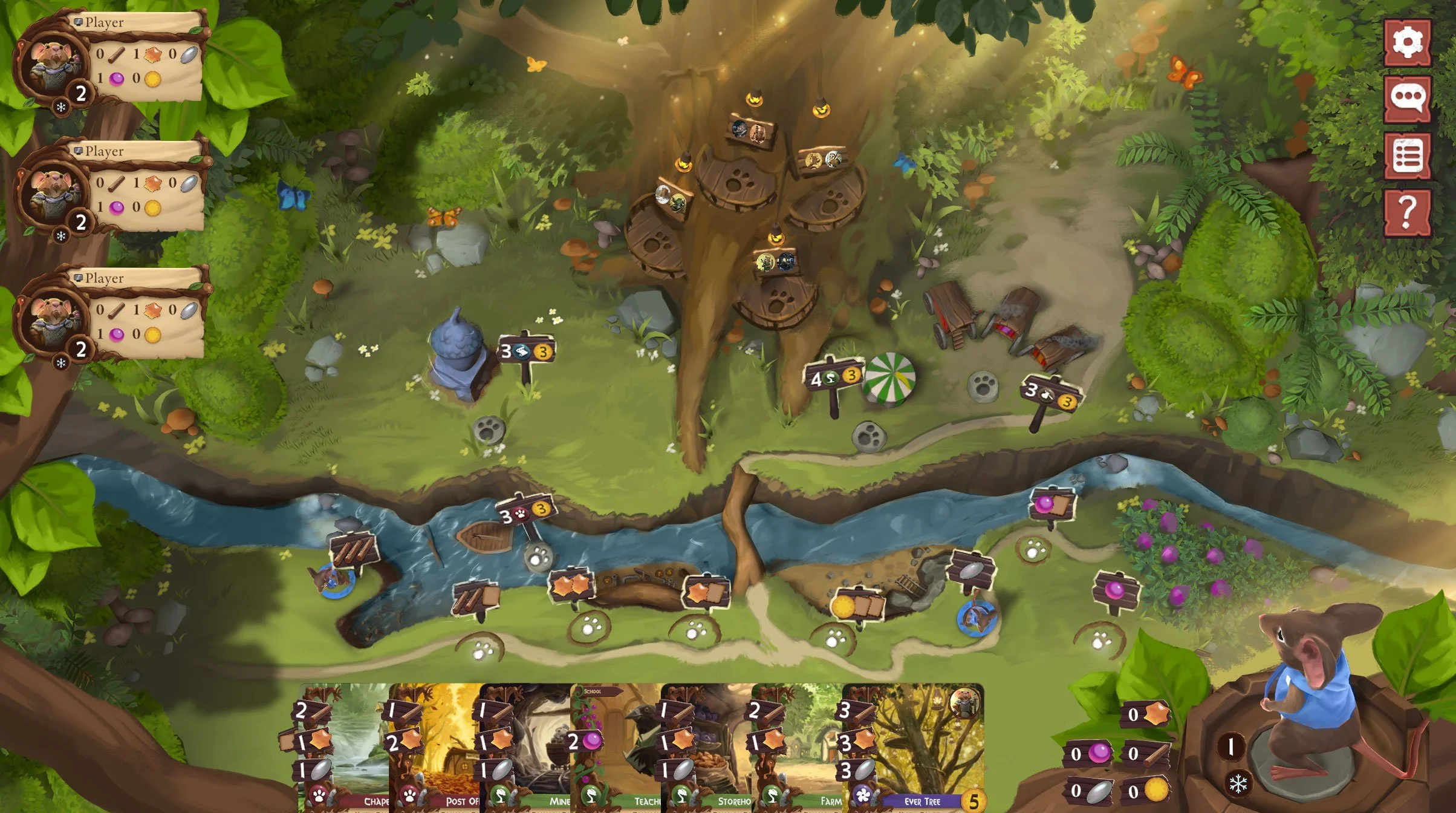
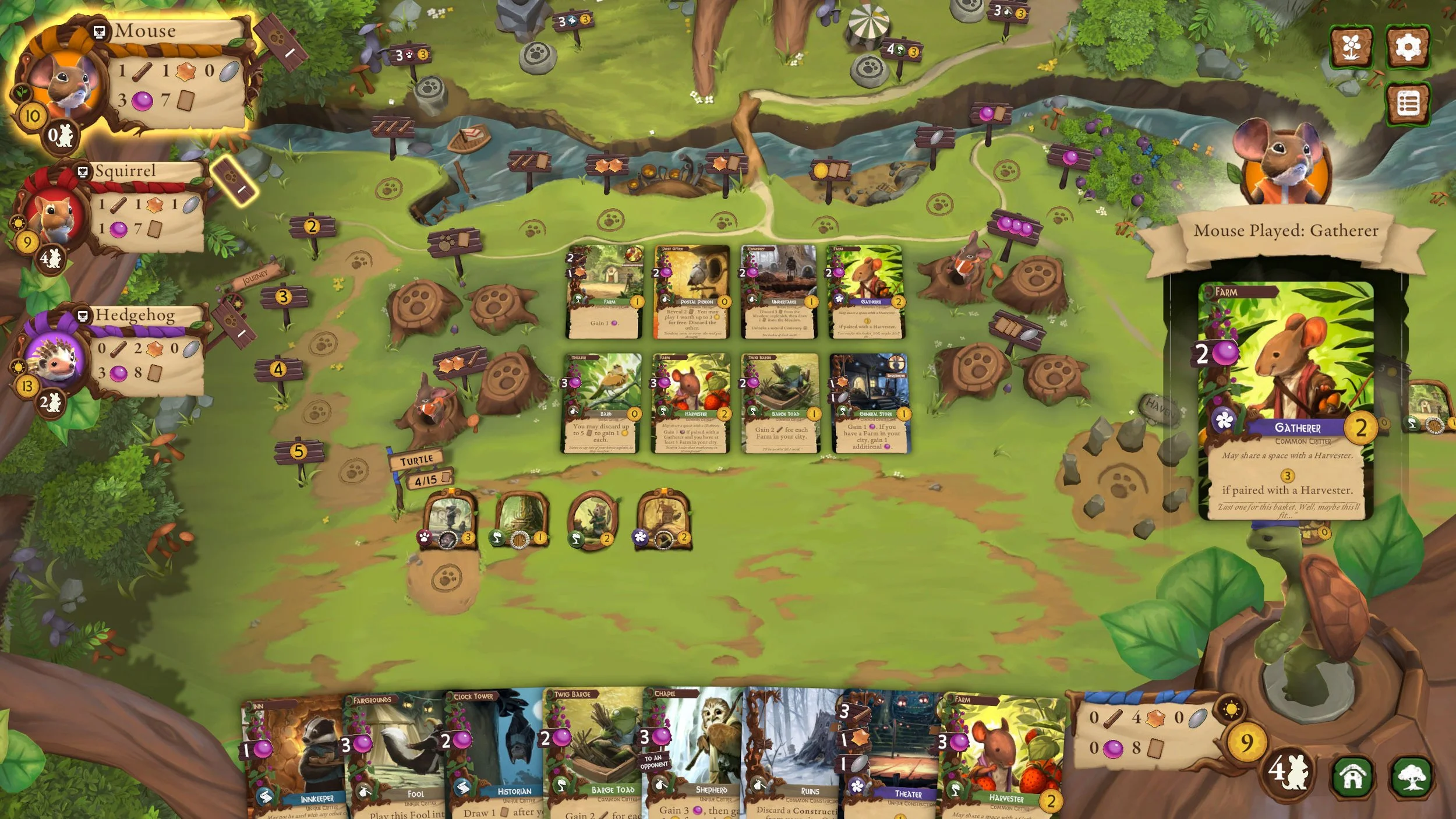
I worked on the environment for the digital conversion of the board game Everdell. My goal was to make the 3D environment art match the remarkable illustration from the original board game. Everdell was released cross-platform on Android, iOS, PC, and Switch.
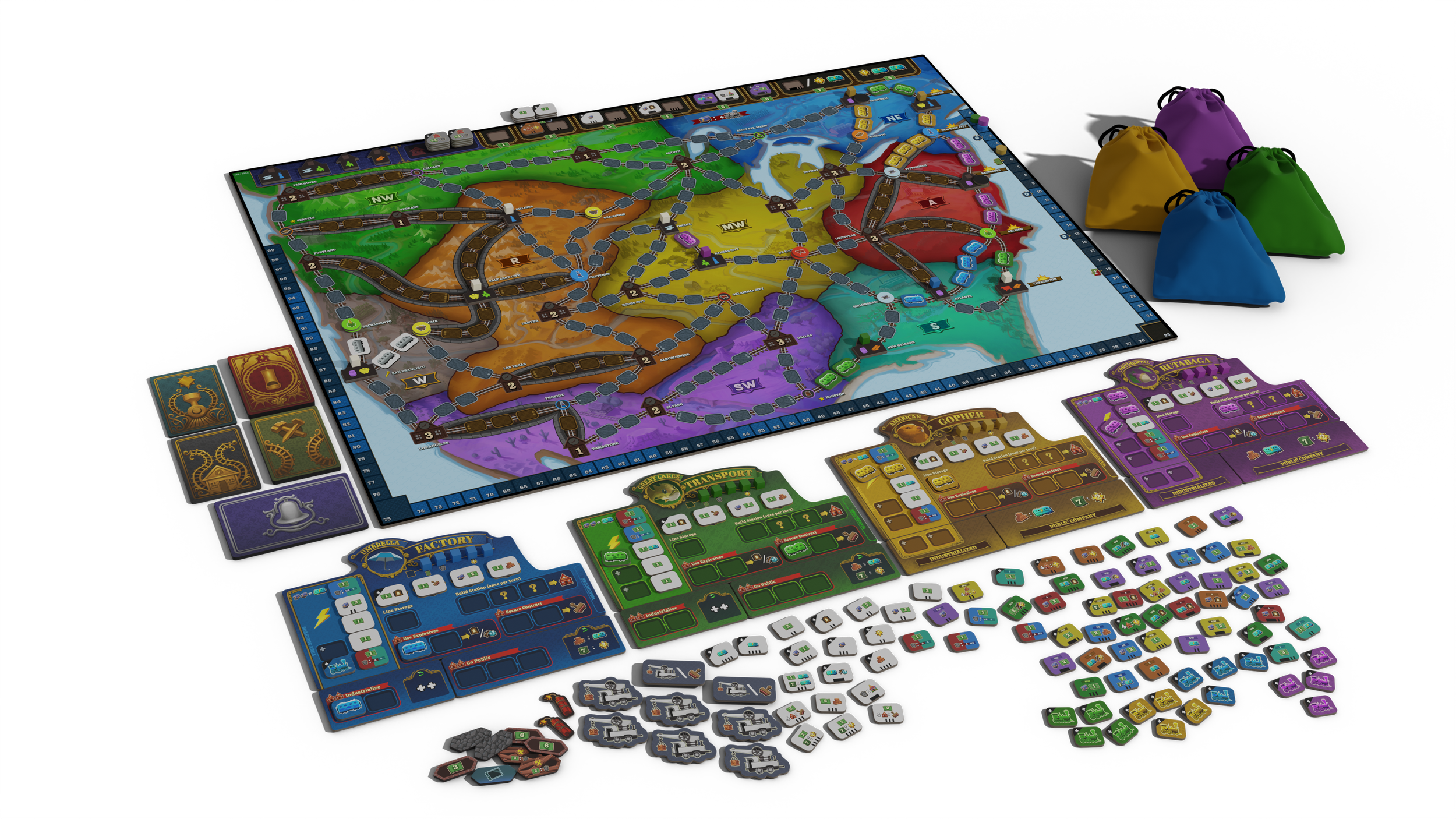
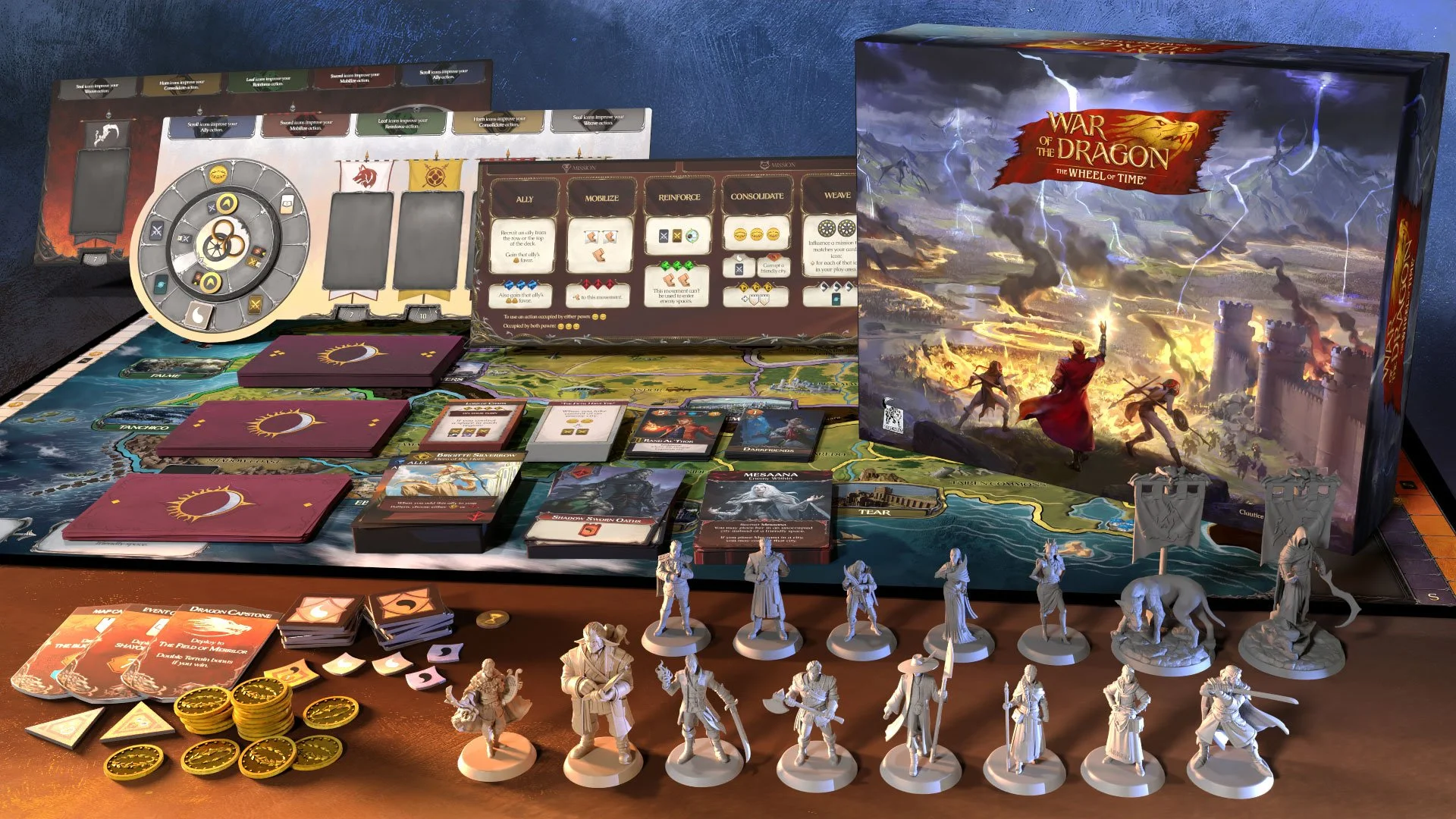
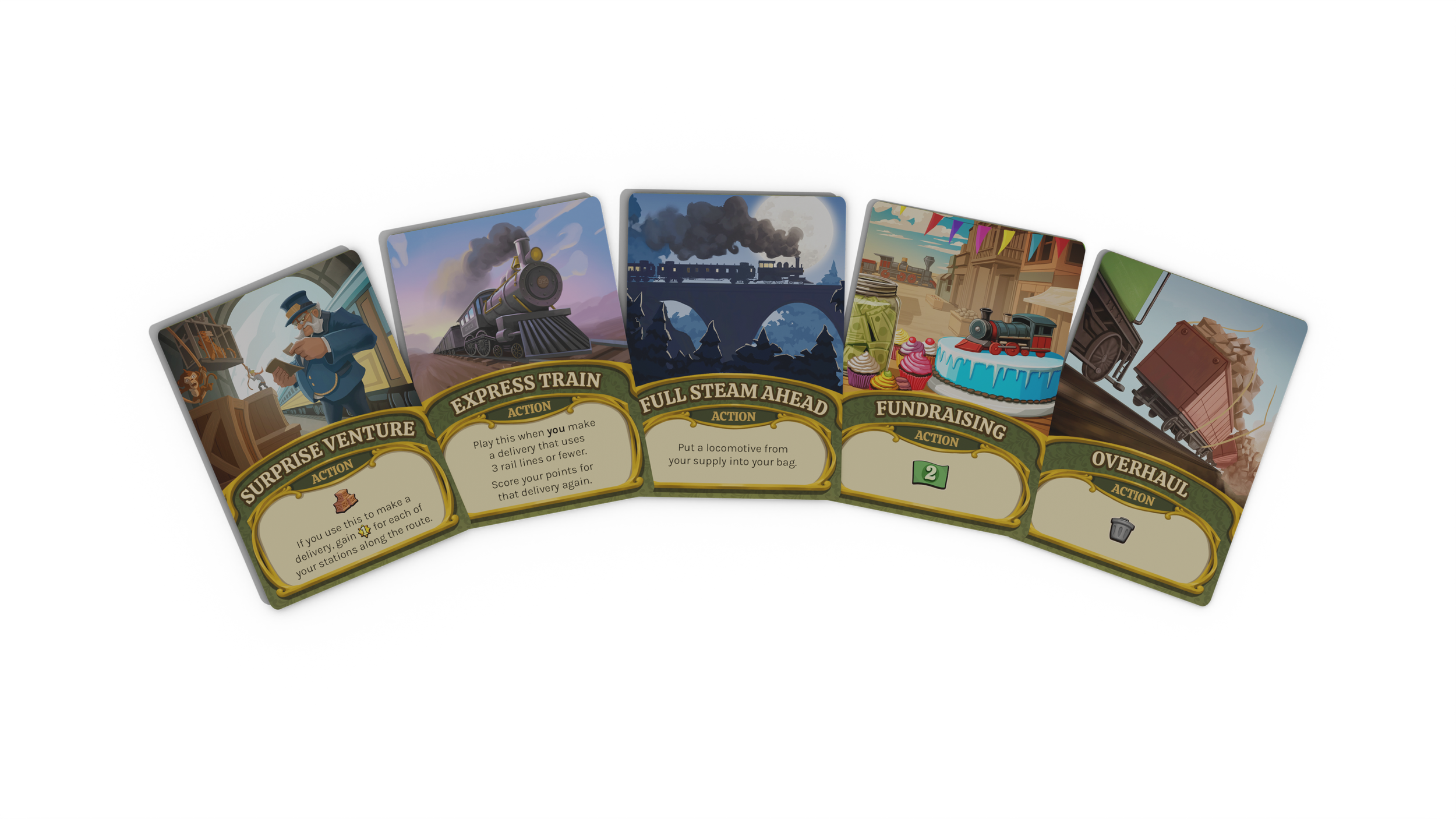
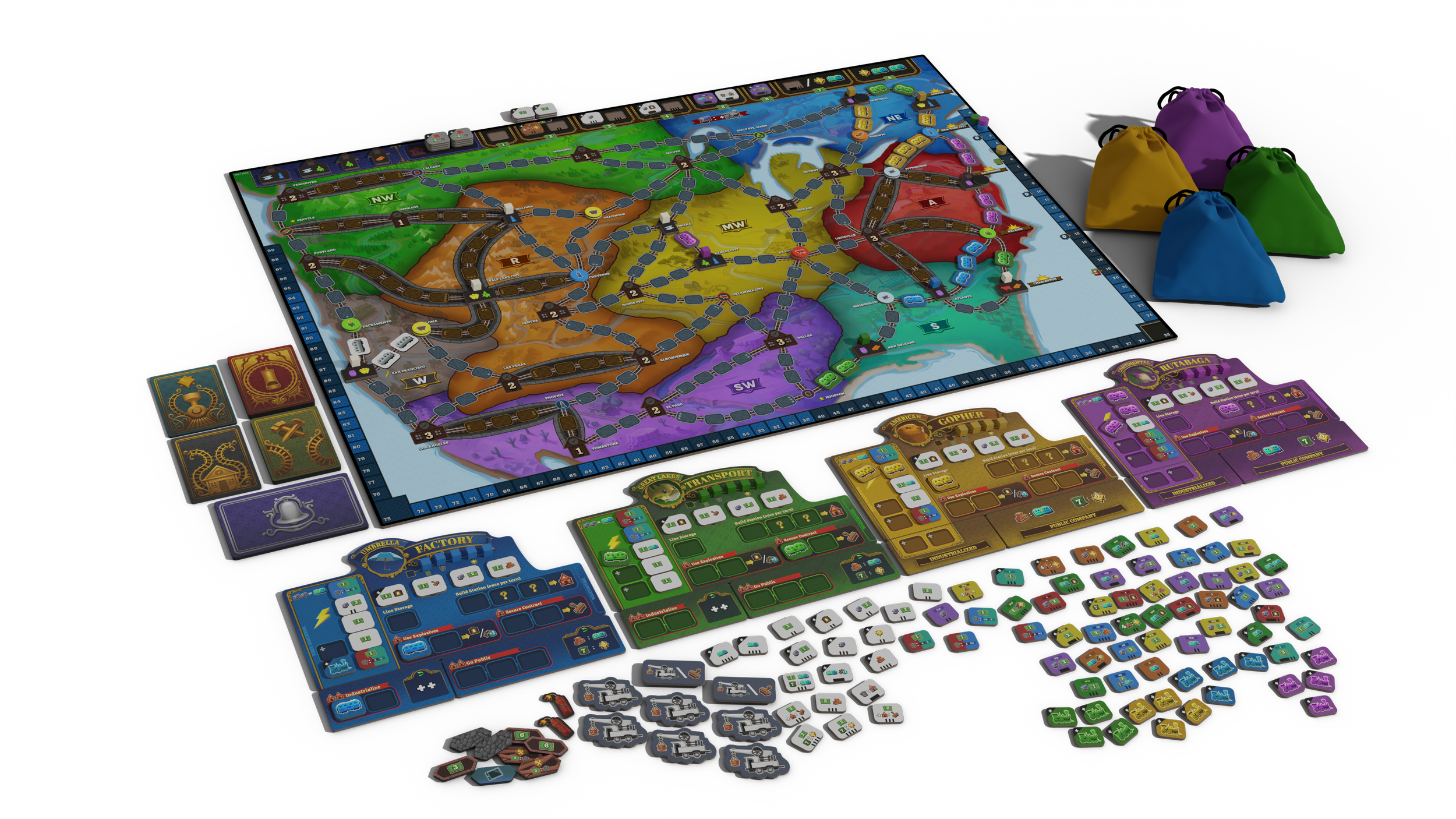
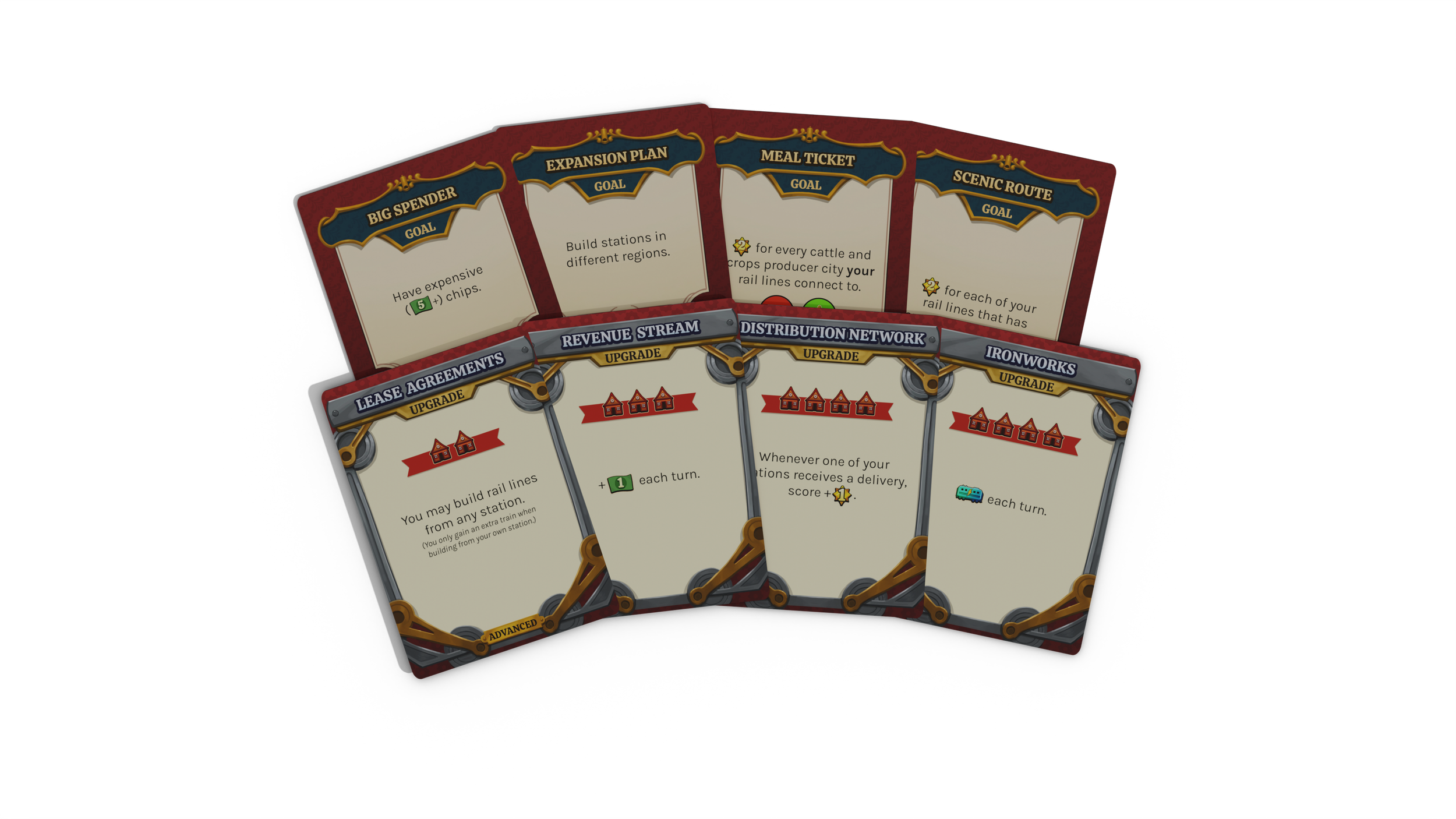
Tabletop
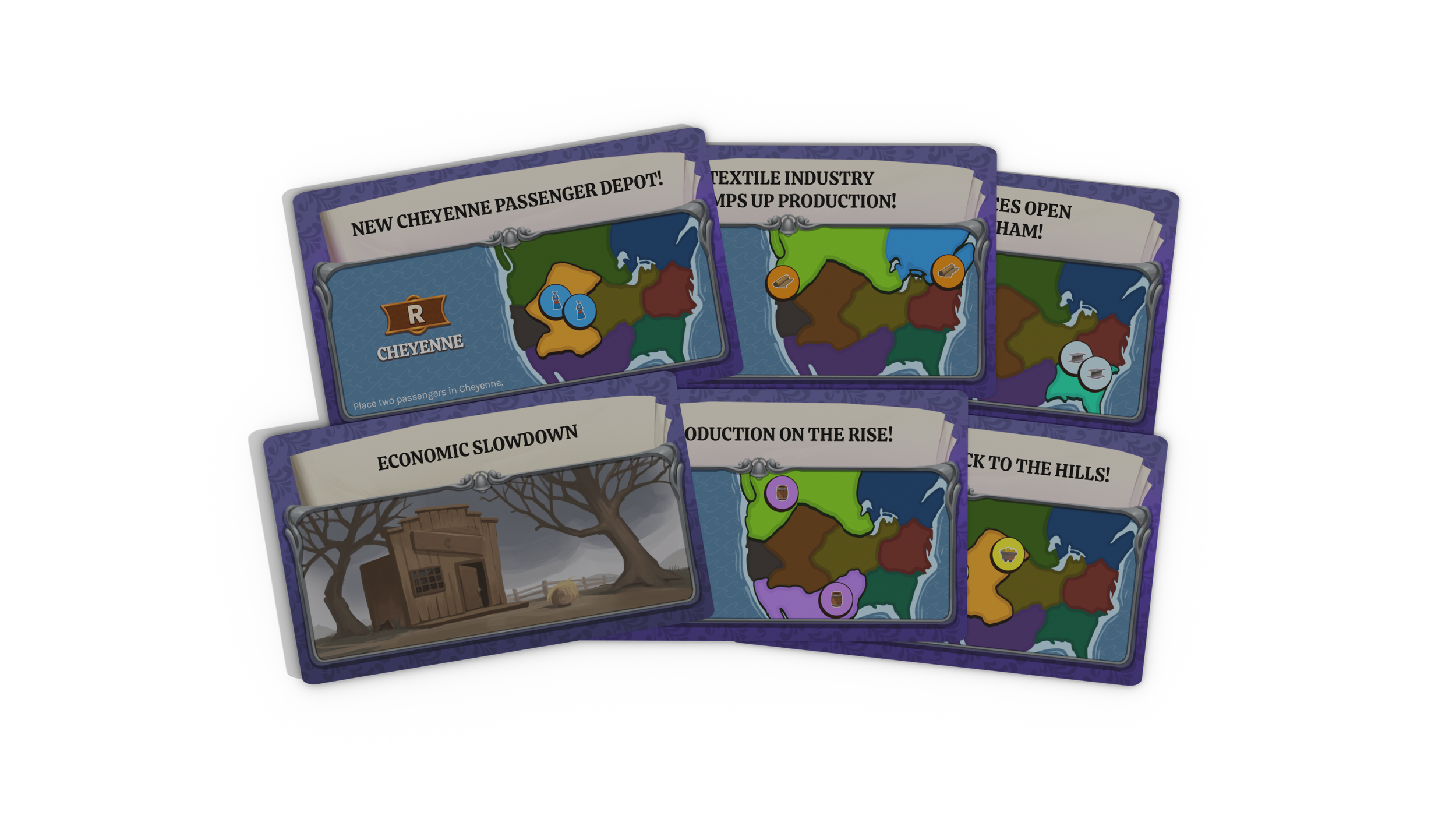
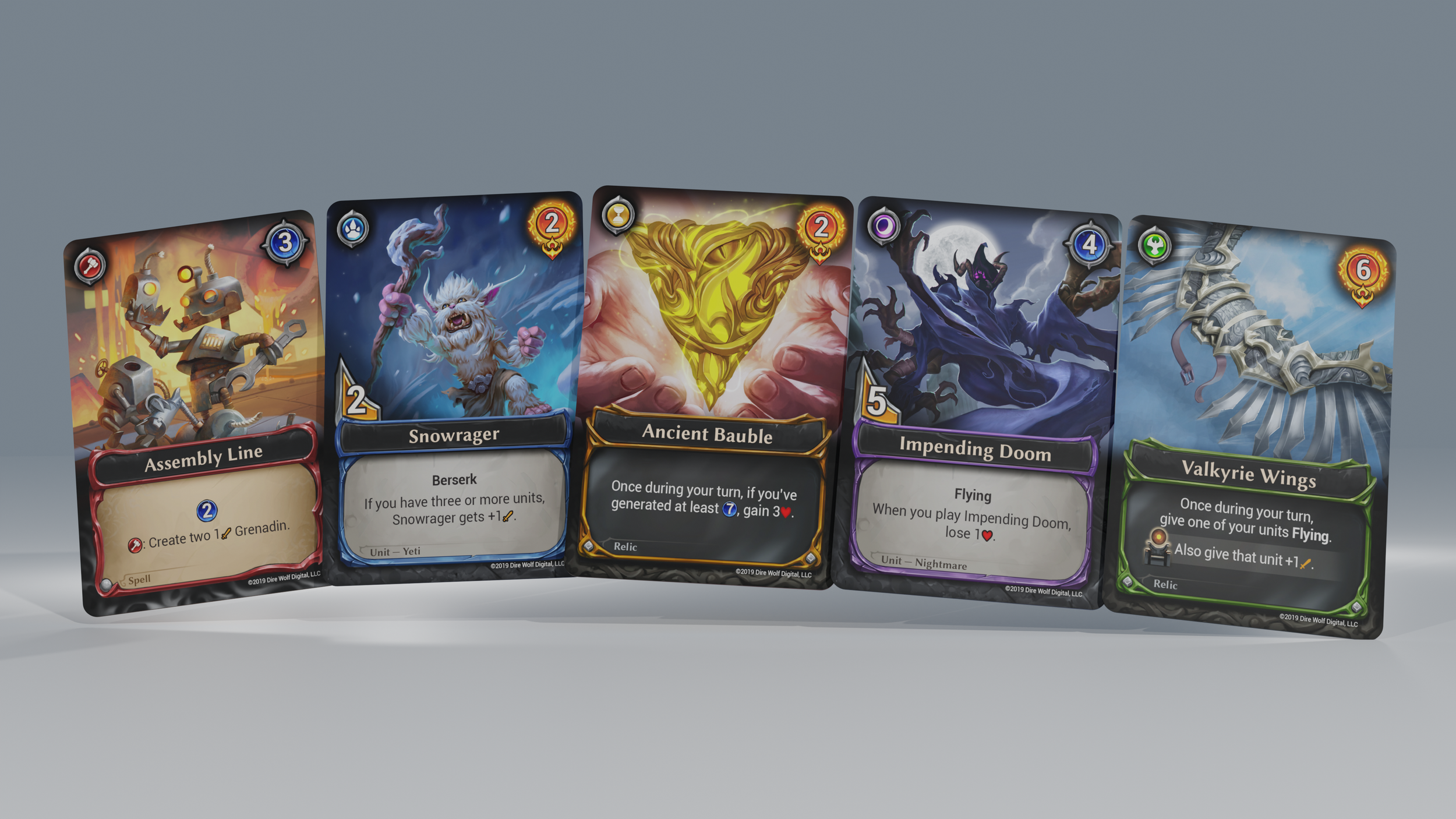
Art direction, graphic design, illustration
Software Used: Photoshop, Illustrator, InDesign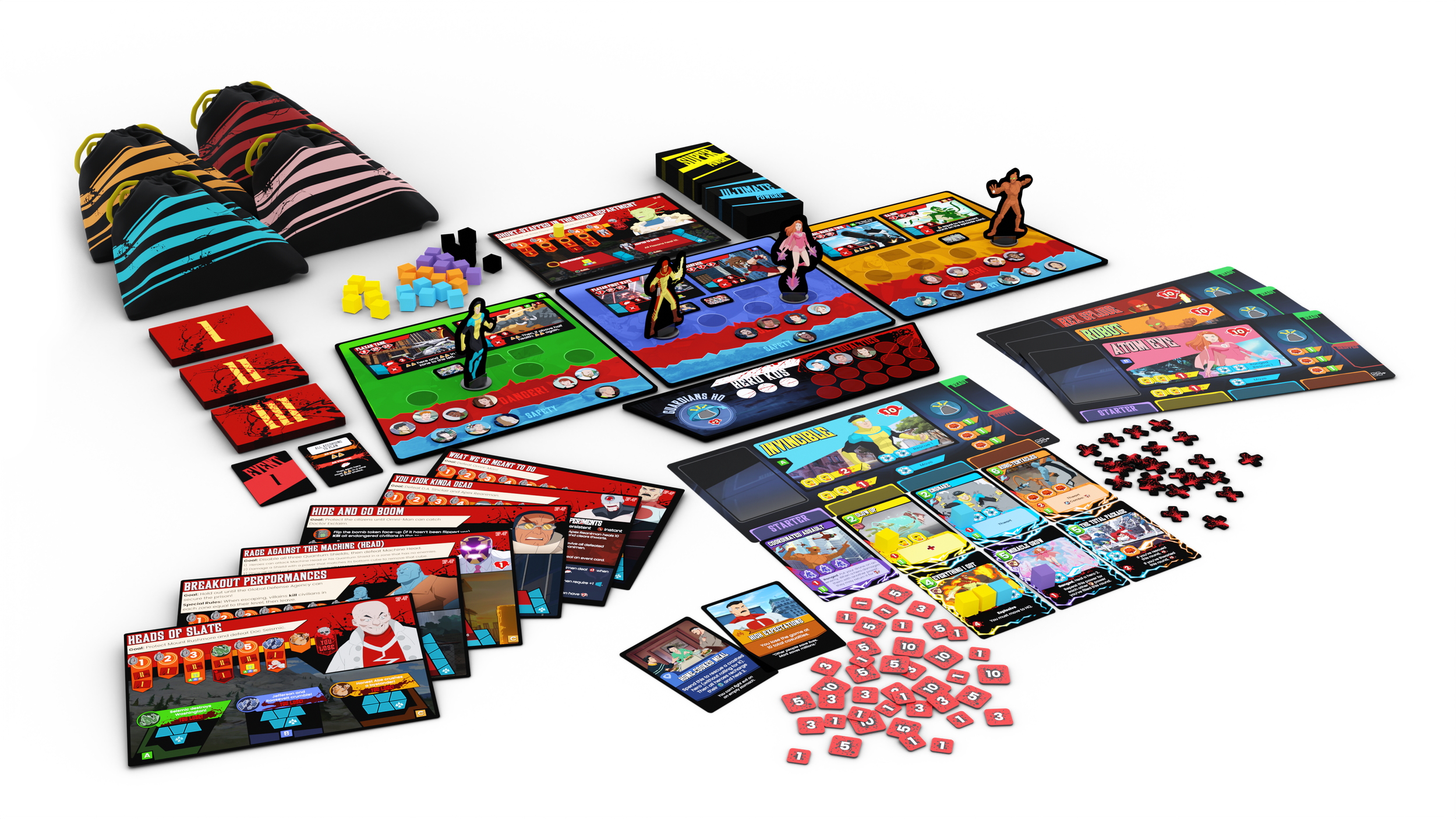
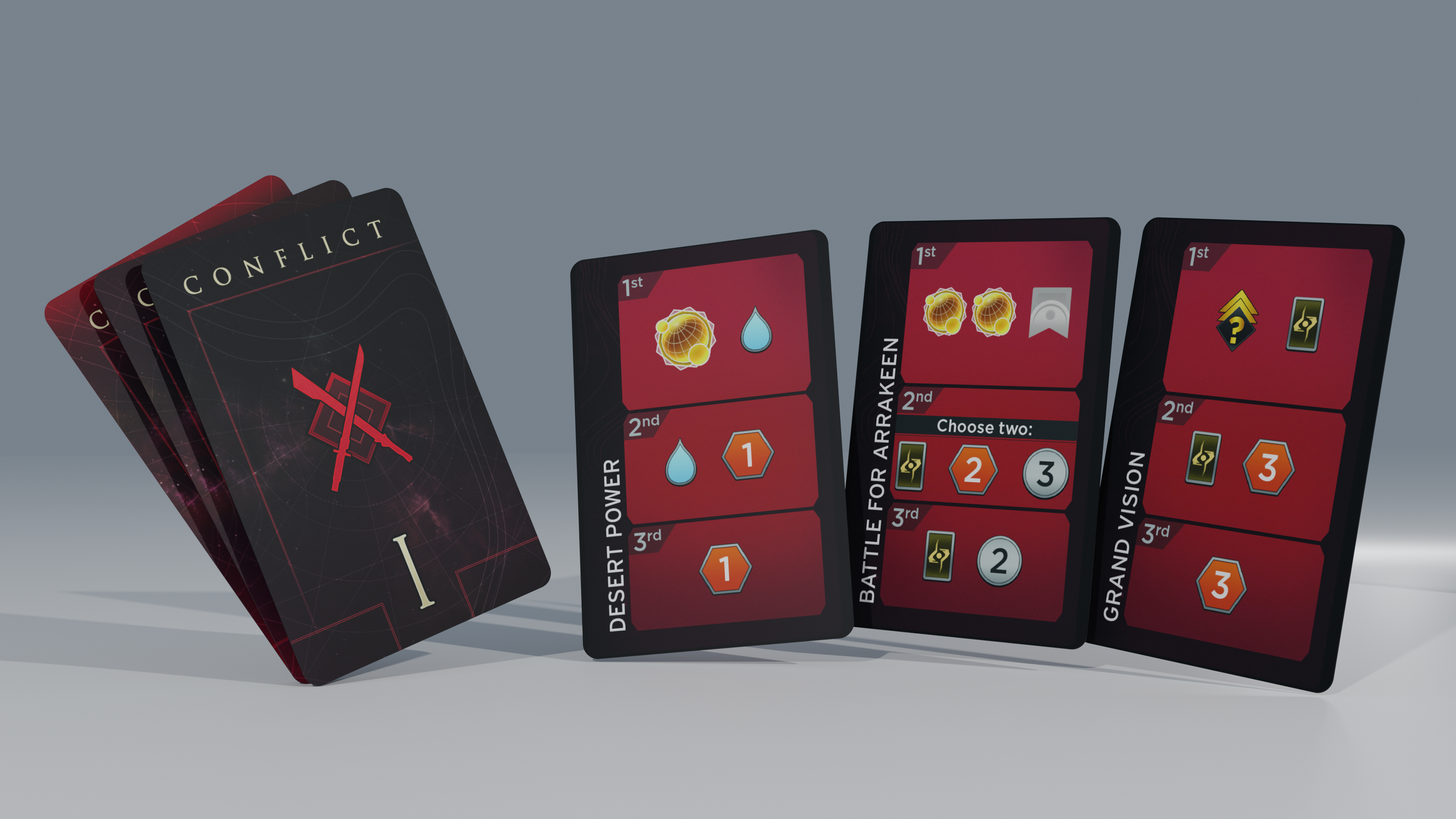
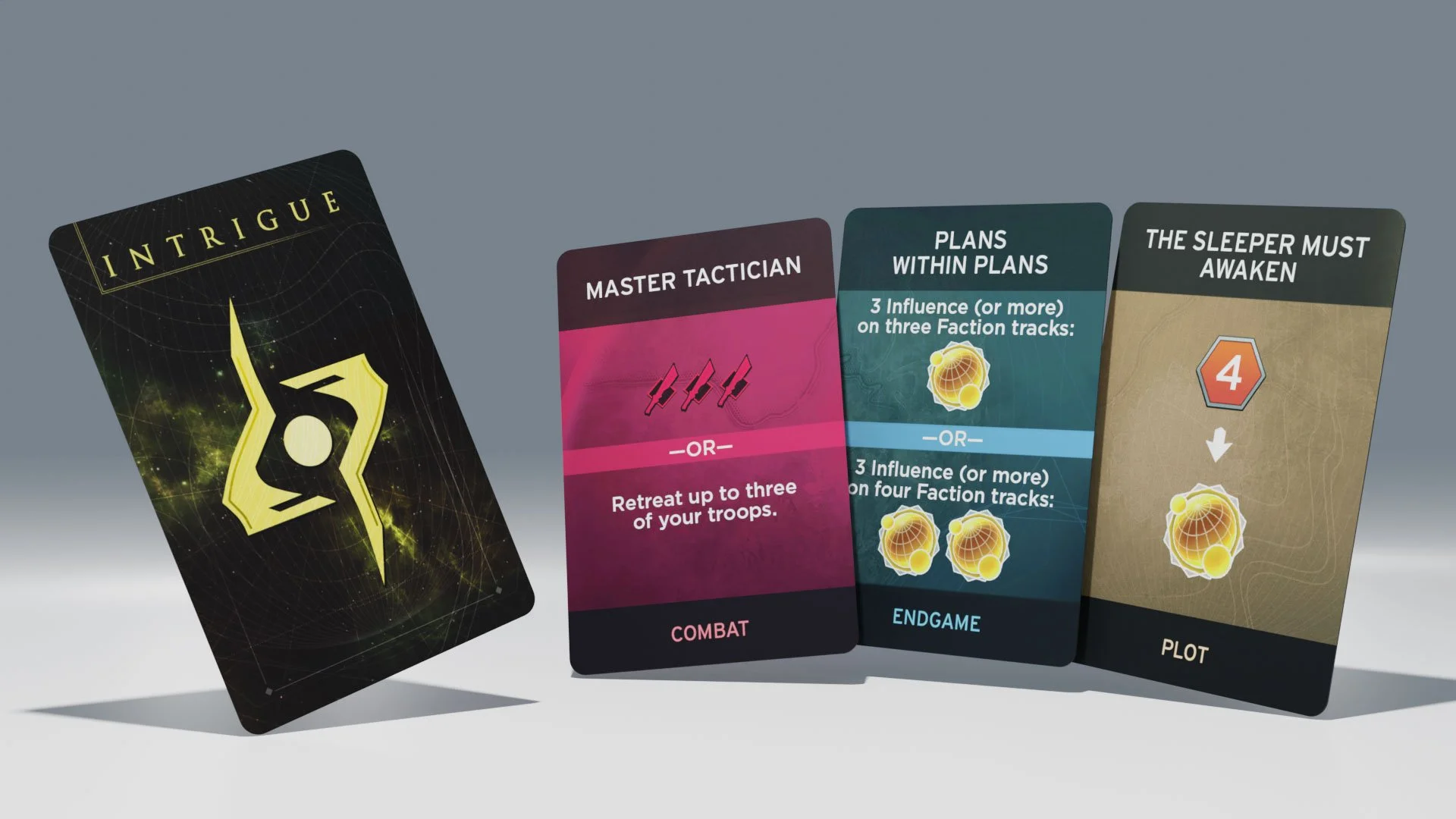
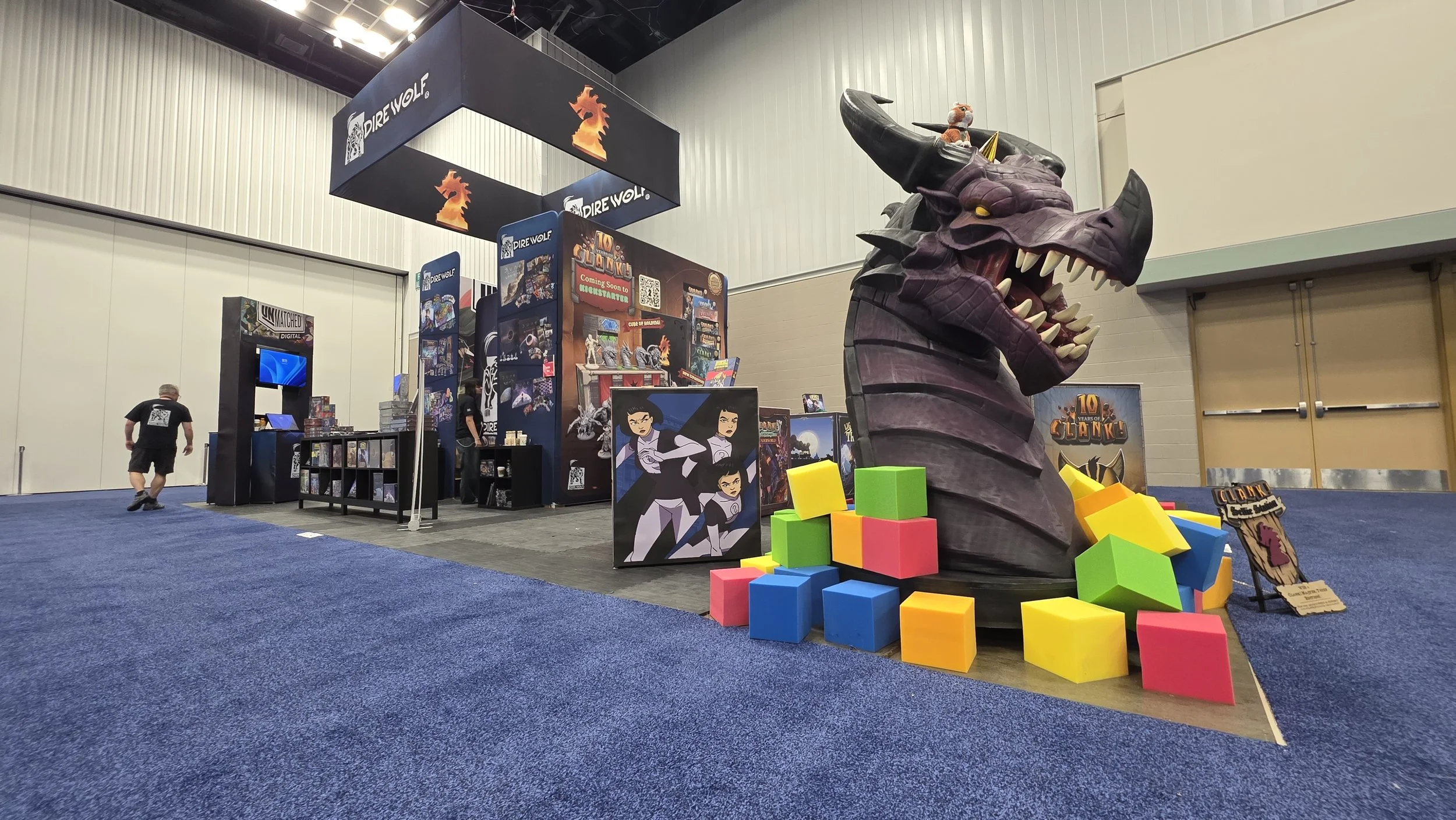
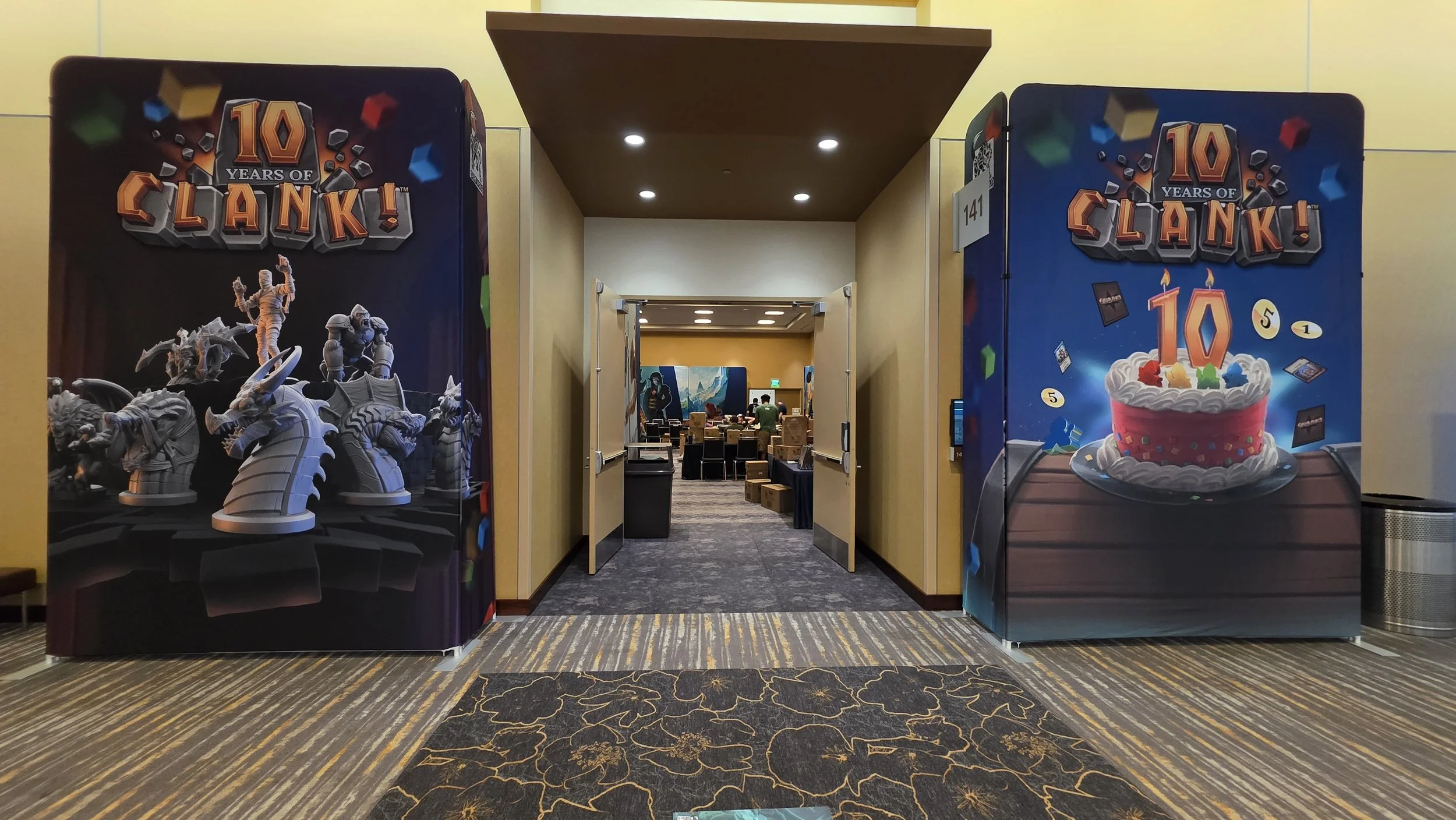
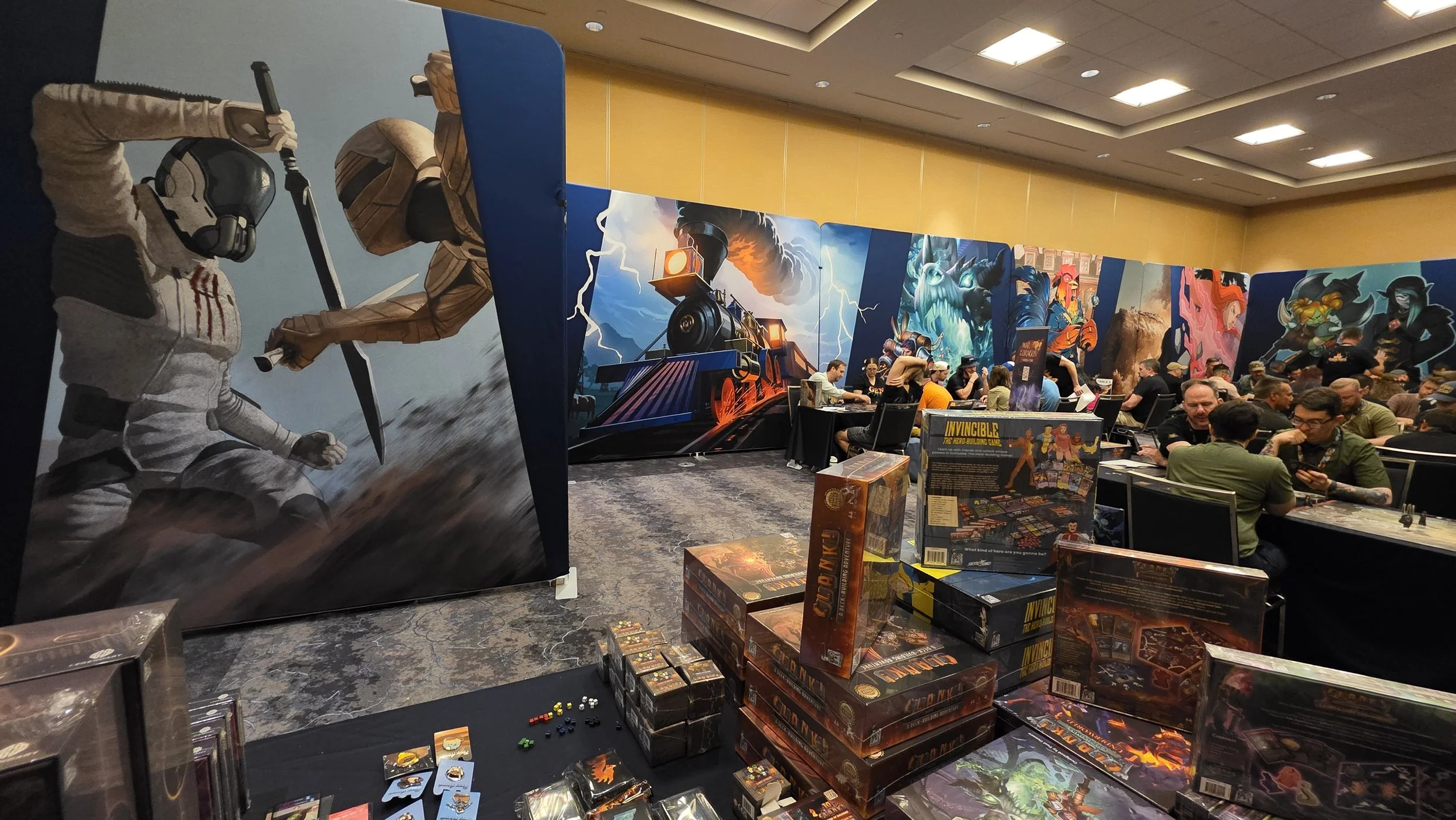
Convention Materials
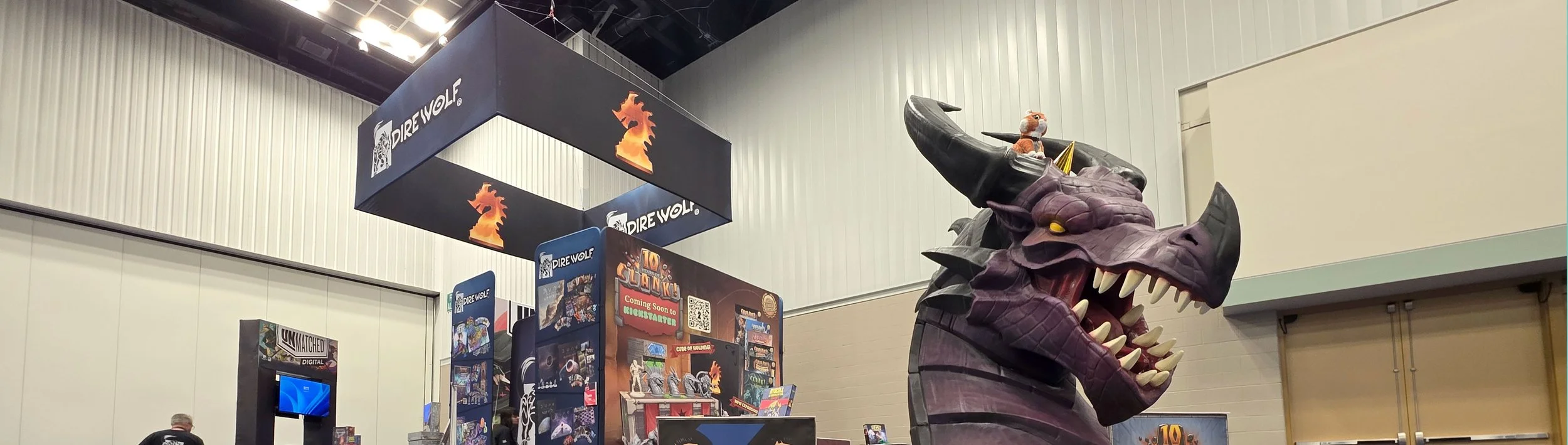
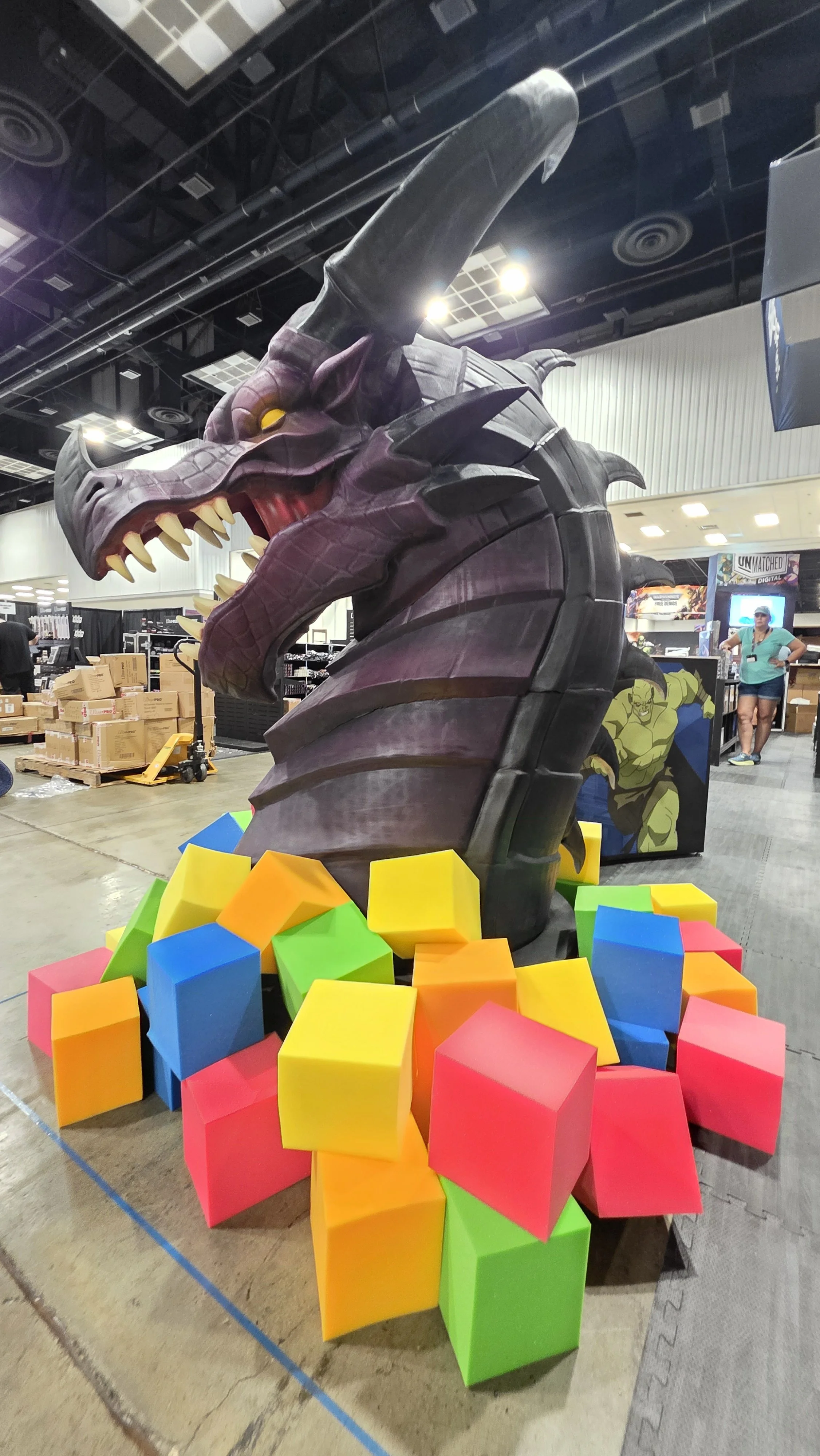
Art direction, sculpture, painting, graphic design
Software Used: Photoshop, Zbrush, InDesignTools Used: LFAM printing, post processing, auto body paint
Personal Work
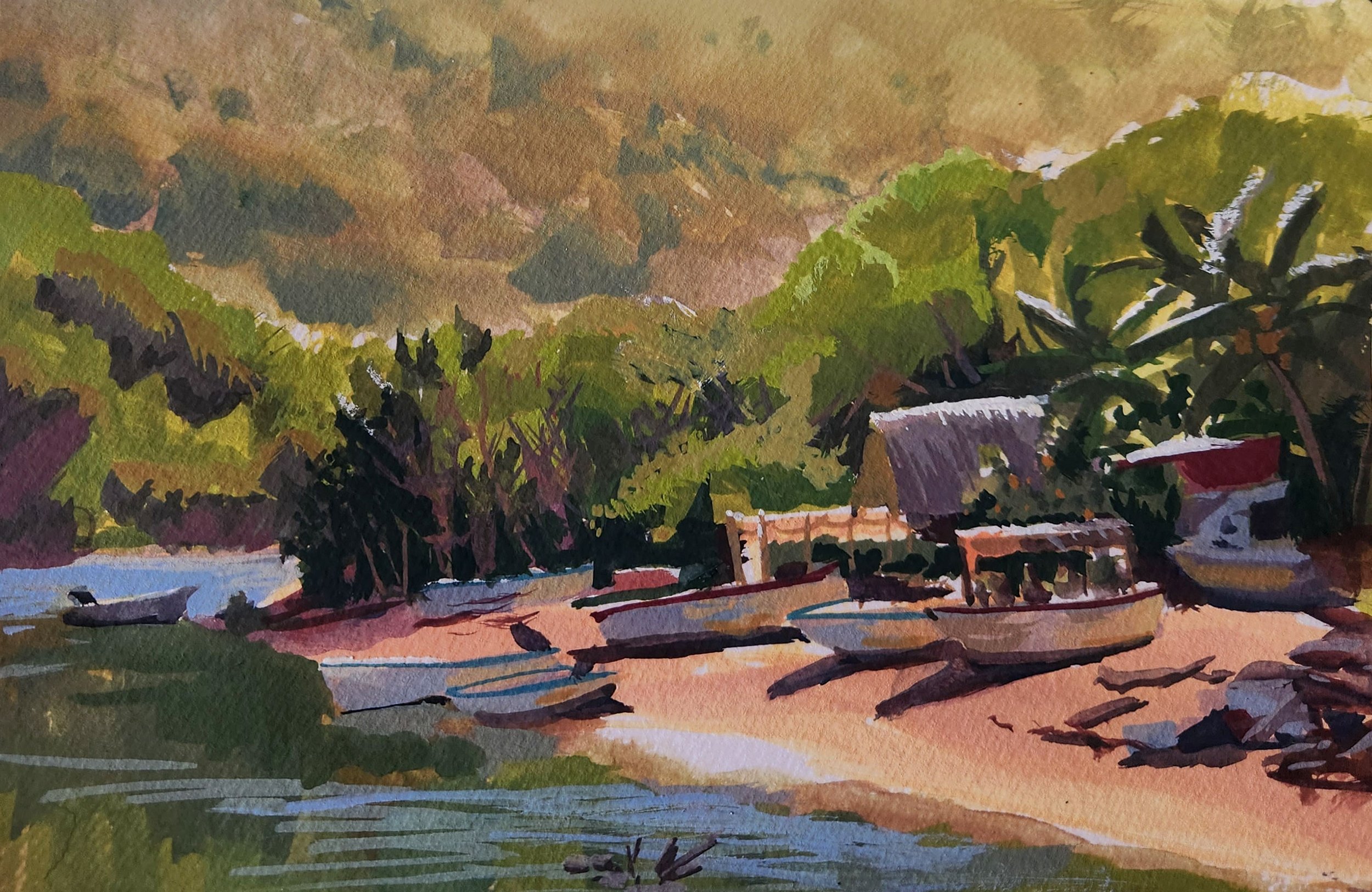
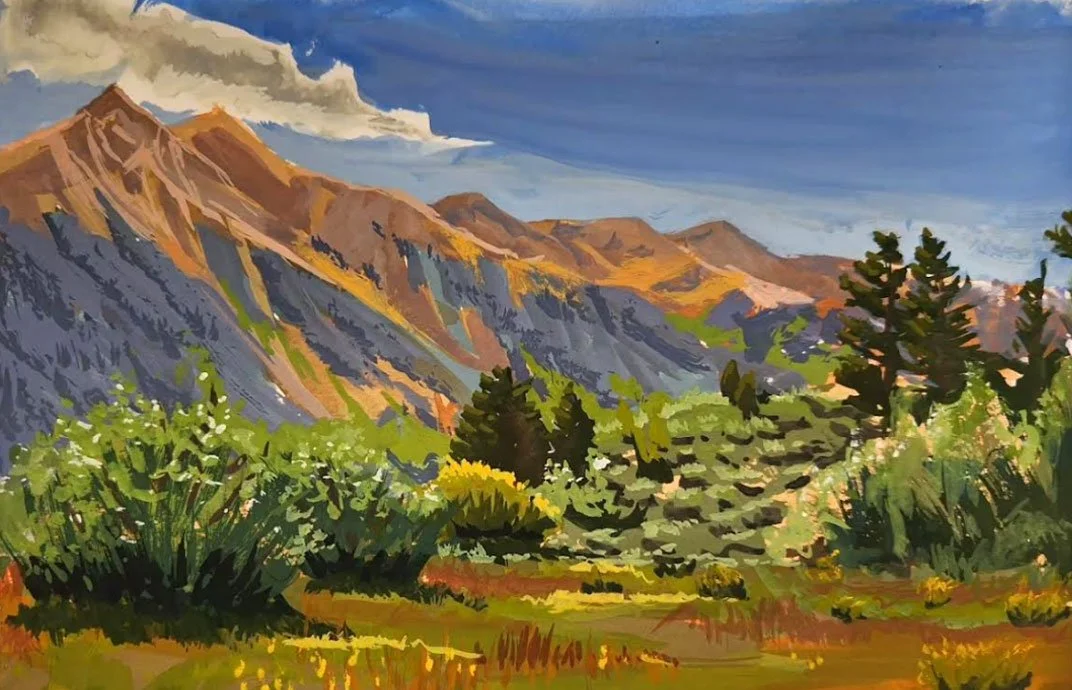
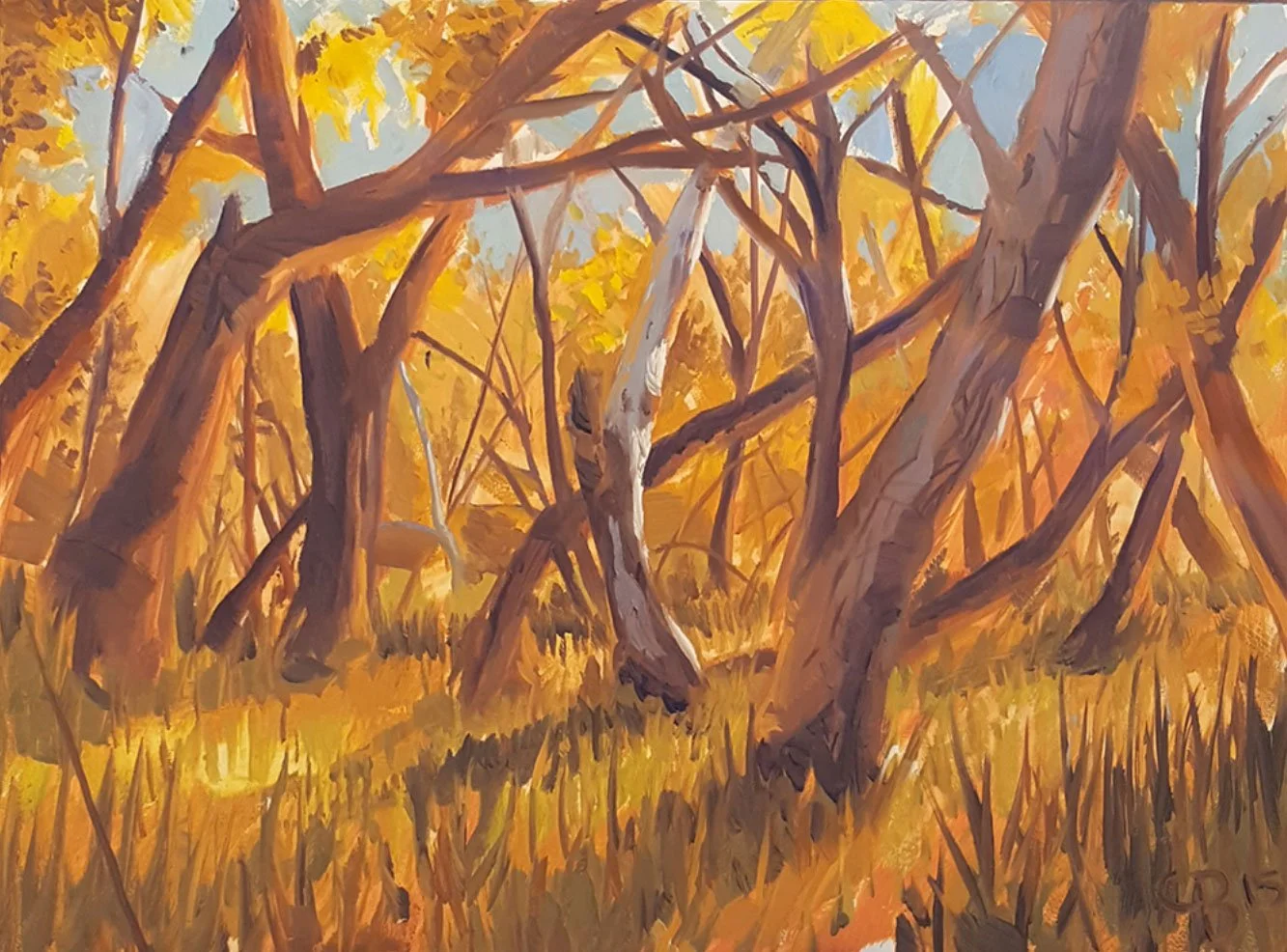
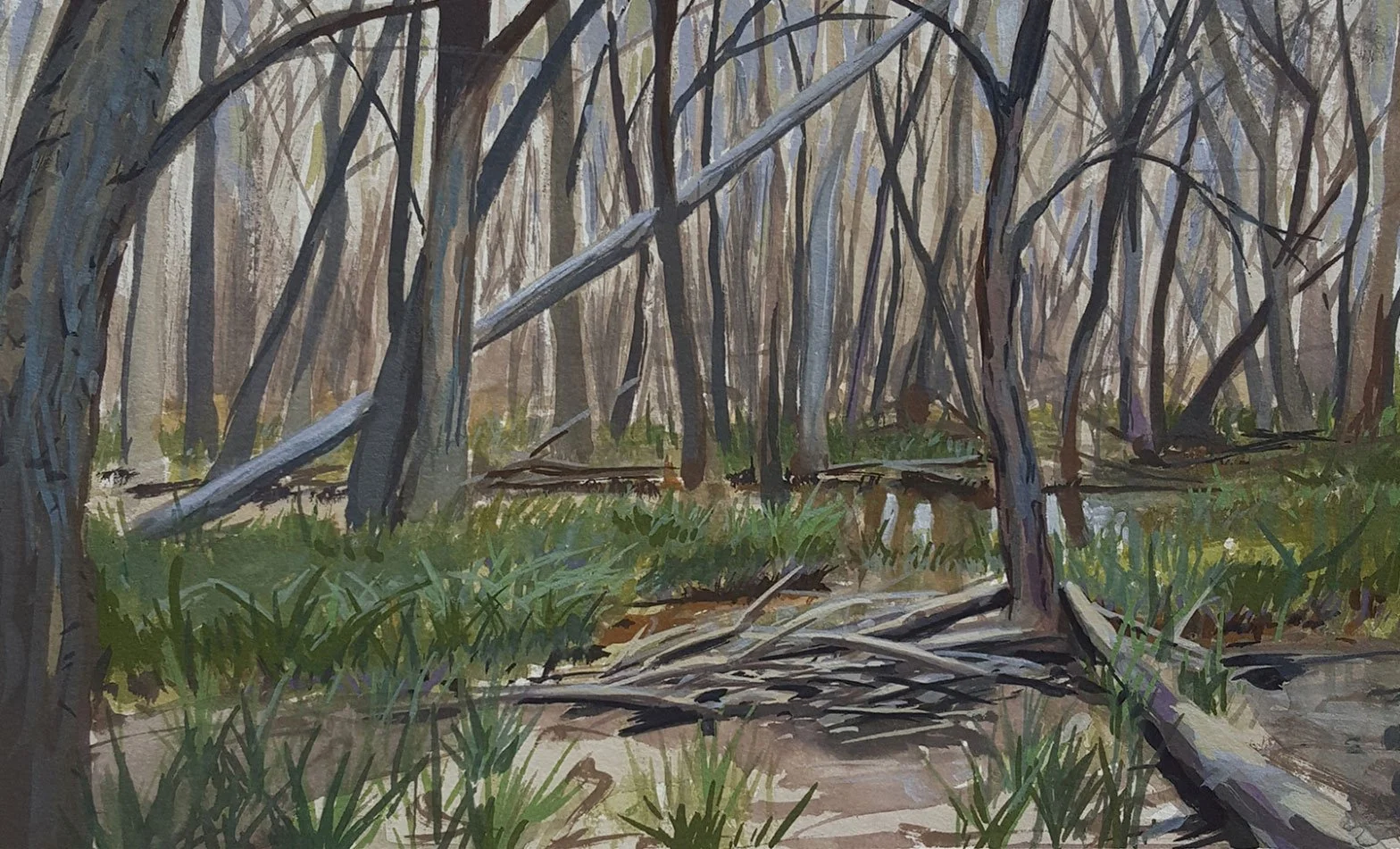
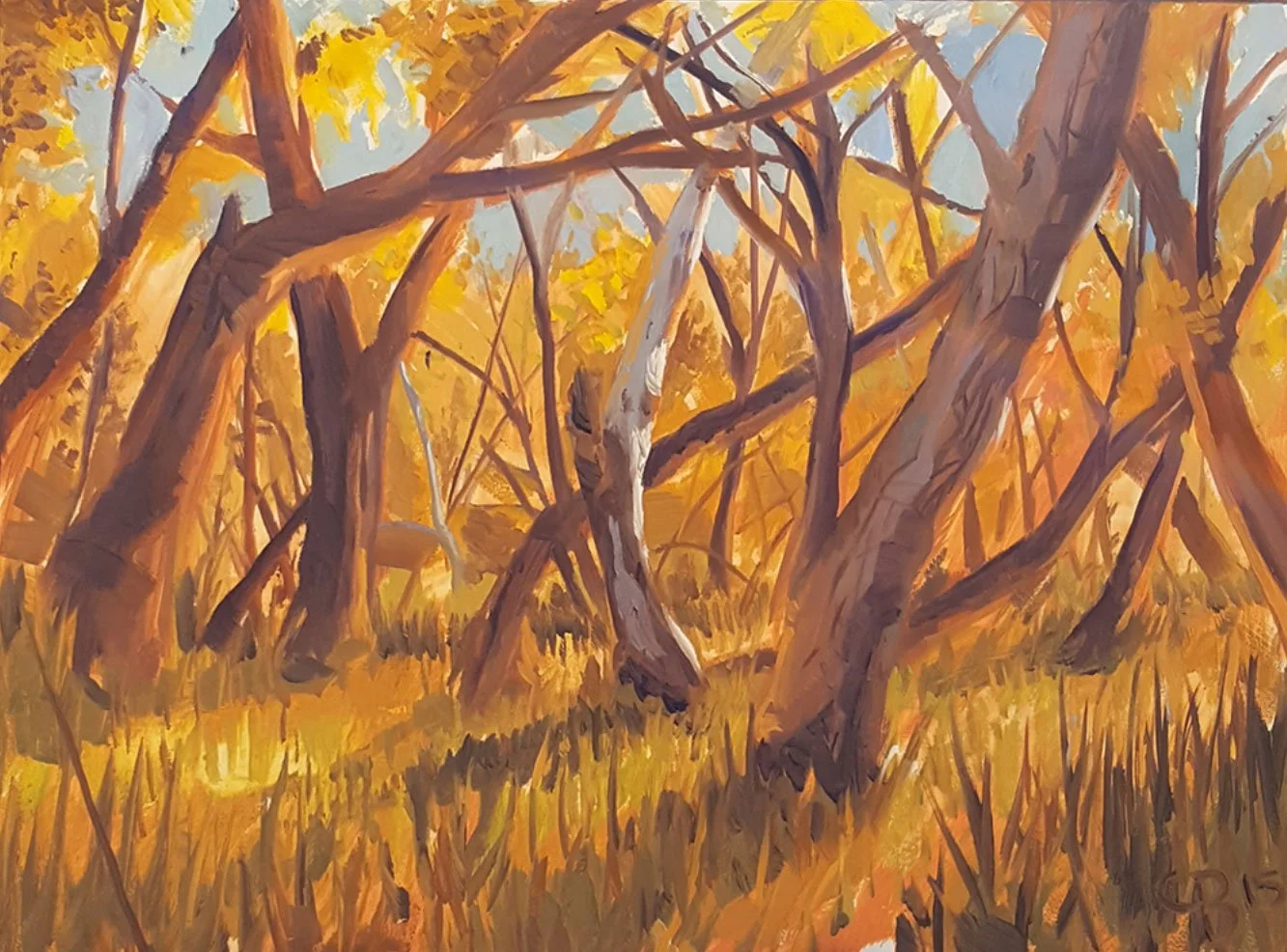
Plein air paintings
Tools Used: Gouache, Oil, Photoshop